

Dental Calculus Cleaning

You are here:

Dental Calculus Cleaning

What is Tartar Cleaning?

Dental calculus is mineralised plaque deposits accumulated on the surface of the teeth. These accumulations harden on the teeth over time and form a stone-like structure. The formation of calculus can cause serious problems for tooth and gum health. Therefore, regular scaling is important.

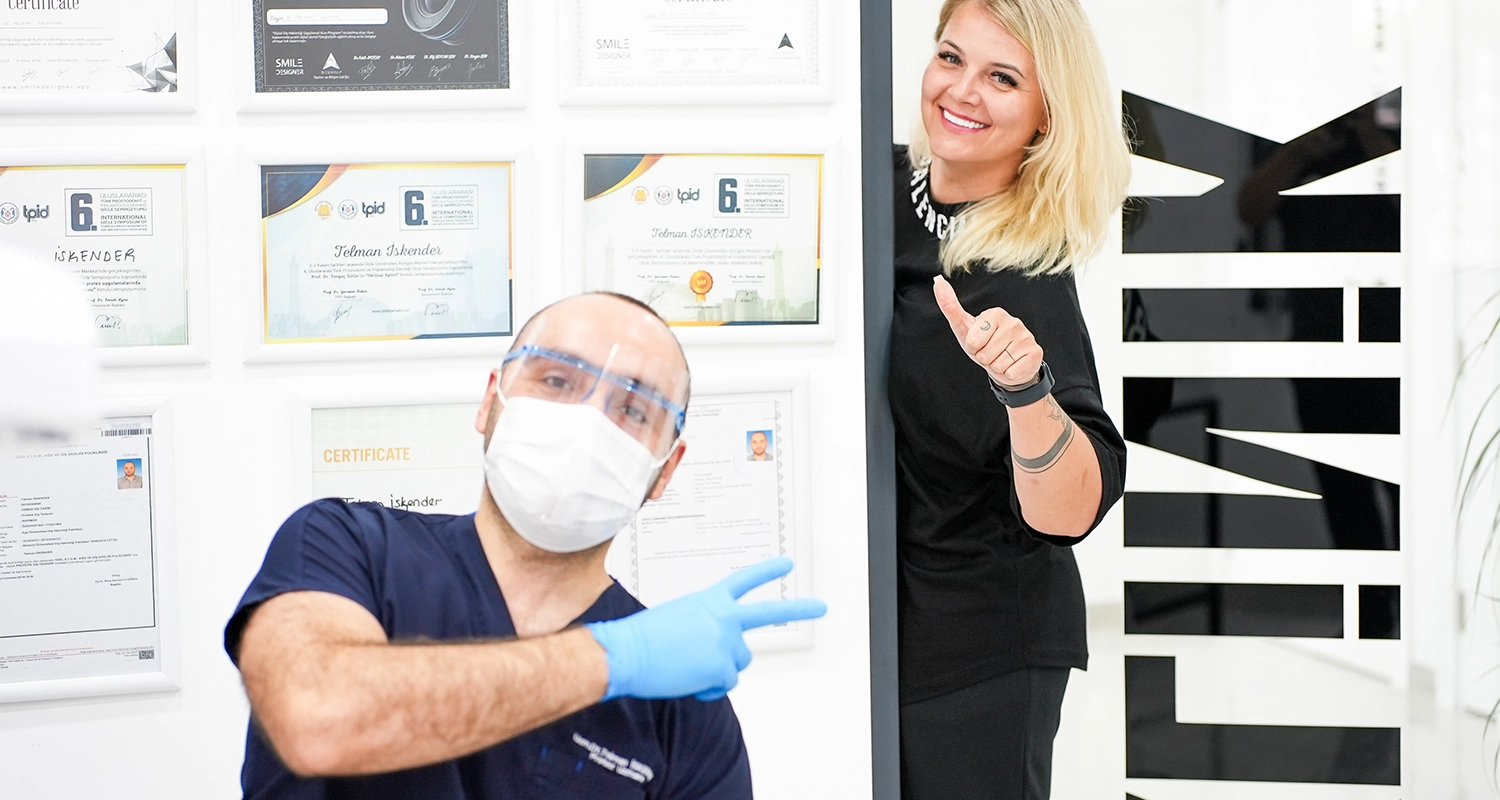
Dental calculus cleaning treatment photo
stom-gorsel-bg-1
stom-gorsel-bg-2

What is Tartar?

Dental calculus is formed as a result of the mineralisation of plaque deposits accumulated on the teeth over time. Plaque is a sticky layer formed by the accumulation of bacteria and food residues in the mouth. Plaque accumulates on the teeth every day and if it is not cleaned regularly, it can harden and turn into tartar.

Causes of Tartar Formation

The main cause of calculus formation is insufficient cleaning of the teeth and the accumulation of plaque on the teeth for a long time. Factors such as inadequate oral hygiene, incorrect brushing technique, irregular flossing or not visiting the dentist regularly can accelerate the formation of dental calculus.

Importance of Tartar Cleaning

Scaling is an important step to maintain tooth and gum health. Tartar is one of the main causes of gum disease and tooth decay. In addition, tartar accumulation can lead to aesthetic problems such as bad breath. Regular scaling is important to maintain the health of the teeth, prevent bad breath and maintain an aesthetic smile.

In this way, scaling is an important step to maintain tooth and gum health and is a routine maintenance procedure that should be performed regularly.

Benefits of Tartar Cleaning

Scaling provides a number of benefits to overall oral health and can be grouped under the following main headings:

1. Protection of Dental and Gingival Health

Tartar is one of the main causes of gum disease. Tartar can accumulate on the teeth and gums, leading to gum recession, gingivitis and other gum problems. Regular scaling protects teeth and gum health by preventing such gum problems.

2. Improvement of Aesthetic Appearance

Tartar build-up can cause yellowing, stains and discolouration of the teeth, which can be perceived as an aesthetic problem. Scaling restores the natural colour of the teeth and helps you achieve a healthier and brighter smile.

3. Prevention of Bad Breath

Tartar build-up can cause an increase in bacteria in the mouth and bad breath odour. Scaling removes these bacteria and bad odours and provides fresher breath.

For these reasons, regular scaling provides an aesthetic smile and fresh breath while maintaining overall oral health.

Tartar Cleaning Process

Scaling is a comprehensive process consisting of a series of steps and is usually carried out by a dentist or dental hygienist. This process includes the following steps:

1. Preliminary Assessment and Inspection

The scaling process usually begins with a preliminary assessment and examination. At this stage, the dentist or dental hygienist assesses the patient’s oral health status, determines the amount of calculus build-up and formulates a treatment plan.

2. Ultrasonic Cleaning

First, calculus build-up is usually removed with ultrasonic devices. Ultrasonic instruments break down and remove calculus deposits using high-frequency sound waves. These instruments help to clean the surfaces of the teeth without damaging them.

3. Manual Cleaning and Smoothing

After the ultrasonic cleaning process, the dentist or dental hygienist manually removes small deposits of tartar around the teeth. In addition, special dental instruments are used to smooth the tooth surfaces and prevent new plaque build-up.

4. Polishing and Fluoride Application

Finally, the teeth are polished and fluoride is applied. Polishing the teeth helps to remove stains and discolouration on the tooth surfaces, while fluoride application strengthens the tooth enamel and prevents the formation of caries.

With the completion of these steps, the scaling process is completed and the patient’s oral health is regained. Regular scaling is important for the protection of dental and gingival health.

Who is Suitable for Tartar Cleaning?

Scaling is generally recommended for individuals with the following conditions:

  1. Those with Tartar Accumulation: Tartar, which accumulates on the surface of the teeth or on the gingival margins, usually cannot be removed by regular brushing and flossing. Individuals with tartar accumulation should be cleaned regularly by dentists.
  2. Those with Gum Problems: Gum disease can be a result of tartar build-up and regular scaling may be necessary to prevent the progression of gum problems. Scaling is important to maintain gum health and keep gum problems under control.
  3. Those who want aesthetic improvement: Tartar build-up can cause stains and discolouration on the teeth, which can be aesthetically unpleasant. Scaling is suitable for those who want to achieve a whiter and brighter smile by restoring the natural colour of the teeth.

For these reasons, regular scaling is recommended for those who have tartar accumulation, gingival problems and those who want aesthetic improvement. These people can receive the appropriate treatment plan after an examination by dentists.

Care After Scaling

After scaling, it is important to take regular care and precautions to maintain your oral health and prevent the build-up of tartar from occurring again. Here are some care steps to be taken after scaling:

  1. Tooth Brushing Techniques: Using regular and correct tooth brushing techniques is important in preventing tartar build-up. Brush your teeth at least twice a day using toothpaste containing fluoride. Brush for at least two minutes each time and make sure to clean your teeth evenly from every surface.
  2. Use of Dental Floss and Mouthwash: Use dental floss to clean between teeth where the toothbrush cannot reach. Flossing removes food residues and plaque accumulations between teeth. You can also support your oral hygiene and prevent bad breath by using antiseptic mouthwashes.
  3. Regular Dentist Check-ups: After scaling, it is important to visit your dentist regularly. The dentist will assess your dental and gum health, identify potential problems, and take treatment measures when necessary. Periodic checks, usually every six months, help you maintain your oral health.

Regular tooth brushing, flossing and dentist checks are important steps to protect your oral health after scaling. By applying these care steps regularly, you can have a healthy and beautiful smile.

Frequently Asked Questions About Tartar Removal

Some frequently asked questions and answers about tartar cleaning are as follows:

Is Tartar Removal Painful?

Scaling is usually a painless procedure. A slight discomfort may be felt during this procedure using ultrasonic instruments or other cleaning tools, but it usually does not cause pain. However, if there is gingivitis or other gum problems, slight sensitivity may be experienced during the procedure.

How often should tartar cleaning be done?

Scaling may vary depending on the oral health status of the individual. In general, dentists recommend scaling at least once a year. However, if calculus build-up occurs rapidly or if there are gum problems, more frequent cleaning may be required.

Tartar RemovalWhat is the Cost of Treatment?

The cost of scaling can vary depending on many factors. These factors may include the location of the dental clinic, the treatment method, the patient’s oral health status, and the equipment used in the clinic. In general, scaling is more cost-effective than other dental treatments and can often be partially or fully covered by insurance plans.

The answers to these questions can help ease the concerns of individuals who want to learn about scaling. However, you can consult a dentist for more information about any oral health concerns or treatment needs.

Free Consultation

Have questions about Dental Calculus Cleaning? Our team is happy to help — free and no obligation.

Key Takeaways

  • Success Rate: Near 100% for calculus removal; prevents 60–70% of periodontal disease progression
  • Expected Longevity: Requires repeat every 6 months (every 3-4 months for periodontal patients)
  • Cost in Antalya: 50 – 150 EUR
  • Savings vs. Europe/US: 60–75% less than UK/Germany/US prices

What is Dental Calculus Cleaning?

Dental calculus cleaning, professionally known as scaling and prophylaxis, is the removal of hardened mineral deposits (tartar/calculus) and bacterial plaque from tooth surfaces both above and below the gum line. Calculus forms when dental plaque mineralizes and cannot be removed by regular brushing or flossing, making professional removal essential for preventing gum disease and tooth decay. At Stom Dental Centre in Antalya, Dr. Telman Iskender and his hygiene team perform thorough calculus cleaning using advanced ultrasonic and hand instruments to restore optimal oral health.

Treatment at a Glance

Procedure Time30–60 minutes for full mouth
AnesthesiaUsually none; local anesthesia available for sensitive patients
Recovery PeriodNone; normal activities resume immediately
Success RateNear 100% for calculus removal; prevents 60–70% of periodontal disease progression
Expected LongevityRequires repeat every 6 months (every 3-4 months for periodontal patients)
Cost in Antalya50 – 150 EUR
Savings vs. Europe/US60–75% less than UK/Germany/US prices
Materials UsedPiezoelectric ultrasonic scaler, Gracey and universal curettes, polishing paste, fluoride varnish
Procedure Time
30–60 minutes for full mouth
Anesthesia
Usually none; local anesthesia available for sensitive patients
Recovery Period
None; normal activities resume immediately
Success Rate
Near 100% for calculus removal; prevents 60–70% of periodontal disease progression
Expected Longevity
Requires repeat every 6 months (every 3-4 months for periodontal patients)
Cost in Antalya
50 – 150 EUR
Savings vs. Europe/US
60–75% less than UK/Germany/US prices
Materials Used
Piezoelectric ultrasonic scaler, Gracey and universal curettes, polishing paste, fluoride varnish

Treatment Process: Step by Step

  1. Oral Examination — A thorough examination of the teeth and gums to assess the amount and distribution of calculus deposits, gum health status, and any areas requiring special attention.
  2. Ultrasonic Scaling — A piezoelectric ultrasonic scaler is used to break apart and remove the bulk of supragingival (above the gum line) and light subgingival (below the gum line) calculus deposits using high-frequency vibrations and water irrigation.
  3. Hand Instrument Scaling — Precise hand curettes are used to remove residual calculus in areas that ultrasonic instruments cannot access effectively, particularly in deep subgingival areas and between tightly spaced teeth.
  4. Root Planing (if indicated) — For patients with subgingival calculus extending along the root surfaces, root planing smooths the root surface to remove embedded bacteria and toxins and facilitate gum reattachment.
  5. Polishing — All tooth surfaces are polished with a rubber cup and prophylaxis paste to remove surface stains, smooth the enamel, and create a surface that resists future plaque accumulation.
  6. Fluoride Application — A professional-strength fluoride varnish or gel is applied to strengthen enamel, reduce sensitivity in areas where calculus was removed, and provide additional protection against decay.

Who Is a Good Candidate?

Ideal Candidates

  • All dental patients as part of routine preventive care every 6 months
  • Patients with visible calculus buildup above or below the gum line
  • Individuals with gingivitis (early gum disease) as initial treatment
  • Patients preparing for orthodontic treatment, dental restorations, or cosmetic procedures
  • Periodontal patients requiring maintenance cleanings every 3-4 months

May Need Alternative Options

  • Patients with acute periodontal abscesses requiring drainage and antibiotic treatment first
  • Individuals with uncontrolled bleeding disorders (requires medical management before treatment)
  • Patients with cardiac pacemakers when ultrasonic scalers are used (magnetostrictive type; piezoelectric is generally safe)

Benefits and Considerations

Benefits

  • Prevents gingivitis and periodontitis by removing the primary cause of gum disease
  • Eliminates bacteria-harboring calculus that cannot be removed by home care alone
  • Removes surface stains from tea, coffee, tobacco, and food, improving smile appearance
  • Reduces bad breath caused by bacterial accumulation in calculus deposits
  • Allows early detection of developing dental problems during the examination
  • Contributes to overall systemic health by reducing oral bacterial load linked to cardiovascular and other diseases

Considerations

  • Mild sensitivity to cold is common for a few days after calculus removal, especially in previously covered root areas
  • Gums may bleed slightly during and immediately after the procedure if inflammation is present
  • Teeth may feel slightly different or have small gaps where heavy calculus deposits were removed
  • Regular maintenance appointments are essential as calculus will re-form over time
  • Heavy calculus accumulation may require more than one appointment for thorough removal

Frequently Asked Questions

Does dental calculus cleaning damage tooth enamel?
No, professional calculus cleaning does not damage tooth enamel when performed correctly. Ultrasonic scalers and hand instruments are designed to remove calculus while preserving the underlying tooth structure. The enamel is significantly harder than calculus, and modern instruments are calibrated to remove deposits without scratching or weakening the tooth surface.
How often should I get my teeth cleaned?
For most patients, professional cleaning every 6 months is recommended. Patients with a history of periodontal disease, heavy calculus formers, smokers, and individuals with certain medical conditions may benefit from more frequent cleanings every 3-4 months. At Stom Dental Centre, Dr. Iskender recommends a personalized cleaning schedule based on your individual risk factors.
Is calculus cleaning painful?
Most patients experience minimal to no discomfort during routine calculus cleaning. Patients with significant calculus buildup, deep subgingival deposits, or gum sensitivity may experience some tenderness. Local anesthesia or topical numbing gel can be applied to ensure your complete comfort at Stom Dental Centre.
Why does calculus keep coming back?
Calculus forms from the mineralization of dental plaque, which begins accumulating on teeth within hours of brushing. Saliva contains calcium and phosphate minerals that gradually harden plaque into calculus over 24-72 hours. Even with excellent brushing and flossing, some plaque inevitably remains in hard-to-reach areas, making regular professional cleaning essential.
Can I remove calculus at home?
No. Once plaque has hardened into calculus, it cannot be removed by brushing, flossing, or any home remedy. Attempting to scrape calculus at home with sharp objects can damage your gums and tooth enamel. Only professional dental instruments can safely and effectively remove calculus. Prevention through thorough daily brushing and flossing is the best home strategy.
What is the difference between calculus cleaning and deep cleaning?
Standard calculus cleaning (scaling and prophylaxis) removes deposits from above the gum line and just below it, suitable for patients with healthy gums or mild gingivitis. Deep cleaning (scaling and root planing) involves cleaning deeper below the gum line along the tooth roots and is a therapeutic procedure for patients with periodontal disease and pocket depths over 3 mm.
Will my teeth look whiter after calculus cleaning?
Your teeth will appear cleaner and often brighter after calculus and stain removal, as the yellowish-brown calculus and surface stains are eliminated. However, calculus cleaning does not change the intrinsic color of your teeth. For actual whitening beyond stain removal, a dedicated teeth whitening procedure would be recommended.
Is dental calculus related to heart disease?
Research has established a correlation between periodontal disease and cardiovascular conditions. The bacteria present in calculus and inflamed gum tissue can enter the bloodstream and contribute to systemic inflammation. While calculus cleaning alone does not treat heart disease, maintaining good periodontal health through regular cleanings is considered an important component of overall health maintenance.
I cannot overstate the importance of regular calculus cleaning as the foundation of all dental health. Patients often underestimate how much damage silent calculus accumulation causes beneath the gum line. At Stom Dental Centre, we frequently see patients who could have avoided costly periodontal treatments or even tooth loss with consistent preventive cleanings every six months.
Dr. Telman IskenderDDS, Oral Surgery Specialist, 20+ Years Experience — Stom Dental Centre, Antalya

Scientific References

  1. Loe H, Theilade E, Jensen SB. Experimental gingivitis in man. J Periodontol. 1965;36(3):177-187.
  2. Worthington HV, MacDonald L, Poklepovic Pericic T, et al. Home use of interdental cleaning devices, in addition to toothbrushing, for preventing and controlling periodontal diseases and dental caries. Cochrane Database Syst Rev. 2019;4(4):CD012018.
  3. White DJ. Dental calculus: recent insights into occurrence, formation, prevention, removal and oral health effects of supragingival and subgingival deposits. Eur J Oral Sci. 1997;105(5 Pt 2):508-522.

Ready to Start Your Treatment?

Book a free consultation with our specialists in Antalya.

Last reviewed: April 2026

Contact Us

Contact us now to get information about our treatments.

Contact Us

Contact us now to get information about our treatments.

Healthy Smiles
Treatments