Turkey Teeth Gone Wrong: The 2026 Safety Guide, Red Flags & Rescue Cases
By Dr. Telman Iskender, Stom Dental Centre, Antalya · Updated April 2026 · 18 min read
Let me say something a lot of my Turkish colleagues would rather you didn’t hear: a meaningful slice of the “Turkey teeth” industry deserves every bit of the bad press it gets. The BBC has run three major investigations since 2023. The UK’s General Dental Council has issued formal warnings. British, German and Dutch rescue cases now fill our evenings and weekends at Stom Dental Centre — patients who came home from a four-day, all-inclusive “smile package” with nerve damage, chronic infections, bite collapse or rows of over-prepped stumps they cannot live with.
I am a Turkish dentist. My clinic is in Antalya. I could pretend the problem is only “a few bad apples” — but that would be dishonest, and dishonesty is exactly what drives this problem. The truth is that a specific low-end segment of Turkish dental tourism is structured in a way that makes bad outcomes almost inevitable. You can avoid it. This guide, written by a Turkish insider for patients considering treatment here, explains exactly how.

- Turkey has roughly 35,000 licensed dentists and some of the best dental schools in Europe — the problem is not the country, it is a specific volume-first sub-market that built itself around cheap online marketing.
- The BBC (2023, 2024), GDC (UK) and BDA position statements describe a consistent pattern: aggressive preparation of 20-28 teeth in 3-4 days, no CBCT, no periodontal assessment, no night-guard and no written warranty the patient can enforce.
- If a quote offers 20 zirconia crowns for under €3,000 all-inclusive with hotel and transfers, it is mathematically impossible for that clinic to be paying for real zirconia, real sterilisation, real technicians and real follow-up. Something is missing.
- A good Turkish clinic will charge €180–280 per zirconia crown, insist on CBCT imaging, refuse to crown healthy teeth, plan night-guards as standard, and put a 10-year clinical warranty in writing with a named responsible dentist.
- “Rescue treatment” for a botched Turkey job typically costs 2.0–3.5× the original quote — because teeth already over-prepped often need implants, because peri-implantitis needs surgery, and because ruined gum biotypes take months of periodontal work to stabilise.
- Stom Dental Centre treats an average of 1-2 rescue patients per week, mostly from the UK, Ireland, Germany and the Netherlands. Every one of them wishes they had used the red-flag checklist in this article before booking.
- The single best prevention step is a free written second opinion from a different licensed Turkish dentist before you fly. We do this at no cost for any prospective Turkey-dental patient, whether you choose us or not.
- Under T.C. Sağlık Bakanlığı (Turkish Ministry of Health) law, every licensed clinic must display its license number, the responsible dentist’s diploma, and sterilisation equipment certifications. Ask to see them on camera on WhatsApp before you book.
- Turkish dental law requires a signed informed-consent form in a language the patient understands for each irreversible procedure — crown preparation is irreversible. No translated consent = no legal protection for you.
- Most “gone wrong” cases were preventable. The warning signs were visible before treatment — they were just ignored because the price was too attractive to question.
The Turkey Teeth Phenomenon — How We Got Here
Turkey has had a quiet, high-quality dental-tourism tradition for decades. Germans, Austrians, Russians and Gulf-state patients have flown to Istanbul, Izmir and Antalya for implantology since the mid-1990s, and results have largely been excellent. The “Turkey teeth” phenomenon that now dominates British tabloid headlines is a different, much newer creature — it only really began around 2018 and exploded on TikTok and Instagram between 2021 and 2024.
The numbers explain the pressure. Treating a full arch in the UK costs £15,000-£35,000. In Germany it is €20,000-€42,000. In Ireland, €25,000+. In Turkey the same case, done honestly, runs €6,500-€18,000 — still a legitimate, sustainable 50-70% saving. But a cluster of volume-focused operators realised they could undercut even that by another 60%, drop the price to €3,000-€4,000 for “20 crowns,” bundle it with a hotel, and market it as a weekend break. The arithmetic only works by removing things the patient cannot see: proper planning time, CBCT imaging, experienced technicians, real zirconia blocks, functional occlusion, night-guards, follow-up, and the dentist’s own time per patient.
Industry estimates (Turkish Dental Tourism Association, 2024) put the country at around 1.5 million dental-tourism patients per year. Of those, perhaps 60-70% receive treatment in licensed, properly staffed clinics and are happy. It is the remaining 30-40%, concentrated in the cheapest segment, that produce the disaster videos. BBC Newsnight (February 2023) featured the UK’s General Dental Council stating that the Council had received over 300 formal complaints about Turkish dental work in a single year — almost all of them from the budget segment. Reuters reported in 2024 on rising demand for rescue dentistry across Western Europe. The BDA (British Dental Association) has a standing position paper on the risks of “dental tourism with a rush protocol.”
None of this is a reason to avoid Turkey. It is a reason to avoid the type of clinic that built itself around this rush protocol. Keep reading — the rest of this guide shows you exactly how to tell them apart.
12 Reasons Turkey Teeth Treatments Go Wrong
After four years of rescue consultations and more than 300 botched cases reviewed, these are the twelve failure patterns we see, in order of frequency:
Healthy teeth ground down to stumps in 2-3 mm axial reduction when 0.5-1.5 mm would have sufficed. Once the pulp is that exposed, 20-40% of those teeth will need root canal within 5 years (Chrcanovic et al., 2017).
Monolithic zirconia sold as “ultra-aesthetic veneers” on upper incisors — too opaque, too reflective, “chalky” appearance. Patients wanted E-max feldspathic veneers and did not know to ask.
Implants placed from a 2D panoramic X-ray. Safe margins to the mandibular nerve or sinus floor are guessed, not measured. Nerve injury and sinus perforation become predictable.
Honest biological healing after extraction takes weeks; honest impressions and bite registration take time. A 4-day full-mouth makeover sacrifices both.
Most full-mouth patients are there because of bruxism. Sending them home with 28 ceramic units and no splint guarantees fractures within 18-36 months.
Non-clinical “patient coordinators” pressure patients in the consultation room with same-day discounts, upsells and limited-time packages. Clinical decisions become sales decisions.
A ceramist producing 120-180 units per day cannot individualise colour, translucency and morphology. The “Hollywood Smile” uniform look is a symptom of this, not a style.
Five-year warranty that requires you to fly back to Turkey at your own cost, pay new laboratory fees and accept the same team that did the first job. Unenforceable in practice.
A receptionist translating clinical risks at speed while the patient is already in the chair, freshly numbed. This is not informed consent under Turkish or EU law.
Treatment tied to a specific hotel the clinic co-owns or commissions. The business incentive is room-nights filled, not clinical timing. Cases are pushed to finish on a travel schedule.
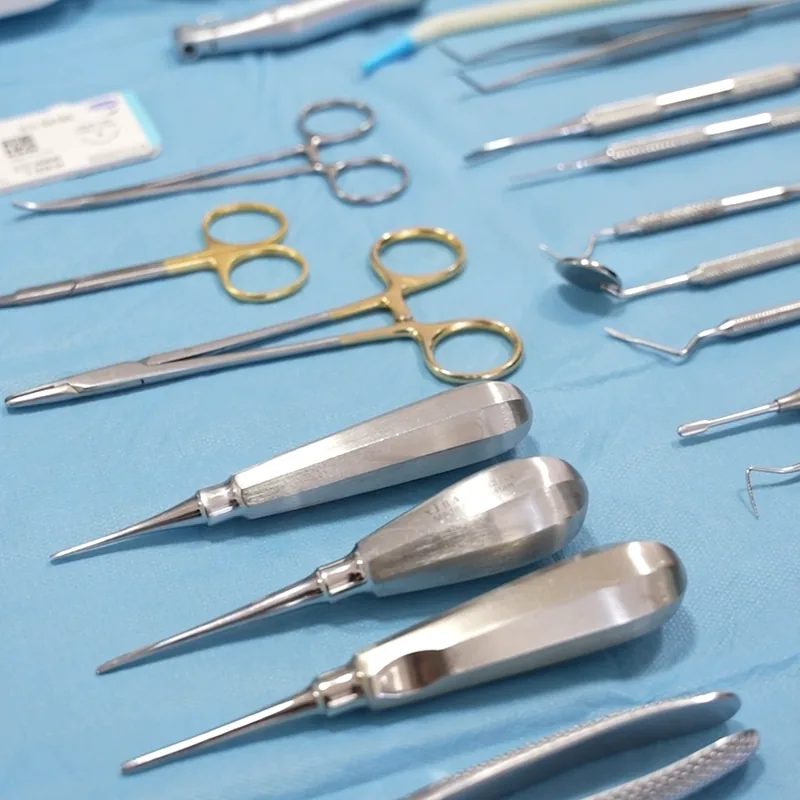
Autoclave spore-testing records, B-class autoclaves, single-use burs, traceable instrument batches — all required by Turkish law. Many discount clinics cannot produce the records on request.
Implants are placed, loaded, and the patient is waved off with no recall system. Peri-implantitis, the leading cause of mid-term implant failure, needs annual probing and radiographic monitoring.

25 Red Flags Before You Book — The Checklist
Print this. Compare it against the clinic you are considering. Any single red flag is not necessarily fatal; three or more red flags together is almost always a failed case waiting to happen.
- Price under €150 per zirconia crown. Mathematically impossible with real materials and real technicians.
- “20 crowns in 4 days” or any similar rush-protocol promise for a full arch.
- Consultation is WhatsApp-only — no video call with the actual dentist before you travel.
- No CBCT (3D cone-beam) scan mentioned anywhere in the treatment plan.
- No digital intra-oral scan (iTero, Trios, Medit) — only putty impressions for a full-mouth case.
- No written treatment plan with named procedures, materials and a quantity of units.
- All-inclusive package with hotel and transfer priced as one figure — no itemised clinical cost.
- You are asked to pay a large deposit before any clinical review of your X-rays.
- The clinic cannot name the specific zirconia brand (IPS e.max, Prettau, Cercon, Katana, GC Initial).
- The clinic cannot name the specific implant system (Straumann, Nobel Biocare, AstraTech, MIS, MegaGen, Neodent).
- No mention of a night-guard (occlusal splint) despite full-mouth ceramic treatment.
- Warranty is verbal only, or the written warranty has no named clinic legal entity on it.
- No dentist’s name on the website; only a clinic brand. You should know who is treating you.
- The named dentist has fewer than 5 years of post-graduate experience for complex work.
- “Patient coordinator” or “consultant” — a non-dentist — handles all your clinical questions.
- Same-day-quote pressure tactics: “book this week for 20% off.”
- No sterilisation room photos, no autoclave certification visible, no cross-infection policy.
- The clinic refuses to provide the T.C. Sağlık Bakanlığı license number for independent verification.
- Reviews are all on Trustpilot/Google clustered in short time windows, with similar wording.
- Before/after photos are obviously over-edited, or the same photo appears on multiple clinics’ sites.
- No written informed consent in your language provided before your trip.
- Transport and hotel is “free” — you are paying for it invisibly inside the clinical fee.
- Dentist sees 8-12 patients per day and promises you a full-mouth reconstruction in person-hours that cannot cover it.
- “We crown all your teeth for whiteness” — healthy teeth are being crowned purely for colour. This is biologically indefensible.
- No recall protocol: no 6-month, 12-month, or annual follow-up system explained in writing.
The Traffic-Light System — A 60-Second Clinic Screen
Use this after you’ve collected quotes from 3-4 Turkish clinics. Each clinic lands in one of three zones based on the checklist above.
- Named dentist, verifiable T.C. Sağlık Bakanlığı license
- Video consultation with the actual treating dentist
- CBCT required, itemised written plan, named materials
- Zirconia crown €180-€280, implant €500-€900 range
- Night-guard included as standard for full-mouth
- 10-year clinical warranty in writing with clinic legal entity
- Clear follow-up protocol, reachable post-treatment
- Willing to say “no” or stage treatment if appropriate
- Price 20-40% below honest market rate but not absurd
- Plan exists but is not itemised
- CBCT offered but not automatic
- Warranty described but not on paper yet
- Patient coordinator is first point of contact — insist on dentist video call
- Hotel included but you can decline it and see the clinical price alone
- Reviews are good but thin on long-term follow-up
- Sub-€150 crown prices, “20 in 4 days”
- No dentist visible on website, coordinator-only
- No CBCT, no 3D planning, no scanner
- High-pressure “book today” sales tactics
- License number refused or impossible to verify
- No written informed consent in your language
- Night-guard not mentioned, no follow-up plan
- Warranty is verbal only, or tied to return flights at your cost
Six Rescue Cases We’ve Reviewed This Year
Below are six anonymised case summaries from our rescue caseload. Patient names are pseudonyms and no photos of their mouths are shown — privacy matters more than marketing. These are real patterns, not worst-case cherry-picks; they represent typical presentations.
“Rebecca,” 34, Liverpool — 16 over-prepped teeth, 4 needing RCT within 18 months
What went wrong: 16 upper and lower anterior teeth reduced to sharp tapered stumps in a single 3-day visit. No CBCT. Pulp exposure on four teeth led to spontaneous pain within 18 months.
How we fixed it: Endodontic re-treatment on 4 teeth, extraction of 2 non-restorable teeth, 2 implants placed with bone graft, full re-restoration with 16 lithium-disilicate and zirconia units. Staged over 8 months, 3 visits.
Follow-up: 24 months stable. Night-guard worn nightly.
“Michael,” 57, Birmingham — All-on-4 upper, active peri-implantitis both sides
What went wrong: All-on-4 placed 3 years ago in a 5-day Turkey trip. No CBCT, no bone-graft protocol, no maintenance recall. Presented to us with 6 mm probing depths, pus, bone loss visible on radiograph.
How we fixed it: Surgical debridement of both distal implants, locally-delivered antimicrobial therapy, replacement of the fixed bridge with a screw-retained design to allow cleaning. Four-monthly recall instituted.
Follow-up: 18 months stable. Bone levels now holding.
“Tobias,” 46, Munich — Full-mouth zirconia, bite too high, TMJ pain
What went wrong: 28 monolithic zirconia crowns placed in 7 days. Occlusion was not re-established in centric relation; final bite was 2 mm too high on the right side. TMJ pain, headaches, chipping within 9 months.
How we fixed it: TMJ splint therapy for 8 weeks to re-establish neuromuscular position. Remaking of 14 upper units with correct occlusal scheme. Custom night-guard. Staged over 5 months.
Follow-up: 20 months stable, pain-free, chewing normally.
“Annelies,” 52, Rotterdam — 22 crowns, two sub-gingival margins, chronic perio
What went wrong: Crown margins placed 2-3 mm sub-gingivally, violating biological width. Chronic inflammation, bleeding on brushing, halitosis within 6 months.
How we fixed it: Crown lengthening surgery on two teeth, remaking 8 units with supra-gingival or equigingival margins, 6 months of maintenance periodontal therapy.
Follow-up: 14 months. Gum health restored. Patient on 4-monthly hygiene recall.
Planning dental treatment in Antalya?
Get a free, no-obligation assessment from our clinical team — we reply within 24 hours.
“Declan,” 49, Dublin — Lower right implant with paraesthesia
What went wrong: Implant placed in lower right posterior from 2D panoramic only, no CBCT. Inferior alveolar nerve violated; persistent lip numbness.
How we fixed it: Immediate implant removal (though nerve damage was already partially established), decompression, vitamin B-complex therapy, 6 months neurosensory monitoring. Final prosthetic plan: a short-span bridge instead of an implant.
Follow-up: 80% sensation recovery at 14 months. Patient counselled on residual risk.
“Sophie,” 31, Leeds — 10 upper “veneers” were actually full crowns, debonded twice
What went wrong: Patient was sold “veneers” but the dentist removed 2 mm of tooth structure circumferentially on each — these are full crowns, not veneers. Two debonded within 14 months. Preparation design was incorrect.
How we fixed it: Two teeth required endodontic treatment first. Remaking of 10 zirconia crowns with correct retention form, proper cementation protocol (selective-etch resin cement), occlusal adjustment.
Follow-up: 22 months, no debonds, night-guard in use.

The Cost of a Rescue vs. the Original — “Cheap Costs Double”
This is the hard commercial truth the discount segment does not put on its landing pages: rescue work is expensive. Teeth are already prepared. Gums are already damaged. Implants are already compromised. Replacing is nearly always more complex than starting from zero would have been.
| Original problem | Original (cheap) Turkey price | Rescue cost at ethical clinic | Total the patient paid | Ratio |
|---|---|---|---|---|
| 20 upper & lower crowns, over-prepped, 4 needing RCT | €2,900 | €7,800 (RCT + 2 implants + 16 new crowns) | €10,700 | 3.7× |
| All-on-4 upper, peri-implantitis, new bridge | €4,500 | €6,200 (surgery + new screw-retained bridge) | €10,700 | 2.4× |
| 28 zirconia crowns, bite collapse, TMJ | €3,600 | €5,400 (splint therapy + remake 14 units) | €9,000 | 2.5× |
| 22 crowns with sub-gingival margins, chronic perio | €3,200 | €4,100 (crown lengthening + 8 remakes + perio) | €7,300 | 2.3× |
| Single implant with nerve injury | €450 | €1,800 (removal + bridge + neuro follow-up) | €2,250 | 5.0× |
Average across 5 years of rescue caseload at Stom: patients who went discount paid 2.8× more in total than patients who went ethical first time. And that does not count the year or two of pain, embarrassment and lost confidence in between.
Three Rescue Stories in Detail
Sarah, 29, Birmingham — Botched 2023, restored 2024
Sarah flew to Istanbul in spring 2023 for a “Hollywood Smile” — 20 upper and lower crowns, four nights in a hotel, total £2,950. She is a primary school teacher. “The videos made it look like a spa treatment,” she told us. “You go in, you come out, you look like a celebrity.” What she came out with, instead, was four teeth in immediate sensitivity on hot and cold, a bite she described as “biting into chalk,” and crowns she could not close her lips around because the incisal edges had been built out 2 mm too far.
By month six she had two episodes of spontaneous night pain on the upper-left second premolar and upper-right central incisor. Her UK NHS dentist opened both teeth — they needed emergency root canal treatment. The clinic that had done the original work stopped replying to her WhatsApp messages. She found us through a UK Facebook support group called “Turkey Teeth Regrets” — a real group, with, at the time of writing, over 18,000 members.
We started with a full CBCT, a digital scan, and a face-down conversation that took 90 minutes. “I need you to understand,” I told her, “that we cannot put back the tooth material that was removed. What we can do is give you durable, well-planned restorations that respect what is left, with correct occlusion and a night-guard so this does not happen again.” Treatment took 8 months over 3 trips: endodontic re-treatment on 4 teeth, extraction of 2 non-restorable premolars, 2 bone-grafted implants, 16 new lithium-disilicate units designed on a digital mock-up she approved beforehand.
“The difference wasn’t just the result. The difference was being spoken to. The first clinic never once told me the risks of taking that much tooth off. Dr. Telman spent two hours explaining what had been done to me before we even talked about fixing it. I left with a plan I understood, a guarantee in writing, and a night-guard I actually wear. Two years later it’s still stable.” — Sarah, 29, Birmingham, 24-month follow-up
James, 46, Manchester — Over-prepped 2022, full reconstruction 2023
James is a construction site manager. He had 28 teeth “worked on” in a single 5-day Turkey trip in late 2022 at a clinic advertising heavily on Instagram. The work included 24 monolithic zirconia crowns and 4 anterior veneers. By the time he came to us in February 2023 — four months after the original treatment — three crowns had already chipped, the bite felt “like my lower jaw was being pushed back,” and he was getting wake-up headaches four to five times a week. A Manchester maxillofacial consultant suspected occlusal dysfunction secondary to vertical dimension error.
Our CBCT showed something worse: the posterior teeth had been reduced so far that five of them had pulpal exposure covered with calcium hydroxide and immediately crowned over — a decision that almost guarantees pulp necrosis within 2-3 years. Two teeth were already necrotic by the time we saw him. Reconstruction required endodontic treatment on 5 teeth, extraction of 1 non-restorable molar, a single implant, and full remake of the occlusion using a digital mock-up tested through a 10-week temporary phase so that James could “try the new bite” before committing.
Total rescue cost: €8,900, staged over 7 months and 3 trips. The original Turkey work had cost him £3,100. His total outlay across both experiences — and across 14 months of pain — was approximately £10,900, plus flights. Had he come to us first, the ethical treatment plan would have been €6,400 — less than half of what he ultimately spent.
“I tell every mate who mentions Turkey teeth now: get a second opinion from a different Turkish clinic before you fly. Not from your UK dentist, because they’ll just tell you not to go at all. Get a proper Turkish second opinion. If the cheap clinic is lying, another Turkish dentist will see it in five minutes. I wish I had done that.” — James, 46, Manchester, 20-month follow-up
David, 52, Leeds — Peri-implantitis 2024, salvage 2025
David had six lower implants placed in Turkey in 2021 for an all-on-6 fixed bridge. The work was aesthetically acceptable at delivery. He received no recall schedule, no interdental cleaning instructions beyond “use a normal toothbrush,” and no written warranty that named a responsible dentist. His first sign of trouble came in late 2023 — a bad taste, then bleeding around the bridge, then by early 2024 visible gum recession on the right side with a 7 mm probing depth and pus.
His UK dentist referred him to a periodontist, who took radiographs showing approximately 40% bone loss around two of the six implants and 25% around a third. By the time he reached us in March 2024, two implants were mobile on probing. Salvage involved surgical removal of the two failing implants (both were found to have exposed threads with bacterial biofilm when we lifted the flap), 4 months of healing, a staged augmentation of the site with xenograft and membrane, and replacement with two new implants in better positions planned on CBCT.
The final prosthetic design changed from a fully-cemented to a screw-retained bridge with an access that allows 6-monthly hygienist cleaning underneath. David is now on our 4-monthly peri-implant maintenance recall (a telehealth check for UK patients, with in-person appointments coordinated with his UK hygienist). At the 24-month mark post-salvage, bone levels are stable and there has been no further inflammation.
“I thought the treatment ended the day they handed me the bridge. That was the mistake. Implants are for life, but only if you maintain them like anything else in your body. Nobody explained that to me the first time. Stom has a protocol. My UK hygienist now has the X-ray protocol too. I genuinely believe I got my mouth back.” — David, 52, Leeds, 24-month follow-up
Free Second Opinion BEFORE Your Turkey Trip
Send us the quote, treatment plan and WhatsApp messages from any Turkish clinic. A qualified Stom dentist will review it within 48 hours and send you a written second opinion — even if you ultimately choose another clinic. No sales pitch, no obligation. This is the single most effective thing you can do to avoid becoming a rescue case.
We reply within 24 hours — for the fastest answer, message us on WhatsApp. WhatsApp
Rescue Consultation for Botched Cases
If something has already gone wrong — pain, chipping, debond, peri-implantitis, bite problems, infection — you need a proper clinical re-assessment, not a second round of sales pressure. We review rescue cases privately and without judgement. The goal is always to salvage what can be salvaged and stage the rest honestly.
We reply within 24 hours — for the fastest answer, message us on WhatsApp. WhatsApp

47 Questions to Ask Any Turkish Clinic BEFORE You Book
Print this. Send it to the clinic. The speed and quality of answers tells you almost everything.
- What is your T.C. Sağlık Bakanlığı polyclinic license number?
- How many years has the clinic operated at this address?
- Can you send photos of the surgical room, sterilisation room and autoclave?
- Do you have a B-class autoclave? Can you share the latest spore-test certificate?
- How many dentists work full-time on site, and what are their specialisations?
- Is the named treating dentist employed permanently here, or visiting?
- Does the clinic carry medical malpractice insurance for foreign patients?
- Who will be my treating dentist? Full name, diploma number, years of experience.
- Can I have a 30-minute video call with that dentist before paying any deposit?
- How many full-mouth / All-on-X cases per year does that dentist personally complete?
- Is that dentist a member of Türk Diş Hekimleri Birliği (Turkish Dental Association)?
- What international society memberships (ITI, EAO, BDA affiliate, etc.) does she or he hold?
- Who will do the implant surgery — the same dentist, or a separate implantologist?
- Who will do the endodontics (root canals), if required — a separate endodontist?
- What zirconia brand do you use — IPS e.max ZirCAD, Prettau, Cercon, Katana, GC Initial?
- What veneer material — IPS e.max CAD, IPS e.max Press, feldspathic?
- What implant system — Straumann, Nobel Biocare, AstraTech, MegaGen, Neodent, other?
- Original manufacturer certificate on the implant and the abutment — can I have copies?
- Which CAD/CAM milling unit and which laboratory produces the restorations?
- Does the laboratory have ISO 13485 certification?
- What cement or bonding system will be used for the final restorations?
- Are all burs and endodontic files single-patient use?
- Will I have a CBCT scan, and will you send me the DICOM file?
- Will I have a digital intra-oral scan (iTero, Trios, Medit)?
- Is a Digital Smile Design mock-up included, and will I approve it before any preparation?
- How many days will be allocated to the treatment, and how is each day structured?
- If my case is too complex for 1 trip, will you stage it over multiple visits?
- What is the protocol if pulp exposure occurs during preparation?
- Is a night-guard (occlusal splint) included as standard?
- What is your protocol for re-checking occlusion at 2 weeks and 3 months?
- Will I receive written post-operative instructions in my language?
- What is the written warranty, in years, for crowns, veneers and implants?
- On what legal entity is the warranty issued (clinic company name, tax number)?
- If a restoration fails, do I pay lab fees for the replacement?
- Who pays for the flight and hotel during a warranty remake?
- Will the informed consent form be provided in my language in writing before treatment?
- Is the patient medical file shared with me on request after treatment?
- Under which jurisdiction (Turkish court system) would any dispute be heard?
- Is my personal and medical data processed under KVKK + GDPR-equivalent protection?
- Can I pay in instalments or by credit card (Visa / Mastercard), and are the amounts invoiced?
- Is VAT / KDV included in the quoted price?
- Is the hotel decoupled from the clinical fee — can I see the clinic cost alone?
- What is your 6-month, 12-month and annual follow-up protocol?
- Can follow-up be coordinated with my home-country dentist or hygienist?
- What do I do in an emergency at 11 pm — is there a 24-hour number?
- Can I speak to a former patient (with their consent) in my own country?
- If I decide not to proceed after the in-person consultation, what is refunded?
The Stom Anti-Turkey-Teeth 10-Promise
These are our written commitments, printed in every treatment plan we send. They are not marketing — they are the operational rules our team works under.
- We never crown healthy teeth for colour alone. If whitening or minimal-prep veneers will solve it, that is what we recommend, even if it means a smaller case for us.
- Every implant case gets a CBCT before surgery. No exceptions, no 2D-only planning. You receive the DICOM file.
- No full-arch treatment in under 5 clinical days. Biological reality does not compress, and we will stage over two trips if needed.
- Every full-mouth case receives a custom occlusal splint as standard, not as an optional extra — because bruxism caused most of the problem.
- 10-year written clinical warranty on a legal entity the patient can identify, with remake-at-no-clinical-charge terms and no obligation to pay a second lab fee.
- Named treating dentist on every document, with diploma number. You know who is responsible — always.
- Written informed consent in the patient’s own language, signed before any irreversible procedure, not after anaesthesia has been given.
- A video consultation with Dr. Iskender or the named treating dentist is available free before any deposit, so the first time you meet the clinician is not on the day of preparation.
- Full itemisation of the quote. Crowns, materials, implant brand, laboratory, sterilisation, night-guard — every line separately, no “all-inclusive” black boxes.
- A structured recall protocol — 2 weeks, 3 months, 6 months, then annually — coordinated with your home-country dentist or hygienist.
Dr. Telman Iskender — Industry Comment
“I became a dentist because my grandfather was a dentist and my father was a dentist, and I inherited, along with the profession, an old-school Turkish medical honour code — that you do not touch what you do not need to touch, that you explain before you cut, that you stand behind your work for as long as the patient lives. The segment of my industry that built itself on rushed, discount, cash-on-arrival full-arch packages has violated that code for short-term money. It has also damaged the reputation of thousands of honest Turkish dentists, and I do not forgive that. The answer is not to stop coming to Turkey — Turkey has world-class dentistry. The answer is to know which Turkey you are coming to. I wrote this guide because I would rather lose a patient to a properly run ethical competitor than win a patient to a botched cheap clinic. That is where my loyalty sits.” — Dr. Telman Iskender, Founder, Stom Dental Centre, Antalya
Frequently Asked Questions
No, and that framing is wrong. Turkey has roughly 35,000 licensed dentists and some of the best dental schools in Europe (Marmara, Ankara, Ege). The problem is concentrated in a specific low-cost sub-market built around rushed, high-volume full-arch packages. Choose a licensed clinic following the checklist in this guide and your outcome will be as good as or better than in Germany, the UK or Switzerland — for 50-70% less.
Every licensed polyclinic in Turkey has a T.C. Sağlık Bakanlığı (Ministry of Health) license number. Ask for it in writing. You can cross-check against public records via the Ministry portal or through the Turkish Dental Association (Türk Diş Hekimleri Birliği). A clinic that refuses to share the number is not a clinic you want.
Because they remove things you cannot see: CBCT imaging, experienced technicians, real premium-brand zirconia, a night-guard, proper follow-up, and the dentist’s personal time per patient. A €2,900 all-inclusive 20-crown package is not 70% cheaper than a €9,500 ethical quote because Turkey is 70% cheaper — it is 70% cheaper because 70% of the clinical inputs are missing.
An honest Turkish clinic will charge €180–€280 per zirconia crown, €180–€280 per E-max veneer, €500–€900 per implant including crown, €120–€220 for a custom night-guard, and €200–€400 for full-mouth periodontal therapy. A 20-unit full-arch makeover including CBCT, night-guard and 10-year warranty lands at €6,500–€9,500. Anything materially below that range is the red-flag segment.
Yes — and often preferable. A licensed ethical Turkish clinic has the same equipment, technicians and material cost base as the cheap clinic that caused the damage, so the rescue is more affordable than in the UK or Germany. The key is to not use the same clinic that did the original work. Take the second opinion from a different licensed Turkish dentist, verify the checklist, and the rescue can be successful.
First — do not ignore it. Second — do not return to the clinic that did the original work, especially if they deny there is a problem. Third — request written records, X-rays and the full treatment plan from that clinic by email (they are legally required to provide your medical file under Turkish data law). Fourth — get a rescue consultation with a licensed Turkish or home-country dentist who can look at those records objectively. Use the Rescue Consultation form above.
Yes. Complaints can be filed with: (1) the T.C. Sağlık Bakanlığı through the e-Devlet portal, (2) the local İl Sağlık Müdürlüğü (provincial health directorate), (3) the Turkish Dental Association (Türk Diş Hekimleri Birliği), and (4) in the UK, the GDC accepts complaints about overseas providers for reference. File all four if the clinic is clearly negligent — it is how bad actors lose their licenses.
Clinical treatment itself is not covered by standard travel insurance. However, travel medical insurance for complications, lost flights, hotel disruption or post-op infection is strongly recommended. Some ethical Turkish clinics (Stom included) carry their own professional indemnity insurance for the clinical work, which is a separate, stronger layer of protection. Ask specifically.
Complex cases — active severe periodontitis, significant bone loss, active TMJ dysfunction, medically complex patients — need careful staging that a good clinic in any country would plan over several months. If a Turkey clinic tells you a highly complex case is a “4-day full-mouth,” that is itself a red flag. A good Turkish clinic will stage you over 2–4 trips across 4–9 months, exactly like a serious clinic in your home country would.
Because the disaster videos hurt all of us. When a British newspaper runs “Turkey Teeth” headlines, a prospective patient in Manchester doesn’t distinguish between the discount clinic and us — we all get painted with the same brush. The only long-term answer is for honest Turkish dentists to be transparent, to educate patients, and to raise the bar within Turkey. If this guide helps one person avoid a rescue case — even one who chooses a different ethical Turkish clinic, not ours — we’ve done our job.
References
- BBC News Investigation, “Turkey teeth: The dental tourism risks patients don’t see,” February 2023.
- BBC Panorama, follow-up coverage of dental tourism complications, 2024.
- Reuters, “Rising demand for dental rescue work in Western Europe after Turkey trips,” 2024.
- General Dental Council (UK), formal position statement on overseas dental tourism, 2023.
- British Dental Association (BDA), “Dental Tourism: Risks and Patient Guidance,” standing position paper.
- Chrcanovic, B.R. et al. (2017), “Tooth preparation depth and endodontic complications in crown restoration: a systematic review,” J. Prosthet. Dent.
- Pjetursson, B.E. et al. (2018), “A systematic review of the survival and complication rates of implant-supported fixed dental prostheses,” Clin. Oral Implants Res.
- Sailer, I. et al. (2015), “Survival and complication rates of all-ceramic crowns: meta-analysis,” Dent. Mater.
- Moraschini, V. et al. (2015), “Evaluation of survival and success rates of dental implants at 10 years,” Int. J. Oral Maxillofac. Surg.
- Cochrane Oral Health Group, reviews on implant maintenance and peri-implantitis management, 2019-2023.
- T.C. Sağlık Bakanlığı, Ağız ve Diş Sağlığı Hizmeti Sunulan Özel Sağlık Kuruluşları Hakkında Yönetmelik (Polyclinic Licensing Regulations), current edition.
- Türk Diş Hekimleri Birliği (Turkish Dental Association), ethics and licensing guidelines.
WhatsApp: +90 537 306 87 09 · Phone: +90 242 323 00 66 · Dr. Telman Iskender, Stom Dental Centre, Antalya.