E-max vs Zirconia: Which Crown Material Is Right for Which Tooth?
Author / Clinical lead: Dr. Telman İskender, Prosthodontist, Stom Dental Centre Antalya
“Is e.max better, or zirconia?” doesn’t have one universal answer — because the two materials aren’t really competitors, they’re complementary tools. One excels in aesthetics, the other in mechanical strength; the right choice depends on the tooth’s position, your bite forces, and whether appearance or durability is the priority. This guide explains the real mechanical data behind both materials, when each is preferred, and how zirconia itself is further classified into different strength/translucency subtypes (the Y-TZP classification), based on published research.

- E.max (lithium disilicate) flexural strength: roughly 400-500 MPa — ideal for front teeth and aesthetic zones.
- Zirconia flexural strength: ranges from 600-1,200+ MPa depending on subtype — up to 2-3 times stronger than e.max.
- Zirconia isn’t one material: 3Y-TZP is the strongest (>1,000 MPa) but least translucent; 5Y-TZP is the most translucent but weaker (600-800 MPa).
- E.max isn’t suitable for every tooth — zirconia is usually preferred in the back of the mouth and in patients with heavy bite forces or bruxism.
- No-prep veneers, done in the right case, can even outperform traditional veneers in survival (97% and above), though they aren’t suitable for every tooth.
E.max (Lithium Disilicate): What It Is, When It’s Chosen
E.max is a glass-ceramic material that transmits light in a way that closely resembles natural tooth enamel. Its flexural strength sits around 400-500 MPa — comfortably handling everyday chewing forces, though not as high as zirconia. In one long-term study, pressed e.max restorations in the back of the mouth showed a cumulative survival rate of 97.5% at a mean 5.9 years, and 95% at 8.3 years.
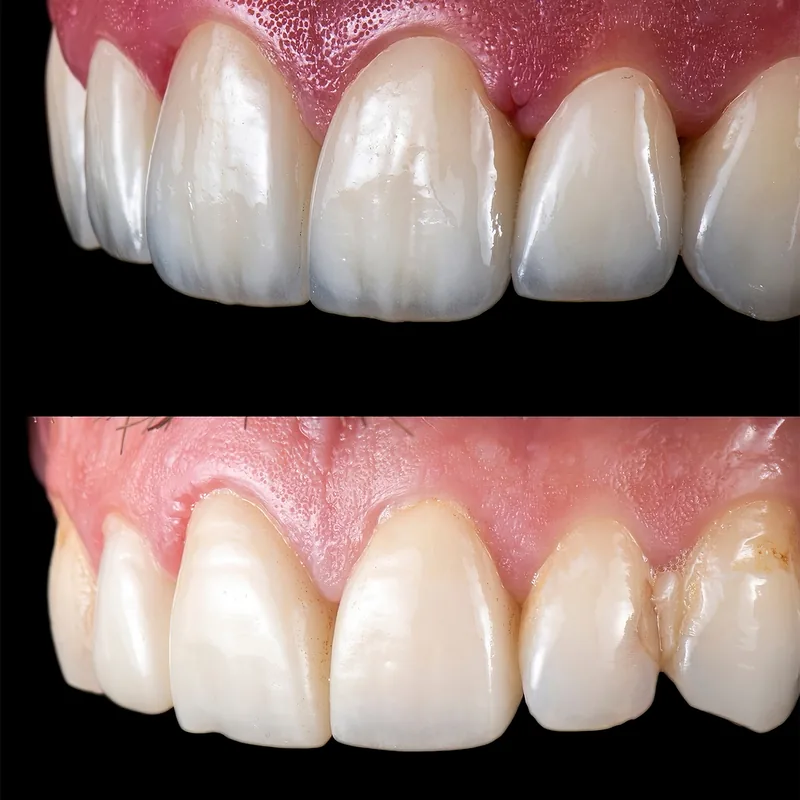
E.max’s greatest strength is its natural-tooth-like translucency — which is why it’s particularly favoured for front teeth and the smile line. With adhesive cementation, full-contour crowns as thin as 1 mm can be produced, meaning less natural tooth structure needs to be removed.
What Is Zirconia? The 3Y-TZP, 4Y-TZP and 5Y-TZP Difference
“Zirconia crown” isn’t a single material — it’s classified into three main subtypes by chemical composition, and strength and translucency trade off against each other: as one increases, the other decreases. This explains why the right zirconia choice depends entirely on which tooth it’s for.
| Zirconia type | Flexural strength | Translucency | Best suited for |
|---|---|---|---|
| 3Y-TZP (3% yttria) | >1,000 MPa (fully sintered) | Low — opaque | Back teeth, heavy bite forces, implant-supported crowns |
| 4Y-TZP (4% yttria) | Moderate | Moderate | Premolar region, a balance point |
| 5Y-TZP (5% yttria) | 600-800 MPa | High — close to natural tooth | Front region, aesthetics-first cases |
In short: for a back molar, the strongest option — 3Y-TZP — is usually preferred, while for a front tooth on the smile line, the more translucent 5Y-TZP is usually chosen, because appearance takes priority over extra strength there. Modern multilayer zirconia discs combine both properties in layers within a single restoration, aiming for both strength and a natural look at once.
Front or Back? The Logic Behind Material Selection
Which material a tooth needs depends largely on its position in the mouth and the force it bears:
Chewing force is relatively low, aesthetics take priority. E.max or 5Y-TZP zirconia are preferred here for their natural translucency.
Moderate force and moderate aesthetic demand. 4Y-TZP zirconia or reinforced e.max systems are often the balancing choice.
This region bears the highest chewing forces. 3Y-TZP zirconia is the standard choice here because of its high flexural strength.
Without a natural tooth root, force distribution differs; zirconia is generally preferred over e.max on implants for its greater opacity and strength.
Is E.max Suitable for Every Tooth? The Chewing Force Reality
No — e.max isn’t ideal for every tooth or every patient profile. E.max implant-supported crowns show roughly 85-90% survival at 10 years, while monolithic zirconia crowns reach 90-95%. In one 10-year clinical study, 100% of high-strength zirconia crowns remained functional without issue, compared with 94% of e.max crowns.
This doesn’t mean e.max is a poor material — it means correct case selection is critical. Zirconia is generally the safer choice in the following situations:
- Patients with a notable history of teeth grinding/clenching (bruxism)
- Back-of-the-mouth restorations, particularly first and second molars
- Single or multiple implant-supported restorations
- Cases where the opposing jaw has a hard restoration instead of a natural tooth
By contrast, in the front of the mouth — where aesthetics is the priority and chewing force is relatively low — e.max is often the preferred material for its natural appearance.
No-Prep Veneers: Who Are They Right For?

No-prep veneers are ultra-thin ceramic veneers bonded directly onto the tooth surface without removing any enamel. Clinical studies show that, in the right case, this approach can even outperform traditional (prepped) veneers in survival: one study reported 97% survival for no-prep veneers, and a more recent study reported 99.5% survival at 24 months.
The main advantage is that enamel stays fully intact — anaesthesia is generally unnecessary, and the risk of pulpal or structural complications is minimised. But this approach has real limits too:
Can the Same Patient Have an Implant and an E.max Crown?
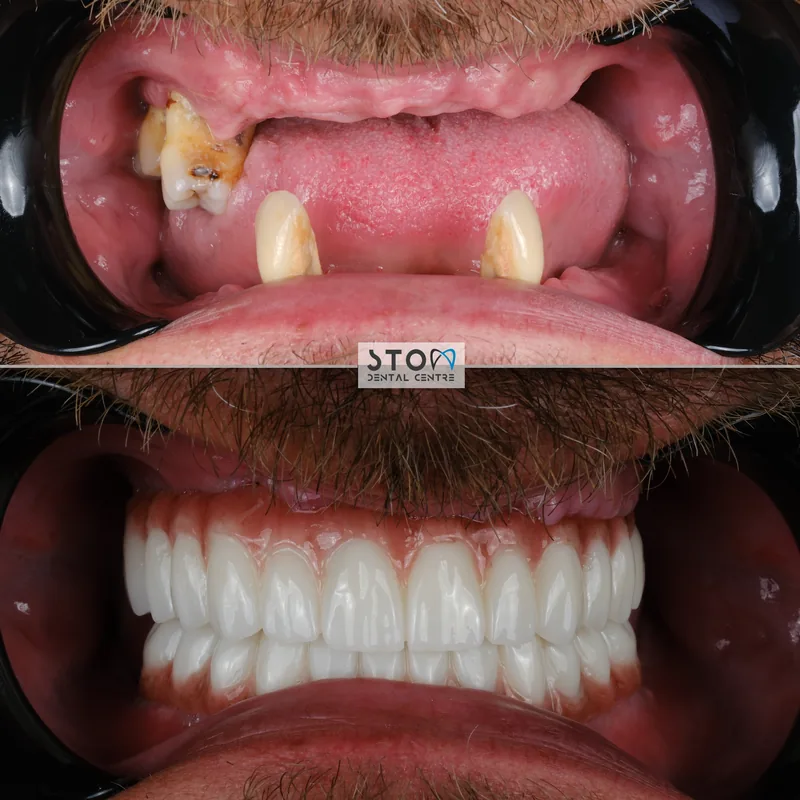
Yes — but planning is location-specific. Having both an implant and a natural-tooth e.max crown in the same patient is completely normal; what matters is using the right material in the right location for each restoration. For example, an anterior implant may be planned with an e.max-based superstructure when aesthetics is the priority, while the same patient’s posterior implant might use zirconia for its resistance to high chewing forces.
Three factors drive the decision: the implant’s location in the mouth, the condition of the opposing teeth, and whether the patient has a history of bruxism. This is why material choice deserves as much careful evaluation as the implant planning itself.

“I tell my patients this often: ‘Which one is better?’ is the wrong question. The right question is, ‘What’s better for this specific tooth, given this patient’s chewing habits and aesthetic expectations?’ E.max and zirconia aren’t competitors — they’re two tools that complement each other.”

Frequently Asked Questions
Is e.max suitable for every tooth, and does it handle chewing force well?
Planning dental treatment in Antalya?
Get a free, no-obligation assessment from our clinical team — we reply within 24 hours.
E.max’s flexural strength is around 400-500 MPa and handles everyday chewing forces well, but it’s lower than zirconia’s (600-1,200+ MPa). That’s why zirconia is generally preferred for patients with heavy bruxism and for back-of-mouth molars; e.max suits front-tooth, aesthetics-first cases better.
What Y-TZP grade is needed for a durable zirconia crown?
If durability is the priority (back teeth, implant-supported crowns, bruxism), 3Y-TZP is preferred — flexural strength can exceed 1,000 MPa. If aesthetics is the priority (front teeth), 5Y-TZP is preferred, with strength around 600-800 MPa but noticeably better translucency. 4Y-TZP sits between the two.
What are no-prep laminate veneers, and who are they suitable for?
These are ultra-thin veneers bonded directly onto the tooth without removing any enamel. They suit patients with mild discoloration, small diastemas, or minor incisal-edge defects; they aren’t suitable for significant misalignment or teeth with exposed dentin.
Does e.max or zirconia last longer?
In a 10-year clinical study, 100% of high-strength zirconia crowns remained functional versus 94% of e.max crowns. This gap is particularly meaningful in back-of-mouth and implant-supported restorations; in the front of the mouth, both materials show high survival.
Can the same patient have both an implant and an e.max crown?
Yes. Material choice is tooth-specific; using e.max at the front and zirconia at the back in the same patient is a common and correct approach. The deciding factors are the implant’s position, the opposing jaw, and bruxism history.
What’s the fundamental difference between zirconia and e.max?
Zirconia is more opaque and mechanically stronger (up to 3-4 times), while e.max offers translucency closer to natural tooth enamel. Zirconia is preferred where durability is the priority; e.max where aesthetics comes first.
Are no-prep veneers more durable than traditional veneers?
In the right case, yes — one study reported 97% survival for no-prep veneers, and a more recent one reported 99.5% at 24 months. But this high rate depends on correct case selection (mild cases, sound enamel); it isn’t suitable for every tooth.
Which material is preferred for implant-supported crowns?
Zirconia is generally the preferred material for implant-supported restorations due to its opacity and high mechanical strength; e.max shows 85-90% survival on implants at 10 years, while zirconia can reach 90-95%.
Sources
- Retrospective clinical study on the performance and aesthetic outcome of pressed lithium disilicate restorations in posterior teeth up to 8.3 years — PMC: 97.5% cumulative survival at 5.9 years, 95% at 8.3 years.
- Comparison of 16.9-year survival of pressed acid-etched e.max lithium disilicate glass-ceramic restorations in posterior teeth — Journal of Prosthetic Dentistry.
- Lithium disilicate flexural strength range of 400-500 MPa — various materials-science studies (Dove Medical Press, ScienceDirect).
- Evaluation of translucency, biaxial flexural strength and fracture toughness of 3Y-TZP, 4Y-TZP and 5Y-TZP materials — Dental Materials / ScienceDirect: strength-translucency trade-off.
- Comparison of Testing Designs for Flexural Strength of 3Y-TZP and 5Y-PSZ — PMC: 3Y-TZP fully sintered exceeding 1,100 MPa.
- How to Choose Between Zirconia Crowns and IPS e.max Crowns — Glidewell Dental clinical guidance: implant zirconia preference, material properties.
- 10-year clinical study: 100% survival for high-strength zirconia crowns, 94% for e.max crowns, functioning without issue.
- Clinical Outcomes of No-prep Veneers and Conventional Veneers — systematic review: 97% survival for no-prep veneers, fewer complications than conventional veneers.
- Retrospective clinical evaluation of a no-prep porcelain veneer protocol — Journal of Prosthetic Dentistry: 99.5% survival at 24 months.
This article is for informational purposes only and does not replace a dental examination. Material choice should be personalised by your dentist based on the tooth’s clinical condition, chewing forces, and aesthetic goals. Figures are drawn from independent scientific publications and are not a guarantee of outcome at any specific clinic.