Dental Implant Age Limit: Is There a Minimum or Maximum? A 2026 Guide
Author / Clinical lead: Dr. Telman İskender, Prosthodontist, Stom Dental Centre Antalya
“Am I too young, or too old, for dental implants?” is one of the most common questions patients ask — and the answer is often different from what people assume. The minimum age depends not on your birth date but on whether your jaw has finished growing, while there’s practically no maximum age at all — what matters isn’t your age on paper, but your overall health. This guide explains the real age criteria for dental implants, what long-term studies show about outcomes in older patients, and how smile design is planned differently across age groups, based on published clinical evidence.

- Minimum age is determined by skeletal maturity, not birth date — generally around 18, though it can extend into the mid-20s for some patients.
- In patients over 65, 1-3-5-10-year survival rates are 97.7% / 96.3% / 96.2% / 91.2% respectively.
- In patients over 75, 5-year survival is 96.8% — no meaningful drop compared with the 65-75 age group (92.1%).
- Osteoporosis alone has not been shown to be a significant risk factor for implant failure.
- Smile design suits every age — but the plan differs: proportion and symmetry for younger patients, compensating for wear and gum recession for older patients.
What’s the Minimum Age for Dental Implants?
The answer to “how early can implants be placed” isn’t a birth date — it’s skeletal maturity. The jaw bone continues growing through adolescence; if an implant is placed before that growth finishes, the implant’s position can shift relative to the surrounding bone as the jaw continues to develop — because, unlike a natural tooth, an implant doesn’t move together with the growing bone, it stays fixed.
Most clinical guidelines use age 18 as the minimum, since jaw growth is generally complete by then.
Due to individual variation, some patients don’t reach full skeletal maturity until their mid-20s — in these cases, implant placement is postponed accordingly.
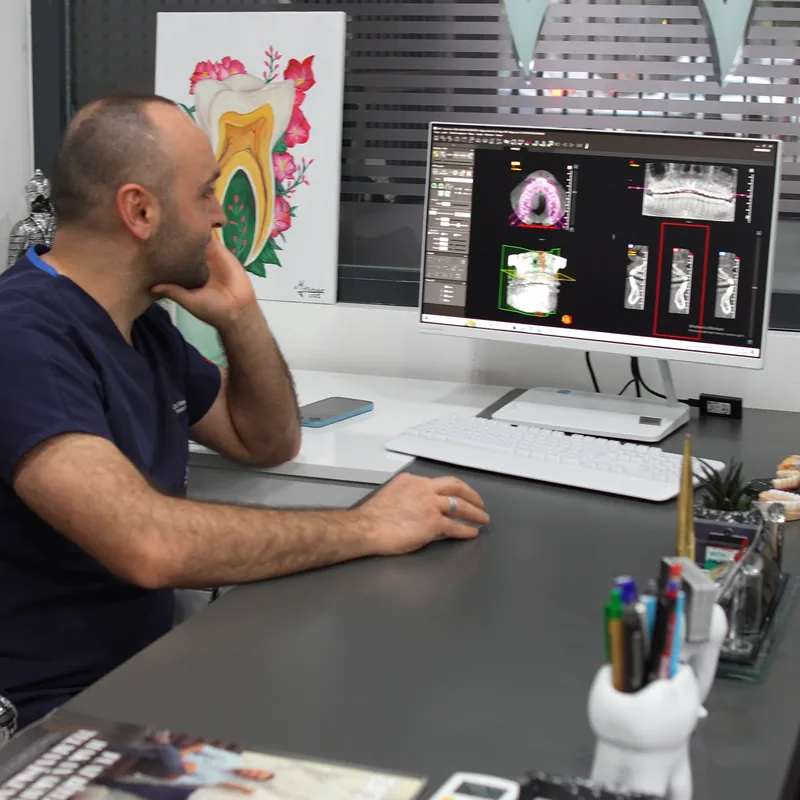
X-rays and growth assessments objectively confirm whether bone development is complete — this isn’t guesswork.
An implant placed before growth is complete can appear relatively “sunken” as the surrounding bone continues to develop, and can create misalignment with neighbouring teeth.
“I’m Too Old” — Not What the Evidence Says
On the upper age limit, the literature is quite clear: age alone doesn’t meaningfully affect implant survival. In fact, some studies report striking results in older age groups:
| Patient group | Survival rate | Follow-up |
|---|---|---|
| 65+ — general | 97.7% (1 year) / 96.2% (5 years) / 91.2% (10 years) | Meta-analysis data |
| 65-75 age group | 92.1% | 5 years |
| 75+ | 96.8% | 5 years |
| 65+, full-denture wearers, splinted implants | 5.6× higher survival | Compared with non-splinted implants |
The notable finding: the 75+ group showed survival equal to or even higher than the 65-75 group — partly a reflection of careful patient selection, but the takeaway is clear: implants have been placed successfully in patients in their 80s, with strong long-term outcomes. Even though older patients tend to show more plaque and bleeding on probing, the bone structure around the implant generally remains stable.
Risk Factors That Matter More Than Age
Research shows the real driver of implant success isn’t the number on your birth certificate — it’s your overall health:
- Osteoporosis: the literature shows patients with osteoporosis are not at significant risk of implant failure — even with reduced bone density, osseointegration proceeds normally in most cases.
- Oral bisphosphonate therapy: in a review of 468 implants placed in patients on oral bisphosphonate therapy, only 2 failed — results comparable to patients not on the medication.
- Intravenous (IV) bisphosphonate therapy: this group needs more careful evaluation — although the risk of medication-related osteonecrosis of the jaw (MRONJ) is low in patients on antiresorptive therapy (roughly 3-5 per 1,000), it exists, and implant planning should be coordinated between your dentist and the specialist managing that medication.
- General age-related frailty: some analyses report a 12-15% increase in implant failure odds per 5-year age increase, but this reflects a small change in absolute risk, and doesn’t rule out implant treatment on its own.
The practical takeaway: advanced age alone is not a reason to say no to implant treatment. What genuinely needs evaluating is your overall health, current medications, and the state of your jaw bone.
Does Smile Design Suit Every Age?

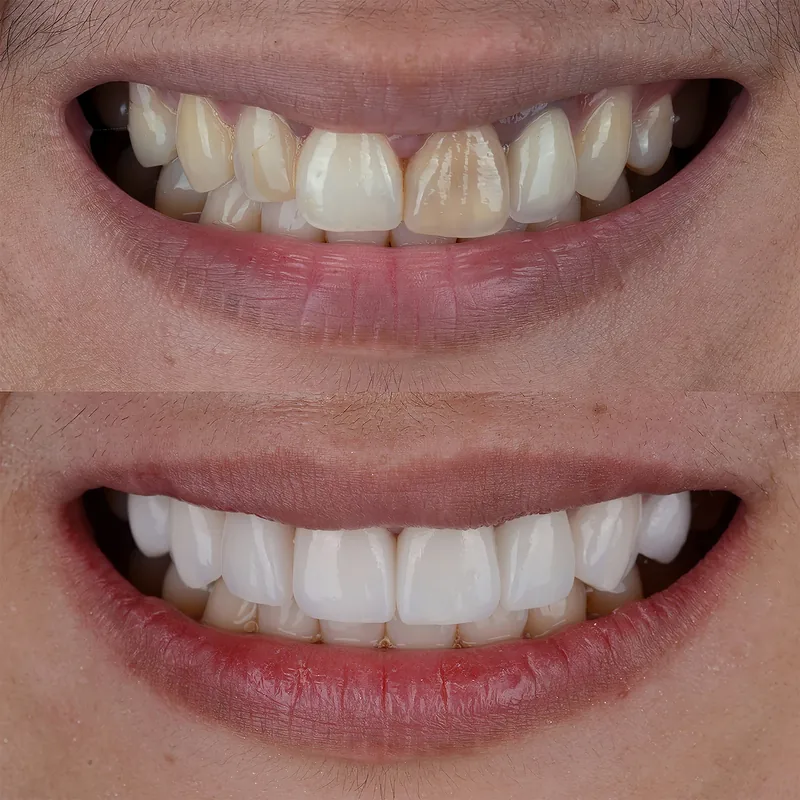
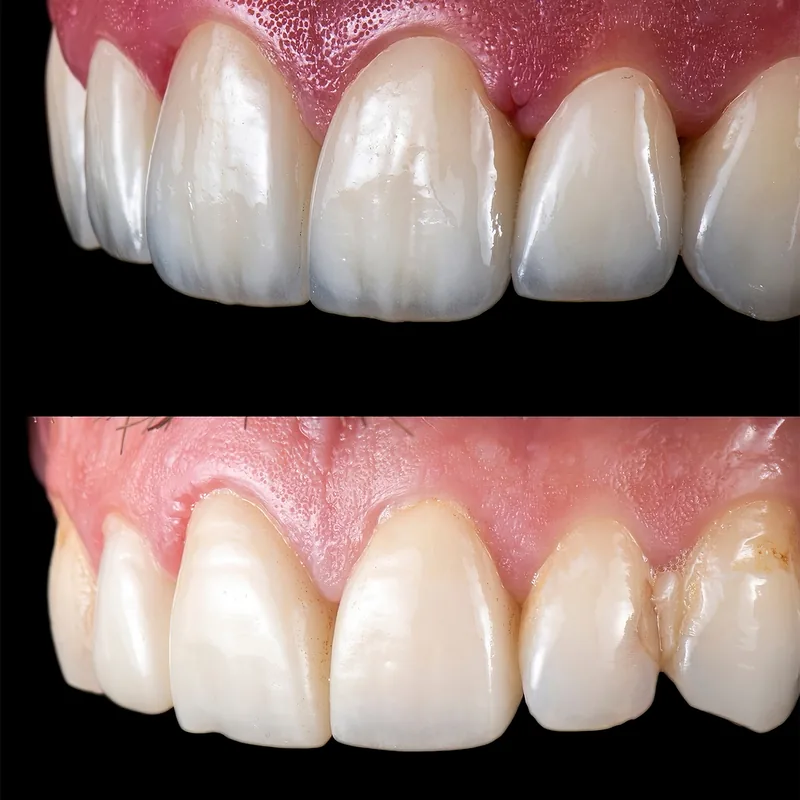
Yes, smile design suits every age — but not in the same way. Aging changes the appearance of teeth in specific, predictable ways: over the years, enamel wears down and teeth shorten, gums recede exposing more root surface, lip tissue thins, and less tooth shows at rest. Longer teeth read as youthful, while shorter, worn teeth contribute to an aged appearance.
This is why middle-aged and older patients tend to have different smile design priorities than younger patients:
Worn front incisors are restored to both natural length and appearance using composite bonding or porcelain veneers.
Receded or uneven gum lines can be reshaped to restore proportion and a more youthful appearance to the smile.
Research shows middle-aged and older patients tend to prefer roughly 3-4 mm of incisor showing with the lips relaxed — a concrete, measurable target for smile design.
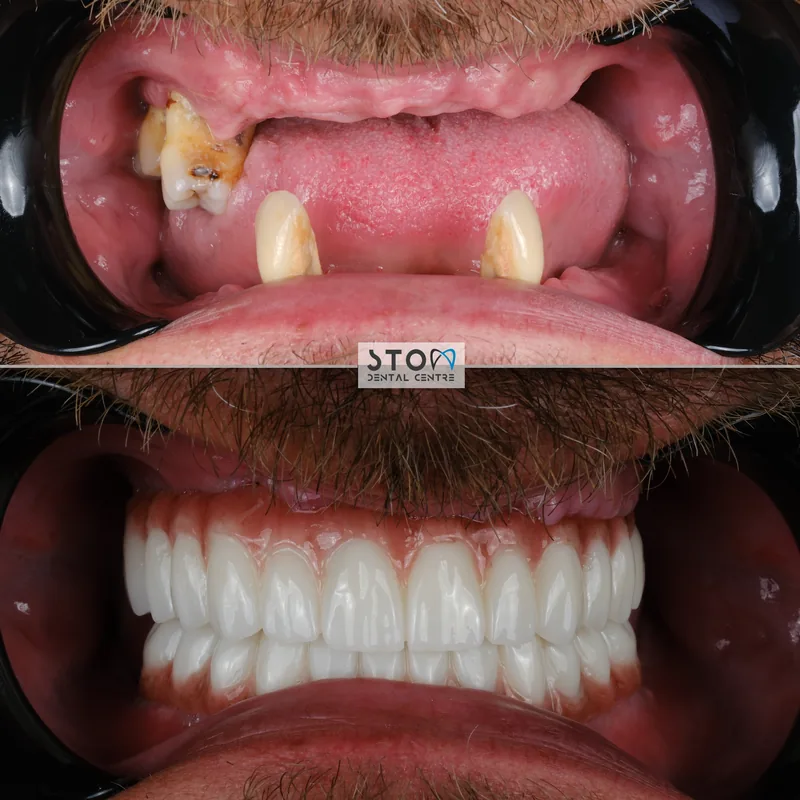
In cases with significant wear and functional loss, a combination of crowns, bridges, and fillings can restore both aesthetics and chewing function together.
In short: in a younger patient, smile design usually centres on symmetry and proportion; in an older patient, the process focuses on balanced correction of the visible signs of time — the goal isn’t an artificial look, but a natural, age-appropriate result.
Planning dental treatment in Antalya?
Get a free, no-obligation assessment from our clinical team — we reply within 24 hours.

“We have patients in their 80s in our clinic, and patients who are 18 or 19. In both cases we ask the same question: is their bone and general health suitable for treatment? The honest answer is almost never simply ‘what’s their age’.”

Frequently Asked Questions
What is the age limit for dental implants?
The minimum age depends on skeletal/jaw growth completion rather than birth date — typically around 18, sometimes extending into the mid-20s. There’s practically no upper age limit; implants have been placed successfully in patients in their 80s.
Is there such a thing as being too old for dental implants?
No. 5-year implant survival in patients over 75 has been reported at 96.8% — not lower than the 65-75 age group (92.1%). What matters isn’t age, but overall health and bone structure.
Why is the minimum implant age around 18?
Because the jaw bone continues growing through adolescence. An implant placed before growth is complete doesn’t move with the surrounding bone as it develops further, which can lead to positional problems over time.
Does osteoporosis affect implant success?
According to the literature, patients with osteoporosis are not at significant risk of implant failure. Oral bisphosphonate therapy also doesn’t meaningfully affect implant success; patients on IV bisphosphonate therapy require more careful evaluation.
Does smile design suit every age?
Yes, but planning differs by age. Younger patients typically prioritise symmetry and proportion, while older patients typically prioritise correcting worn tooth length and gum contouring.
What should be considered for implant treatment in older patients?
Overall health (diabetes control, current medications), jaw bone density, and any history of antiresorptive (bisphosphonate) therapy are evaluated. Unstable chronic conditions should be brought under control first.
At what age do dental implants stop being an option?
There’s no fixed upper age limit. The decision is based on overall health, bone structure, and healing capacity rather than age on its own; suitable patients can achieve successful outcomes even at advanced ages.
What’s the difference in smile design between younger and older patients?
In younger patients, the focus is on symmetry and proportion; in older patients, the focus is on balanced correction of age-related changes like wear and gum recession — aiming for a natural, age-appropriate result.
Sources
- Implant Survival in Patient Populations With a Mean Age of 65-75 Years Compared to Older Cohorts: A Systematic Review and Meta-Analysis — Clinical Oral Implants Research / PMC: 27 studies, 3,892 implants; 96.8% in patients 75+, 92.1% in the 65-75 group (5 years).
- Meta-analysis of implant survival in patients over 65: 1/3/5/10-year rates of 97.7%/96.3%/96.2%/91.2% respectively.
- 5.6× higher survival for splinted implants in full-denture wearers over 65 — clinical cohort data.
- Minimum implant age and skeletal maturity criteria — oral surgery clinical guidelines (general threshold of 18-21, individualised assessment with X-ray confirmation).
- Effect of Bisphosphonate and Age on Implant Failure as Determined by Patient-Reported Outcomes — PubMed: 12-15% increase in implant failure odds per 5-year age increase.
- Outcomes of placing dental implants in patients taking oral bisphosphonates: a review of 115 cases — PubMed: 466 of 468 implants successfully integrated.
- Dental Implant Failure and Medication-Related Osteonecrosis of the Jaw Related to Dental Implants in Patients Taking Antiresorptive Therapy: A Systematic Review and Meta-Analysis — ScienceDirect (2025): pooled MRONJ rate of 0.5%.
- Dental Implants in Patients With Osteoporosis — A Review: finding that osteoporosis alone is not a significant risk factor.
- Tooth shortening, gum recession, and a preference for 3-4 mm of incisor show at rest in aging smiles — aesthetic dentistry literature review.
This article is for informational purposes only and does not replace a dental examination. Implant and smile-design suitability should be personalised by your dentist based on clinical examination, X-ray findings, and general health history. Figures are drawn from independent scientific publications and are not a guarantee of outcome at any specific clinic.