
Gingivitis vs. Periodontitis: What’s the Real Difference?
Medically reviewed by Dr. Fuat Biter, Stom Dental Centre Antalya
Meet our team and patient coordinators — verified names and WhatsApp numbers, so you always know who you are talking to.
Bleeding gums when you brush are easy to dismiss — yet they are usually the first visible sign that inflammation has started. At its earliest stage (gingivitis), this inflammation is completely reversible. Left untreated, it can progress into periodontitis, a condition that permanently damages the bone and connective tissue holding your teeth in place. This guide explains, with reference to published research, exactly what separates gingivitis from periodontitis, how to recognise each, the risk factors involved, and what the evidence actually says about the link to overall health.

- Gingivitis is inflammation confined to the gum tissue that resolves completely once plaque is removed.
- Periodontitis causes permanent loss of the connective tissue and bone supporting the tooth (clinical attachment loss) — this loss does not regenerate on its own.
- Very common worldwide: severe periodontitis affects 11.2% of the world’s population (the 6th most prevalent health condition globally); GBD 2021 data estimates roughly 1.07 billion people worldwide affected by periodontal disease.
- Smoking increases the risk of periodontitis by roughly 85%; around 50% of the risk variation is attributable to genetic factors.
- Seeking care at the gingivitis stage gives you the best chance of reversing the problem completely.
What Is the Difference Between Gingivitis and Periodontitis?
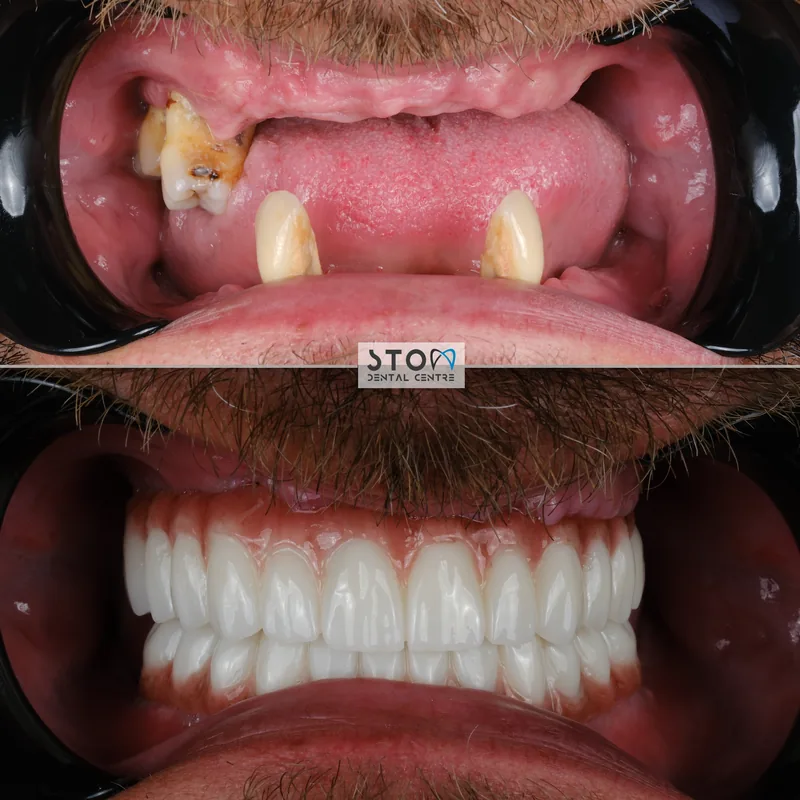
Gingivitis is inflammation confined to the gum tissue itself, with no loss of the connective tissue or bone that anchors a tooth in the jaw. Under the current European Federation of Periodontology (EFP) classification, a site is diagnosed with gingivitis when bleeding on probing (BOP) is present in at least 10% of sites — and critically, gingivitis resolves completely once the bacterial plaque causing it is removed. Periodontitis develops when gingivitis is left untreated and progresses further: it now involves loss of the connective tissue and bone supporting the tooth — a process called clinical attachment loss. This loss is irreversible; treatment can stop it from progressing further, but the lost bone does not regenerate on its own. In short: gingivitis is a warning sign, periodontitis is a disease that leaves lasting damage.
How Common Is Gum Disease Worldwide?
Gum disease is far more common than most people assume. A large systematic review of global 2010 data found that severe periodontitis affects 11.2% of the world’s population, making it the 6th most prevalent health condition globally. A more recent Global Burden of Disease (GBD) 2021 analysis estimates approximately 1.07 billion people worldwide are affected by periodontal disease, with an age-standardised prevalence rate of roughly 12.5% (12,498 per 100,000 population). Gingivitis itself is dramatically more common still — most adults experience at least mild gingival inflammation at some point — though it is generally tracked as the precursor stage rather than as a separate global statistic.
Recognising the Symptoms
Symptoms of both conditions progress gradually and are frequently painless in the early stages — which is exactly why so many people live with the disease for years without noticing.
Signs of gingivitis:
- Bleeding when brushing or flossing
- Red, swollen gums
- Tenderness to touch
- Mildly increased bad breath
Signs of periodontitis (in addition):
- Gum recession, teeth appearing “longer”
- Deepening pockets between gum and tooth
- Loose teeth or new gaps appearing between teeth
- A change in how the teeth bite together
- Pus visible when the gum is pressed
- Persistent bad breath that brushing doesn’t resolve (halitosis here is a symptom of the underlying inflammation, not a separate condition)
- Tooth loss in advanced stages
Causes and Risk Factors
The root cause of gum disease is bacterial plaque (biofilm) that builds up on the tooth surface. When it isn’t removed by regular brushing and flossing, it hardens into calculus (tartar), which can only be removed professionally — and from that point the inflammation no longer resolves on its own. Beyond plaque, several factors significantly influence how the disease develops:
A meta-analysis pooling 14 prospective studies found that smoking increases the risk of periodontitis by approximately 85% (relative risk 1.85; 95% CI 1.5-2.2).
People with diabetes have roughly three times the risk of periodontitis compared with non-diabetics; the relationship is bidirectional — periodontitis can also make blood sugar control more difficult.
Twin studies suggest that roughly 50% of the variation in risk for adult periodontitis can be attributed to genetic factors — a figure that holds even after adjusting for behavioural factors like smoking.
Inadequate oral hygiene, certain medications, hormonal changes (pregnancy, puberty), stress, and conditions affecting immune function.
The Stages of Periodontitis (2017 Classification)
The classification adopted jointly by the American Academy of Periodontology (AAP) and the European Federation of Periodontology (EFP) in 2017 — still the current standard — describes periodontitis along two dimensions: stage (I-IV), reflecting the severity of damage already done and the complexity of treatment, and grade (A-C), reflecting how fast the disease is likely to progress.
| Stage | Severity | Key feature |
|---|---|---|
| Stage I | Early | Mild bone loss (less than 15%, within the coronal third of the root), no tooth loss due to periodontitis |
| Stage II | Moderate | Bone loss of 15–33%, still within the coronal third of the root but more pronounced than in Stage I; probing depth up to 5 mm; no tooth loss due to periodontitis |
| Stage III | Severe | Bone loss extends to the mid-third of the root or beyond, up to 4 teeth may be lost to periodontitis, added complexity (e.g. furcation involvement) |
| Stage IV | Very severe | Extensive damage, 5 or more teeth lost to periodontitis, risk of loss of masticatory function, complex rehabilitation may be needed |
Grade A (slow progression, no risk factors), Grade B (moderate rate) and Grade C (rapid progression, typically with risk factors present such as heavy smoking or poorly controlled diabetes) let a clinician plan treatment based not just on the damage already present, but on how quickly the disease is likely to advance.
The Link to Overall Health
Periodontitis is not confined to the mouth. A joint consensus report by the European Federation of Periodontology and the International Diabetes Federation (IDF) describes a bidirectional relationship between periodontitis and diabetes, and reports that periodontal therapy is associated with an average HbA1c (long-term blood sugar marker) reduction of 0.27-0.48% at three months in people with diabetes. A separate consensus report from the European Federation of Periodontology and the World Heart Federation concludes that severe periodontitis is independently associated with cardiovascular disease — this is not the same as saying periodontitis directly causes heart disease; shared inflammatory pathways and risk factors are the proposed mechanism, and the relationship remains an active area of research. The practical takeaway: patients with periodontitis are encouraged to be aware of their broader health risk — particularly around diabetes and cardiovascular health — and to keep their physician informed.

When Should You See a Dentist?
You should see a dentist or a periodontal specialist if you notice any of the following:
- Gum bleeding that persists for more than 1-2 weeks, or continues despite unchanged brushing habits
- Persistent redness, swelling or tenderness of the gums
- Visible gum recession
- Loose teeth or teeth shifting position
- Bad breath that doesn’t resolve with brushing
- Pus around the gumline
Seeking care at the gingivitis stage gives you the best chance of reversing the problem completely. Once periodontitis has set in, the goal shifts from “curing” to stopping further progression and protecting the teeth you still have — which is exactly why early diagnosis makes such a difference.
Treatment Approaches — An Overview
The EFP’s evidence-based clinical practice guideline for stage I-III periodontitis describes treatment as a stepwise process:
- Step 1: Patient education, correcting oral hygiene habits, addressing risk factors such as smoking, and professional removal of plaque and calculus from the tooth surface. (This is covered in detail on our dedicated dental calculus cleaning page.)
- Step 2: Removal of plaque and calculus below the gumline (subgingival instrumentation) using specialised instruments.
- Step 3: If deep pockets don’t respond adequately, repeated instrumentation, adjunctive treatments, and in selected cases surgical approaches such as curettage or flap surgery are considered. (Our curettage page covers this procedure in full detail.)
- Step 4: Ongoing supportive periodontal care and recall visits — maintained long-term to prevent the disease from returning.
The purpose of this guide is to help you understand where you stand; for details on the specific procedures involved, see our dental calculus cleaning and curettage pages.

Everyday Prevention
- Brush at least twice daily with fluoride toothpaste
- Clean between teeth daily with floss or interdental brushes (plaque hides where a brush can’t reach)
- Attend regular professional cleanings and check-ups
- Stop smoking
- If you have diabetes, keep blood sugar well controlled
- Replace your toothbrush every three months
- Use an antiseptic mouth rinse if your dentist recommends one
Frequently Asked Questions
What is the difference between gingivitis and periodontitis?
Planning dental treatment in Antalya?
Get a free, no-obligation assessment from our clinical team — we reply within 24 hours.
Gingivitis is inflammation limited to the gum tissue that fully resolves once plaque is removed. Periodontitis is a more advanced disease that causes permanent loss of the bone and connective tissue supporting the teeth, and can progress to tooth loss if untreated.
Is bleeding gums always a sign of disease?
Recurring bleeding, or bleeding that continues despite normal brushing habits, is a sign of gum inflammation (gingivitis) and shouldn’t be ignored. A single, isolated bleeding episode tied to overly hard brushing may be different — if in doubt, it’s safest to have a dentist check.
Can periodontitis be reversed?
The bone and connective tissue lost to periodontitis does not regenerate on its own. However, with appropriate treatment the inflammation can be brought under control, further progression halted, and remaining teeth preserved for many years.
How common is gum disease worldwide?
Severe periodontitis affects an estimated 11.2% of the world’s population based on 2010 data, ranking it the 6th most prevalent health condition globally. More recent estimates put the number of people affected by periodontal disease worldwide at roughly 1.07 billion.
What effect does smoking have on periodontitis?
Smoking increases the risk of periodontitis by roughly 85%. Quitting smoking is one of the single most effective steps for improving how well the gums respond to treatment.
Is periodontitis hereditary?
Twin studies suggest that around half of the variation in risk for adult periodontitis may be attributable to genetic factors. That said, a genetic predisposition doesn’t make the disease inevitable — consistent care can substantially reduce the risk.
What does periodontitis have to do with diabetes or heart health?
Periodontitis and diabetes have a bidirectional relationship, and periodontal treatment can support better blood sugar control. Severe periodontitis has also been independently associated with cardiovascular disease, though this does not mean one directly causes the other.
How is periodontitis treated?
Treatment starts with professional removal of plaque and calculus, continues with cleaning below the gumline, and — if needed — is supported by additional procedures such as curettage or surgical approaches. Regular follow-up visits afterward are essential to prevent the disease from returning.

Sources
- Kassebaum NJ, Bernabé E, Dahiya M, Bhandari B, Murray CJL, Marcenes W. “Global burden of severe periodontitis in 1990-2010: a systematic review and meta-regression.” Journal of Dental Research. 2014;93(11):1045-1053. PMID 25261053.
- Hu M, Zhang R, Wang R, Wang Y, Guo J. “Global, regional, and national burden of periodontal diseases from 1990 to 2021 and predictions to 2040: an analysis of the global burden of disease study 2021.” Frontiers in Oral Health. 2025;6:1627746.
- Trombelli L, Farina R, Silva CO, Tatakis DN. “Plaque-induced gingivitis: Case definition and diagnostic considerations.” Journal of Clinical Periodontology. 2018;45(Suppl 20):S44-S67. PMID 29926492.
- Papapanou PN, Sanz M, Buduneli N, et al. “Periodontitis: Consensus report of workgroup 2 of the 2017 World Workshop on the Classification of Periodontal and Peri-Implant Diseases and Conditions.” Journal of Clinical Periodontology. 2018;45(Suppl 20):S162-S170. PMID 29926490.
- Tonetti MS, Greenwell H, Kornman KS. “Staging and grading of periodontitis: Framework and proposal of a new classification and case definition.” Journal of Periodontology. 2018;89(Suppl 1):S159-S172. PMID 29926952.
- Leite FRM, Nascimento GG, Scheutz F, López R. “Effect of Smoking on Periodontitis: A Systematic Review and Meta-regression.” American Journal of Preventive Medicine. 2018;54(6):831-841. PMID 29656920.
- Michalowicz BS, Diehl SR, Gunsolley JC, et al. “Evidence of a substantial genetic basis for risk of adult periodontitis.” Journal of Periodontology. 2000;71(11):1699-1707. PMID 11128917.
- Preshaw PM, Alba AL, Herrera D, et al. “Periodontitis and diabetes: a two-way relationship.” Diabetologia. 2012;55(1):21-31. PMID 22057194.
- Sanz M, Ceriello A, Buysschaert M, et al. “Scientific evidence on the links between periodontal diseases and diabetes: Consensus report and guidelines of the joint workshop on periodontal diseases and diabetes by the International Diabetes Federation and the European Federation of Periodontology.” Journal of Clinical Periodontology. 2018;45(2):138-149. PMID 29280174.
- Sanz M, Marco del Castillo A, Jepsen S, et al. “Periodontitis and cardiovascular diseases: Consensus report.” Journal of Clinical Periodontology. 2020;47(3):268-288. PMID 32011025.
- Sanz M, Herrera D, Kebschull M, et al. “Treatment of stage I-III periodontitis — The EFP S3 level clinical practice guideline.” Journal of Clinical Periodontology. 2020;47(Suppl 22):4-60. PMID 32383274.
This article is for informational purposes only and does not replace a dental examination. Treatment decisions for gum disease should be made individually with your dentist, based on the stage and cause of the condition. Figures are drawn from independent scientific publications and are not a guarantee of outcome at any specific clinic.