Dental Implant Healing Stages: What to Expect Week by Week
Meet the Stom Dental Centre team
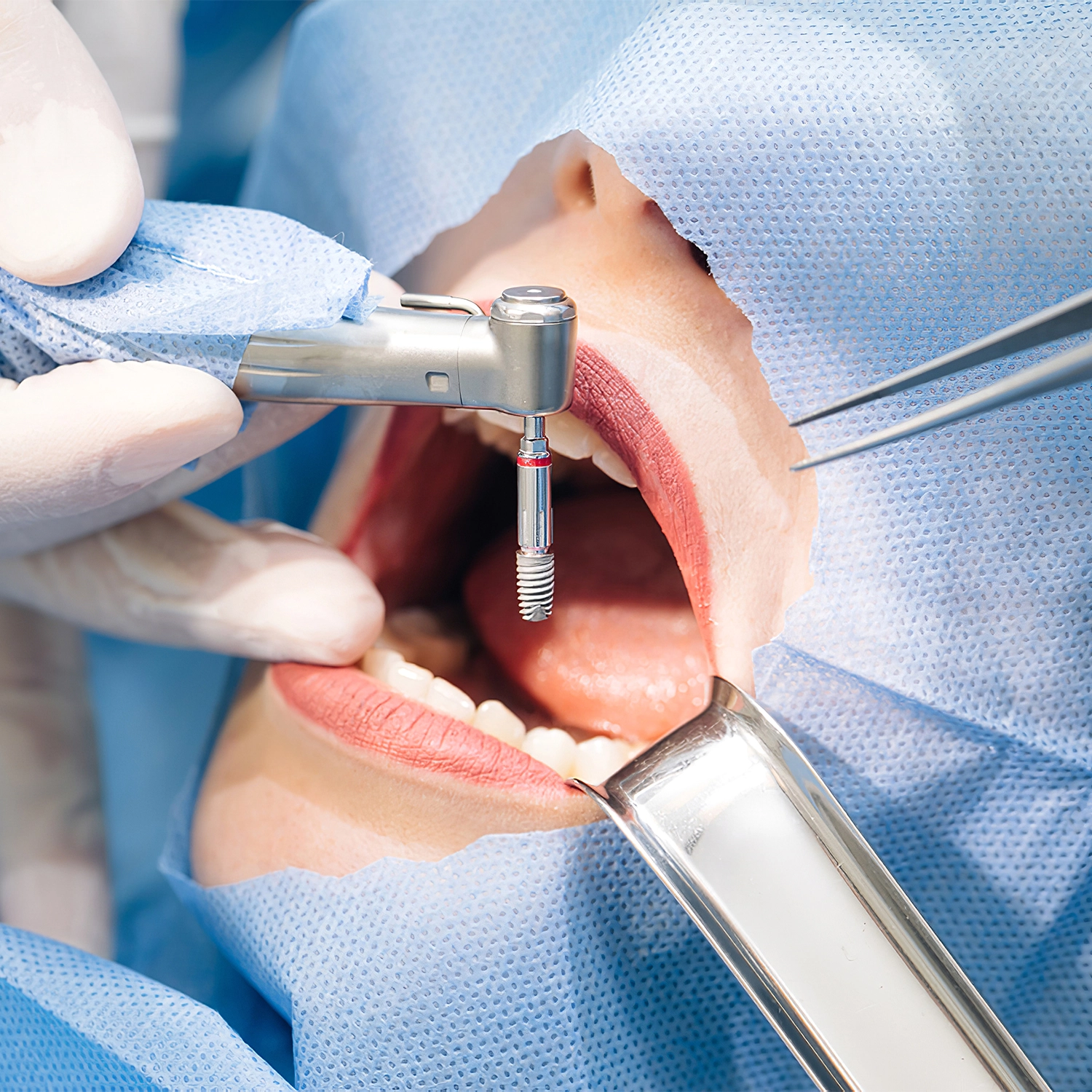
Most of what people worry about after implant surgery happens in the first three days. The slower biology that lets the implant fuse with the bone happens in the weeks and months after, when you have stopped thinking about it.
Healing runs on three clocks at once. The wound and the gum settle within one to two weeks. The seal of soft tissue around the implant needs six to eight weeks to mature. The bone keeps remodelling for months, and in a quieter way for life. Pain and swelling belong to the first clock, and in the studies they turn out mild for most patients and short. The crown belongs to the third. What follows draws on clinical studies, systematic reviews and NHS hospital leaflets. It describes groups of patients, not you, and your own dentist’s written instructions come first.
- Pain and swelling peak in the first one to three days. Pain was highest at 24 hours in a study of 234 patients; in a separate study of 26 single implants, pain and swelling peaked on day 2 and were back to pre-operative levels by day 14.
- Three clocks. The gum surface heals in 7–14 days, the soft-tissue seal in 6–8 weeks, and bone remodelling starts at 6–12 weeks and never fully stops.
- The crown date is a range. 2–6 months of healing is what the European Federation of Periodontology and a Dundee Dental Hospital (NHS) leaflet quote; loading after 2 months counts as “conventional”.
- Extractions, grafts and sinus lifts add months, not days.
- Smoking is the best-documented risk factor. Pooled studies put the risk of implant failure in smokers at roughly double.
The Timeline at a Glance
Each row comes from a different group of patients and a different scale. Read it as what was reported in that study, not as a promise.
| Time after surgery | What you may notice | What the studies and leaflets report |
|---|---|---|
| Day 0 | Numbness wears off. A single implant usually takes about half an hour. | Leaflets: painkillers before the anaesthetic wears off; no strenuous activity for the rest of the day. |
| Day 1 | Pain is at or near its highest. | Mean 2.01 out of 10 in 234 patients (Al-Khabbaz 2007). |
| Day 2 | Swelling usually peaks. | Ridge about 1.9 mm wider than right after surgery; pain and swelling about 1.7 out of 10 (Kofina 2025). |
| Day 7 | Little or nothing for most people. | Median pain, swelling and bruising scores near zero in 468 patients having implant, crown-lengthening or flap surgery (Tan 2014). |
| Days 7–14 | Stitches come out or dissolve. | Removal after 7–14 days in NHS leaflets; surface healing complete (Sculean 2014); symptoms back to pre-operative level by day 14 (Kofina 2025). |
| Weeks 2–6 | Nothing you can see or feel. | Measured stability dipped in two small studies (Barewal 2003; Oates 2009); new bone touches 12–15% of a test surface at 2 weeks and about 61% at 6 weeks (Lang 2011). |
| Weeks 6–8 | The gum seal matures. | 6–8 weeks (Sculean 2014). |
| After 2 months | “Conventional” loading begins. | Immediate loading: within 1 week. Early: up to 2 months. Conventional: after 2 months (Esposito 2013). |
| Months 2–6 | The typical window before the crown. | 2–6 months of healing (European Federation of Periodontology; Dundee Dental Hospital), then about 2–3 months for the restoration (Dundee). |

The First Three Days: Sore, Puffy, Mostly Manageable
Ask what implant surgery feels like afterwards and the studies give a consistent answer: mild to moderate soreness, worst in the first one to three days. In a two-centre study of 234 patients with 510 implants, mean pain on a 0–10 scale was highest at 24 hours (2.01) and declined steadily from there; for most patients it was mild at every time-point. Women reported more pain (Al-Khabbaz 2007), and operations longer than an hour went with higher pain, swelling and bruising scores (Tan 2014).
Swelling keeps its own schedule, and one team measured it directly. At a US university periodontics clinic, researchers scanned the gum over 26 single implants in three dimensions. The tissue was thickest on day 2, about 1.9 mm wider and 37.8% bigger in volume than right after surgery. The width was back to the post-operative value by day 7; height and volume took anywhere from two weeks to two months. What patients reported matched the scans: pain and swelling peaked on day 2 at around 1.7 out of 10 and were back to pre-operative levels by day 14. On that second day 3 of the 26 called their pain moderate or severe, and 5 their swelling. Two details put these numbers in context: the operations were long (about 109 minutes on average), and 22 of the 26 sites had had ridge preservation, bone regeneration or a sinus lift earlier (Kofina 2025). Our inference, not the authors’: a routine, shorter single implant may feel milder, because operations over an hour went with higher scores in the Singapore cohort (Tan 2014).
Anti-inflammatory painkillers (NSAIDs) reduced pain after implant surgery in a review of nine randomised trials, and the first 72 hours may be when that matters most; the review could not name one best regimen (Khouly 2021). The Guy’s and St Thomas’ leaflet advises regular paracetamol or ibuprofen for the first 48 hours, started before the anaesthetic wears off. There is a wrinkle with ibuprofen, in the last section.
Pressure on a bleeding wound is advised for at least 30 minutes in the Guy’s and St Thomas’ implant leaflet and at least 10 minutes in the Cambridge one. One leaflet has you rinse with chlorhexidine twice a day, another four times a day until the review. One says no alcohol for 24 hours, another no smoking or alcohol for 3 days. Follow your own dentist’s instructions. If bleeding does not stop after firm pressure, the Guy’s and St Thomas’ leaflet says to go to the nearest emergency department.
Week One and Two: The Stitches, and Then You Forget About It
By day 7 the median pain, swelling and bruising scores in a Singapore cohort of 468 patients having implant, crown-lengthening or flap surgery were close to zero, although 11.6% of the implant patients still found the site tender when pressed (Tan 2014). Epithelial healing after surgical periodontal therapy appears complete after 7–14 days, and oral wounds follow a similar pattern (Sculean 2014). Stitches come out after 7–14 days at Guy’s and St Thomas’ and after one to two weeks at Dundee; in the Cambridge leaflet they dissolve over several weeks. Daily life can resume quickly: Guy’s and St Thomas’ says patients can usually go back to work the day after treatment under local anaesthetic, while Cambridge suggests the rest of the day off and perhaps a day or so at home. A denture over the site may be unusable for one to two weeks.
A lateral sinus lift is a bigger operation, and the one trial cited here reported higher scores than the single-implant studies (different patients and protocols, so not a direct comparison). In a randomised trial of 40 patients, swelling in the freehand group averaged 4.95 out of 10 on day 2 and 0.79 on day 7, and 87.5% of all patients used painkillers on day 1, 7.5% on day 7 and nobody on day 14. The gum flap was completely closed in 80% at two weeks, and the thin membrane lining the sinus was perforated during surgery in 6 of the 40 (Narongchai 2025).
Weeks Two to Eight: The Quiet Phase
From the outside nothing seems to happen. Under the gum, a great deal does. Bone around an implant forms first as woven bone and later as the organised lamellar bone of the rest of the jaw; the first new bone shows up on the implant surface after about a week, and remodelling begins between weeks 6 and 12 (Bosshardt 2017). A human experiment shows the pace. Forty-nine volunteers received tiny test devices, 4 mm long, taken out again after 7, 14, 28 or 42 days: new bone touched 12–15% of the surface at day 14, 32–48% at day 28 and about 61% at day 42, depending on the surface type (Lang 2011). Experimental mini-devices, not everyday implants, but they show how gradual it is.
Researchers who tracked implant stability with resonance frequency analysis found the lowest point at three weeks in 20 patients with 27 implants (Barewal 2003), and at two to six weeks in 42 implants, where patients with an HbA1c of 8.1% or higher dropped further and needed longer to recover (Oates 2009). A measurement taken with an instrument in research settings, not a symptom reported by patients. The gum runs on its own schedule: the soft-tissue barrier around an implant needs 6–8 weeks to mature and ends up resembling scar tissue (Sculean 2014).
Months Two to Six: When the Crown Comes
Loading protocols have standard definitions: immediate loading within one week of placement, early loading between one week and two months, conventional loading after two months (Esposito 2013). For the wait itself, the European Federation of Periodontology says healing before the crowns are added “can take between two and six months”, and a Dundee Dental Hospital leaflet gives the same range plus two to three months for fitting the crown, bridge or denture. A 2013 Cochrane review (searches to June 2012; 26 trials, 15 of them comparing immediate with conventional loading) found no convincing evidence of a clinically important difference in implant or prosthesis failure, although most of the trials were small and at risk of bias and the confidence intervals were wide (Esposito 2013). Whether an earlier crown makes sense in your case is a question for your dentist, after looking at bone quality and stability.
Two terms get confused. A cover screw (closed over by the gum in two-stage surgery) or a healing cap (a small post that sits through the gum) protects the implant while the gum heals; neither is a tooth. A temporary tooth is a separate provisional crown or denture, and NHS leaflets point out that a denture over the site may be unusable for the first one to two weeks.

How long an implant and its crown last once they are in place is covered in our guide to how long implants and veneers last, and the procedure itself in our complete guide to dental implants.
When the Implant Has to Wait: Extractions, Grafts and Sinus Lifts
The jaw changes after a tooth is removed. In humans the ridge loses on average about 3.8 mm in width and about 1.2 mm in height (buccal side) within six months, most of it in the first three to six months; the reported loss of width varies widely between studies, 29–63% after six to seven months (Tan 2012). Placing an implant on the day of the extraction is one option; the others are waiting 4–8 weeks, 12–16 weeks or more than six months (Thoma 2026). A Dundee Dental Hospital leaflet gives typical planning intervals: damaged teeth are usually removed 6–8 weeks before the implant, and a larger bone graft goes in 3–4 months before it.
For sinus lifts and grafts in the upper back jaw, an international expert survey from October 2024 (116 experts) found that 76.7% favoured delayed implant placement. The waiting time before the next operation ranged from 2 to 10 months, with 6 months named most often (43.1%) and no consensus on the optimum (Brunello 2026).

Our pages on bone grafting and sinus lifts describe these procedures in more detail.
Who Is at Higher Risk
Smoking. A meta-analysis of 51 observational studies on four risk factors found a relative risk of failure of 1.92 for smokers (33 studies, 35,118 implants; 95% CI 1.67–2.21) (Chen 2013). A 2022 meta-analysis of 292 publications, 289 of them with failure data, counted 2,265 failures among 35,511 implants in smokers and 3,827 among 114,597 in non-smokers, an odds ratio of 2.40 (Mustapha 2022). Observational data, so smokers may differ in other ways. The evidence for an exact quitting window is thin: one protocol advised stopping at least a week before and two months after surgery, while other studies found no significant benefit from short-term cessation before surgery (as summarised in Chen 2013). Leaflets simply advise avoiding tobacco around the operation.
Diabetes. Control matters more than the diagnosis. Poorly controlled diabetes goes with impaired bone healing and more failures, while well-controlled diabetes behaves much like no diabetes (Naujokat 2016). Tell your dentist about every medicine you take, and about any history of gum disease: the European Federation of Periodontology says periodontitis must be treated successfully before implants are placed.
Normal, or Worth a Call?
Early failure, meaning loss of the implant before the crown, is uncommon but not zero, and the rate depends on how it is counted: 1.4% of implants (4.4% of patients) in a Swedish random sample (Derks 2015), 5.4% of 1,005 implants in a Norwegian teaching clinic (Nyland 2024). In a retrospective study an infection, defined as purulent drainage and/or increasing pain and swelling in the operated area, affected 6.5% of patients and 1.7% of implants (Camps-Font 2015).
| Usually part of normal healing | Reason to contact your dentist |
|---|---|
| Soreness that is highest in the first one to three days and then eases | Pain or swelling that keeps increasing after the first days, pus or a bad taste |
| Swelling that peaks around day 2 and then falls (Kofina 2025) | Bleeding that does not stop after firm pressure: go to an emergency department (Guy’s and St Thomas’) |
| Slight oozing and bruising at first | Loosening of the implant, a bridge or a denture, gum swelling, bad breath or a bad taste (warning signs of peri-implant disease on the European Federation of Periodontology’s list, which usually appears later) |
The idea that pain or swelling which keeps increasing after the first days does not fit the typical curve is our inference from the swelling study, not a statement by its authors.
Planning dental treatment in Antalya?
Get a free, no-obligation assessment from our clinical team — we reply within 24 hours.
Antibiotics, Rinses and Painkillers: Where the Evidence Is Split
Antibiotics. A Cochrane review updated in September 2026 (15 trials, 2,874 participants; implants placed without bone augmentation) concluded that antibiotics probably reduce early implant failure (RR 0.34, 95% CI 0.22–0.53 in the 10 trials against placebo or no antibiotics; number needed to treat about 19), and most trials used a single oral dose of 2 g before surgery (Esposito 2026). A Swedish placebo-controlled trial of 474 patients found failure in 2.5% versus 3.0% and infection in 0.8% versus 2.1%, neither significant (Momand 2022), and a 2024 meta-analysis of seven trials did not support routine prophylaxis (Momand 2024). Whether you receive antibiotics is a decision for your dentist.
Mouth rinses. Two of the three NHS leaflets above name chlorhexidine, while the Cambridge leaflet suggests a mouthwash or warm salt water. The European Federation of Periodontology notes that chlorhexidine can stain teeth and alter taste and recommends it for two weeks at most.
Painkillers. A large 2026 record-based cohort of 12,943 patients linked ibuprofen with early implant failure (odds ratio 2.29), while a 2018 meta-analysis of five studies found no significant association with NSAIDs as a group (Chatzopoulos and Wolff 2026; Chappuis 2018). Associations in records do not prove cause, so the choice of painkiller is best left to your dentist.
Infection and bone loss around an implant years later are covered in our article on peri-implantitis. If you are travelling for treatment, see flying after dental surgery and who fixes dental work done abroad.
Frequently Asked Questions
How long do pain and swelling last after implant surgery?
For most people the worst is over within one to three days. Pain peaked at 24 hours in a study of 234 patients, swelling after single implants peaked on day 2, and self-rated symptoms were back to pre-operative levels by day 14 (Al-Khabbaz 2007; Kofina 2025). After a sinus lift, swelling in the freehand group was 0.79 out of 10 on day 7 and 2.01 in the guided group (Narongchai 2025).
When can I eat normally, brush the area and go back to work?
The Guy’s and St Thomas’ leaflet says patients should be able to eat normally (a dentist may suggest soft foods), can return to work the day after treatment and should not brush the implant area for one week; the Dundee leaflet says not to use a toothbrush on the surgical site until the review appointment, and the Cambridge leaflet suggests the rest of the day off work and perhaps a day or so at home. Details differ between clinics, so follow your own dentist’s written instructions.
How long does an implant heal before the crown is fitted?
It is a range: 2–6 months according to the European Federation of Periodontology and a Dundee Dental Hospital leaflet, plus about 2–3 months for making the restoration. Grafted sites usually wait longer.
Is it normal for an implant to be less stable a few weeks after surgery?
In two small studies an instrument measured a dip in stability between 2 and 6 weeks after placement (Barewal 2003: 27 implants; Oates 2009: 42 implants, 30 of them in people with type 2 diabetes). A third small study (24 implants) saw values rise at one week and fall after two to three weeks, without significant differences over time (Huwiler 2007). It is a research reading, not a symptom patients reported.
How do smoking and diabetes affect healing?
Smoking roughly doubles the risk of implant failure in pooled analyses (RR 1.92 across 33 studies; OR 2.40 across 289 publications with failure data). Diabetes mattered mainly when poorly controlled (Chen 2013; Mustapha 2022; Naujokat 2016).
How can I tell normal healing from an infection?
Normal healing means soreness and swelling that peak in the first days and then fall. Increasing pain and swelling, pus, a bad taste or a loosening implant are reasons to contact your dentist as soon as possible; bleeding that does not stop under firm pressure is a reason to go to an emergency department (Guy’s and St Thomas’; Camps-Font 2015; European Federation of Periodontology).
Sources
- Al-Khabbaz AK, Griffin TJ, Al-Shammari KF. Assessment of pain associated with the surgical placement of dental implants. J Periodontol. 2007;78(2):239-246. doi:10.1902/jop.2007.060032. PMID 17274712.
- Barewal RM, Oates TW, Meredith N, Cochran DL. Resonance frequency measurement of implant stability in vivo on implants with a sandblasted and acid-etched surface. Int J Oral Maxillofac Implants. 2003;18(5):641-651. PMID 14579951.
- Bosshardt DD, Chappuis V, Buser D. Osseointegration of titanium, titanium alloy and zirconia dental implants: current knowledge and open questions. Periodontol 2000. 2017;73(1):22-40. doi:10.1111/prd.12179. PMID 28000277.
- Brunello G, Strauss FJ, Milinkovic I, Kopp I, Schwarz F, Wang HL. 1st Global Consensus for Clinical Guidelines for the Rehabilitation of the Edentulous Maxilla: a single-round survey on sinus lift and alveolar bone augmentation techniques. Clin Oral Implants Res. 2026. doi:10.1111/clr.70018. PMID 41732068.
- Camps-Font O, Figueiredo R, Valmaseda-Castellón E, Gay-Escoda C. Postoperative infections after dental implant placement: prevalence, clinical features, and treatment. Implant Dent. 2015;24(6):713-719. doi:10.1097/ID.0000000000000325. PMID 26384096.
- Chappuis V, Avila-Ortiz G, Araújo MG, Monje A. Medication-related dental implant failure: systematic review and meta-analysis. Clin Oral Implants Res. 2018;29 Suppl 16:55-68. doi:10.1111/clr.13137. PMID 30328197.
- Chatzopoulos GS, Wolff LF. The association between common NSAID use and early dental implant failure: a large-scale retrospective cohort study. J Stomatol Oral Maxillofac Surg. 2026;127(3):102680. doi:10.1016/j.jormas.2025.102680. PMID 41360356.
- Chen H, Liu N, Xu X, Qu X, Lu E. Smoking, radiotherapy, diabetes and osteoporosis as risk factors for dental implant failure: a meta-analysis. PLoS One. 2013;8(8):e71955. doi:10.1371/journal.pone.0071955. PMID 23940794.
- Derks J, Håkansson J, Wennström JL, Tomasi C, Larsson M, Berglundh T. Effectiveness of implant therapy analyzed in a Swedish population: early and late implant loss. J Dent Res. 2015;94(3 Suppl):44S-51S. doi:10.1177/0022034514563077. PMID 25503901.
- Esposito M, Grusovin MG, Maghaireh H, Worthington HV. Interventions for replacing missing teeth: different times for loading dental implants. Cochrane Database Syst Rev. 2013;(3):CD003878. doi:10.1002/14651858.CD003878.pub5. PMID 23543525.
- Esposito MA, Visconti RF, Grusovin MG, Greco K. Interventions for replacing missing teeth: antibiotic prophylaxis for dental implant placement without bone augmentation procedures. Cochrane Database Syst Rev. 2026;9(9):CD004152. doi:10.1002/14651858.CD004152.pub5. PMID 42677885. (Cited as Esposito 2026.)
- Huwiler MA, Pjetursson BE, Bosshardt DD, Salvi GE, Lang NP. Resonance frequency analysis in relation to jawbone characteristics and during early healing of implant installation. Clin Oral Implants Res. 2007;18(3):275-280. doi:10.1111/j.1600-0501.2007.01336.x. PMID 17355357.
- Khouly I, Braun RS, Ordway M, et al. Post-operative pain management in dental implant surgery: a systematic review and meta-analysis of randomized clinical trials. Clin Oral Investig. 2021;25(5):2511-2536. doi:10.1007/s00784-021-03859-y. PMID 33839939.
- Kofina V, Valencia Rincon J, Rawal SY, Dentino AR, Han S, Tatakis DN. Implant placement-associated tissue swelling: a digital three-dimensional and patient-based assessment. Clin Oral Investig. 2025;29(4):212. doi:10.1007/s00784-025-06284-7. PMID 40153106.
- Lang NP, Salvi GE, Huynh-Ba G, Ivanovski S, Donos N, Bosshardt DD. Early osseointegration to hydrophilic and hydrophobic implant surfaces in humans. Clin Oral Implants Res. 2011;22(4):349-356. doi:10.1111/j.1600-0501.2011.02172.x. PMID 21561476.
- Momand P, Becktor JP, Naimi-Akbar A, Tobin G, Götrick B. Effect of antibiotic prophylaxis in dental implant surgery: a multicenter placebo-controlled double-blinded randomized clinical trial. Clin Implant Dent Relat Res. 2022;24(1):116-124. doi:10.1111/cid.13068. PMID 35075765.
- Momand P, Naimi-Akbar A, Hultin M, Lund B, Götrick B. Is routine antibiotic prophylaxis warranted in dental implant surgery to prevent early implant failure? A systematic review. BMC Oral Health. 2024;24(1):842. doi:10.1186/s12903-024-04611-0. PMID 39054434. (Cited as Momand 2024.)
- Mustapha AD, Salame Z, Chrcanovic BR. Smoking and dental implants: a systematic review and meta-analysis. Medicina (Kaunas). 2022;58(1):39. doi:10.3390/medicina58010039. PMID 35056347.
- Narongchai N, Arunjaroensuk S, Subbalekha K, Kamolratanakul P, Pimkhaokham A, Mattheos N. Patient-reported healing of static computer-assisted sinus lateral window osteotomy: a randomized controlled trial. Clin Implant Dent Relat Res. 2025;27(3):e70057. doi:10.1111/cid.70057. PMID 40448540.
- Naujokat H, Kunzendorf B, Wiltfang J. Dental implants and diabetes mellitus: a systematic review. Int J Implant Dent. 2016;2(1):5. doi:10.1186/s40729-016-0038-2. PMID 27747697.
- Nyland AN, Lie SA, Gjerde CG. Risk factors for early dental implant failure. Int J Oral Maxillofac Implants. 2024;39(1):164-172. doi:10.11607/jomi.10418. PMID 38416010.
- Oates TW, Dowell S, Robinson M, McMahan CA. Glycemic control and implant stabilization in type 2 diabetes mellitus. J Dent Res. 2009;88(4):367-371. doi:10.1177/0022034509334203. PMID 19407159.
- Sculean A, Gruber R, Bosshardt DD. Soft tissue wound healing around teeth and dental implants. J Clin Periodontol. 2014;41 Suppl 15:S6-S22. doi:10.1111/jcpe.12206. PMID 24641001.
- Tan WC, Krishnaswamy G, Ong MM, Lang NP. Patient-reported outcome measures after routine periodontal and implant surgical procedures. J Clin Periodontol. 2014;41(6):618-624. doi:10.1111/jcpe.12248. PMID 24593854.
- Tan WL, Wong TL, Wong MC, Lang NP. A systematic review of post-extractional alveolar hard and soft tissue dimensional changes in humans. Clin Oral Implants Res. 2012;23 Suppl 5:1-21. doi:10.1111/j.1600-0501.2011.02375.x. PMID 22211303.
- Thoma DS, Mancini L, Jung RE. Timing of dental implant placement: the past, the present, the future. J Periodontal Res. 2026. doi:10.1111/jre.70088. PMID 41674219.
- European Federation of Periodontology. FAQs: patient information on dental implants and peri-implant diseases. efp.org/faqs.
- Guy’s and St Thomas’ NHS Foundation Trust. After having a dental implant (patient information, reviewed December 2024).
- Cambridge University Hospitals NHS Foundation Trust. Insertion of dental implants (patient information, approved July 2025).
- Tayside Integrated Dental Service, Dundee Dental Hospital. Dental implants: information for patients (reviewed March 2026).
This article is for general information only and does not replace an individual dental examination or the advice of your treating dentist. The figures come from the independent publications and patient leaflets listed under Sources; they describe groups of patients in specific studies and are not a guarantee of outcome for any individual patient or clinic.