Stom Dental Centre · Updated July 2026 · Reading time: 8 min
Summary: All four concepts deliver fixed, non-removable teeth for a complete jaw — the differences lie in the number of implants, the framework and the bone they require. All-on-4 (four implants, tilted posteriors) fits limited bone; All-on-6 adds redundancy when bone allows; a Toronto Bridge is the classic screw-retained acrylic-titanium hybrid; a titanium-bar zirconia bridge is the most rigid premium construction. Implant survival across fixed full-arch concepts runs roughly 94–98% at 5–10 years. Your CBCT scan — not marketing — decides which concept fits your jaw.
The Four Concepts in One Table
| All-on-4 | All-on-6 | Toronto Bridge | Titanium-bar zirconia | |
|---|---|---|---|---|
| Implants per jaw | 4 | 6 | 4–6 | 4–6 |
| Bridge material | Zirconia or hybrid | Zirconia or hybrid | Acrylic teeth on titanium frame | Monolithic/multilayer zirconia on milled titanium bar |
| Bone requirement | Low–moderate (tilted posteriors) | Moderate–good | Low–moderate | Moderate–good |
| Rigidity / load | Good | Very good | Good, acrylic absorbs shock | Maximum |
| Typical repairs | Ceramic chips rare | Ceramic chips rare | Acrylic teeth wear/replace | Rarest, hardest wearing |
| Türkiye cost/jaw 2026 | €1,700–6,000 | €2,400–6,500 | €1,700–2,900 | €2,000–6,500 |
All-on-4 — The Bone-Saving Standard
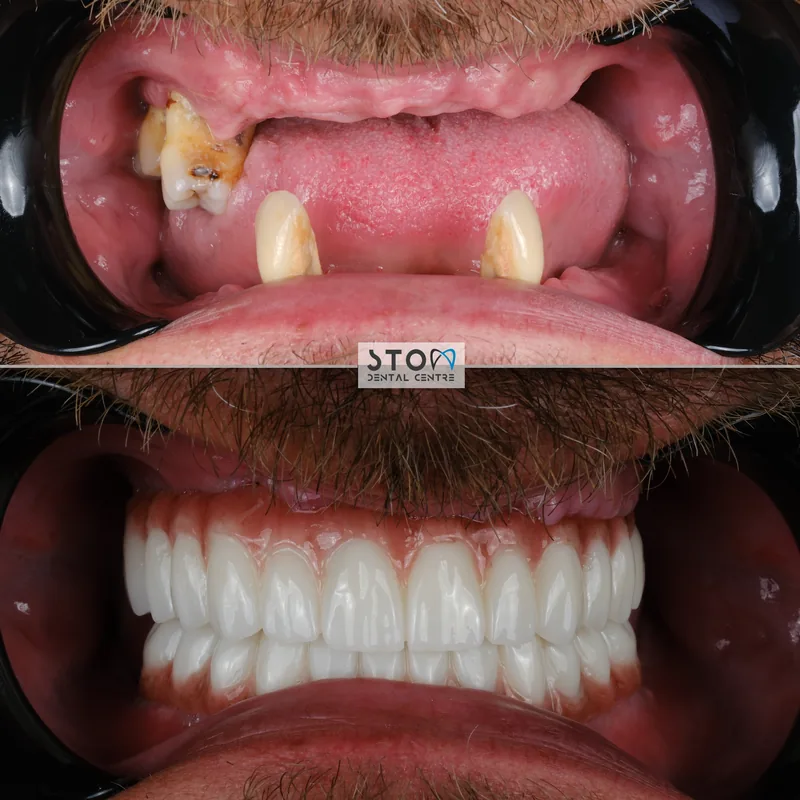
Two straight front implants plus two tilted rear implants carry a full fixed bridge; the tilt uses dense anterior bone and usually avoids grafting. Long-term data reports ≈95% implant survival at 10 years (Maló et al., 2019). The concept of choice when posterior bone is limited and you want fixed teeth within days. Full details on our All-on-4 treatment page.
All-on-6 — Redundancy When Bone Allows
Six anchors distribute chewing load further and keep the bridge serviceable even if a single implant is ever lost. Reviews of full-arch rehabilitation report ≈94–98% implant survival at 5–10 years, with no consistent superiority of either number when correctly indicated — the deciding factor is your bone volume, confirmed by CBCT. Details on the All-on-6 page.
Toronto Bridge — The Proven Hybrid
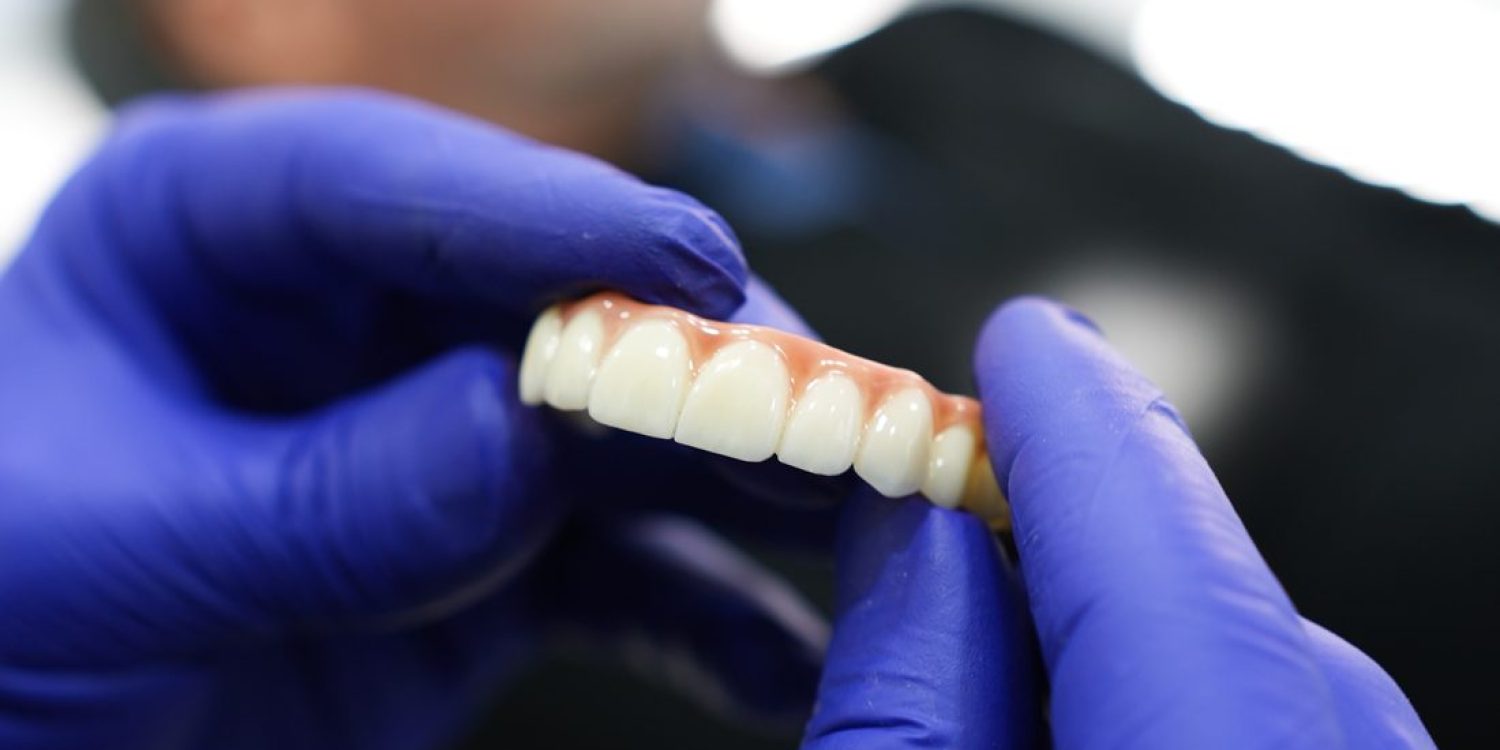
The original full-arch classic: a titanium framework carrying acrylic prosthetic teeth, screwed onto 4–6 implants. Its advantages are lower weight, shock absorption and easy repair — a worn acrylic tooth is replaced in minutes. The trade-off is faster surface wear than ceramics: expect refurbishment of the acrylic layer roughly every 5–8 years. It remains an excellent value solution, especially for opposing natural teeth. See our Toronto Bridge page.
Titanium-Bar Zirconia Bridge — The Premium Build
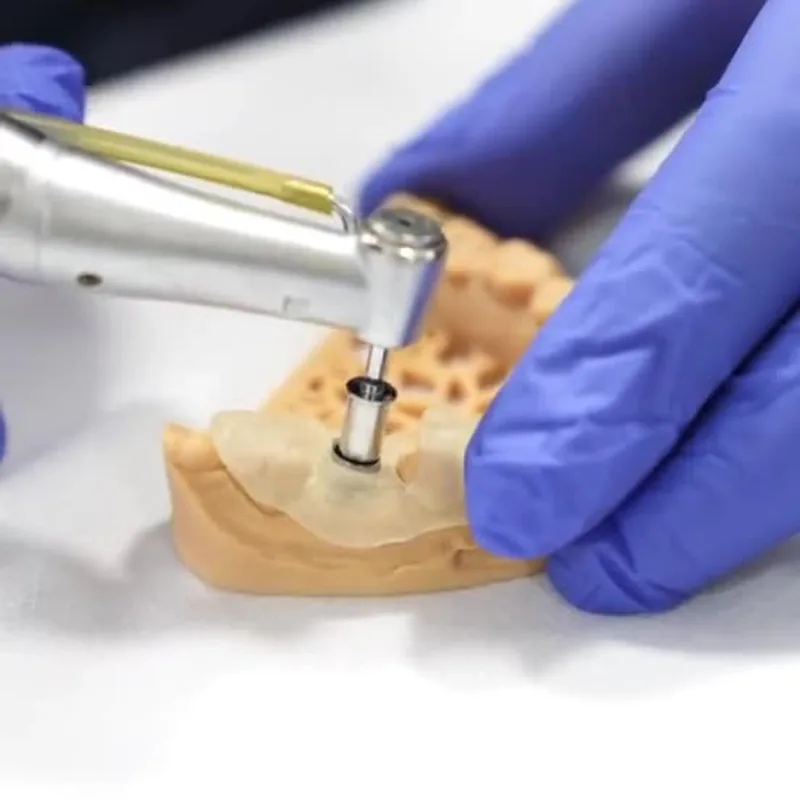
A CAD/CAM-milled titanium bar is fixed to the implants and carries a zirconia bridge — combining the bar’s passive, tension-free fit with ceramic’s hardness and aesthetics. It is the most rigid, longest-wearing construction with the most natural gum-line aesthetics, at a higher laboratory cost. This is our most requested premium full-arch build; details on the titanium-bar bridge page.
How to Choose — Three Honest Questions
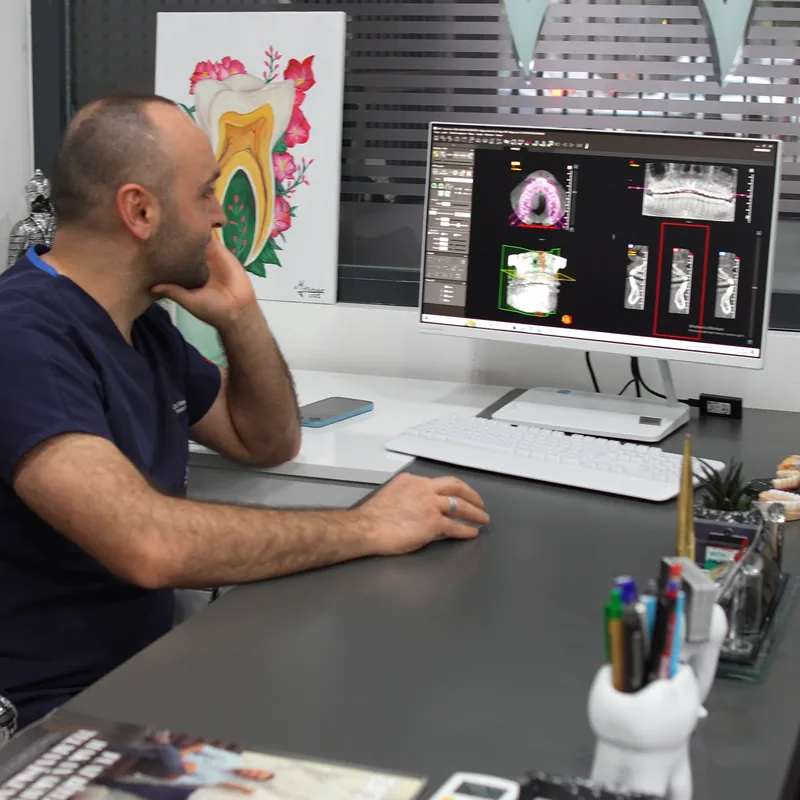
1. What does your CBCT show? Bone volume decides between four and six implants — and whether zygomatic anchorage is needed instead (see zygomatic implants for severe upper-jaw atrophy).
2. What bites against it? Against strong natural teeth or a ceramic arch, harder materials (zirconia, bar-supported) resist wear best; against a denture, a Toronto Bridge is often perfectly sufficient.
3. How do you weigh budget vs. maintenance? Acrylic hybrids cost less now and need refurbishment later; zirconia costs more now and needs the least attention. Both are legitimate choices when made with open eyes — a written plan should spell out the 10-year maintenance picture, not just the purchase price.
Frequently Asked Questions
Which is better: All-on-4 or All-on-6?
Neither universally. All-on-6 spreads load over more anchors and adds redundancy but needs more bone; All-on-4 is engineered for limited posterior bone. Studies show comparable survival when each is correctly indicated — your CBCT decides.
What is the difference between a Toronto Bridge and All-on-4?
All-on-4 describes the implant concept (how many implants, how placed); Toronto Bridge describes the prosthesis type (acrylic teeth on a titanium frame). A Toronto Bridge is often mounted on an All-on-4 or All-on-6 implant base.
How long does each solution last?
Implant survival runs ≈94–98% at 5–10 years across fixed full-arch concepts. Prosthetically: acrylic hybrid surfaces need refurbishment roughly every 5–8 years; monolithic zirconia bridges are the hardest-wearing, with chips being rare. Written guarantee terms should cover both implant and prosthesis.
Planning dental treatment in Antalya?
Get a free, no-obligation assessment from our clinical team — we reply within 24 hours.
Can I upgrade from a Toronto Bridge to a zirconia bridge later?
Usually yes — if the implant positions and number allow it, the acrylic hybrid can be exchanged for a zirconia or bar-supported bridge on the same implants. This staged approach is a legitimate budget strategy.
What do fixed full-arch solutions cost in Türkiye in 2026?
Market ranges per jaw: All-on-4 €1,700–6,000, All-on-6 €2,400–6,500, final zirconia bridge €1,700–2,900, titanium-bar zirconia builds €2,000–6,500 — versus £8,000–16,000+ commonly quoted in the UK. See our full cost comparison guide for details.
What happens if one implant fails years later?
With six implants the bridge usually stays in service while the site heals; with four implants the response depends on which anchor is affected — one reason we recommend six when bone allows. Ask every clinic how this scenario is handled under their written guarantee.
Do all four options feel like natural teeth?
All four are fixed and non-removable, with chewing function close to natural teeth. Zirconia constructions feel the most tooth-like in hardness; acrylic hybrids feel slightly softer and quieter in bite contact — some patients actually prefer this.
Sources
- Maló P, et al. The All-on-4 treatment concept: a longitudinal study with 10 to 18 years of follow-up. Clin Implant Dent Relat Res. 2019;21(4):565-577.
- Daudt Polido W, et al. Number of implants placed for complete-arch fixed prostheses: a systematic review. Clin Oral Implants Res. 2018;29(S16):154-183.
- Heydecke G, et al. What is the optimal number of implants for fixed reconstructions: a systematic review. Clin Oral Implants Res. 2012;23(S6):217-228.
This guide is for information only. The right concept for your jaw can only be determined after clinical examination and CBCT imaging.