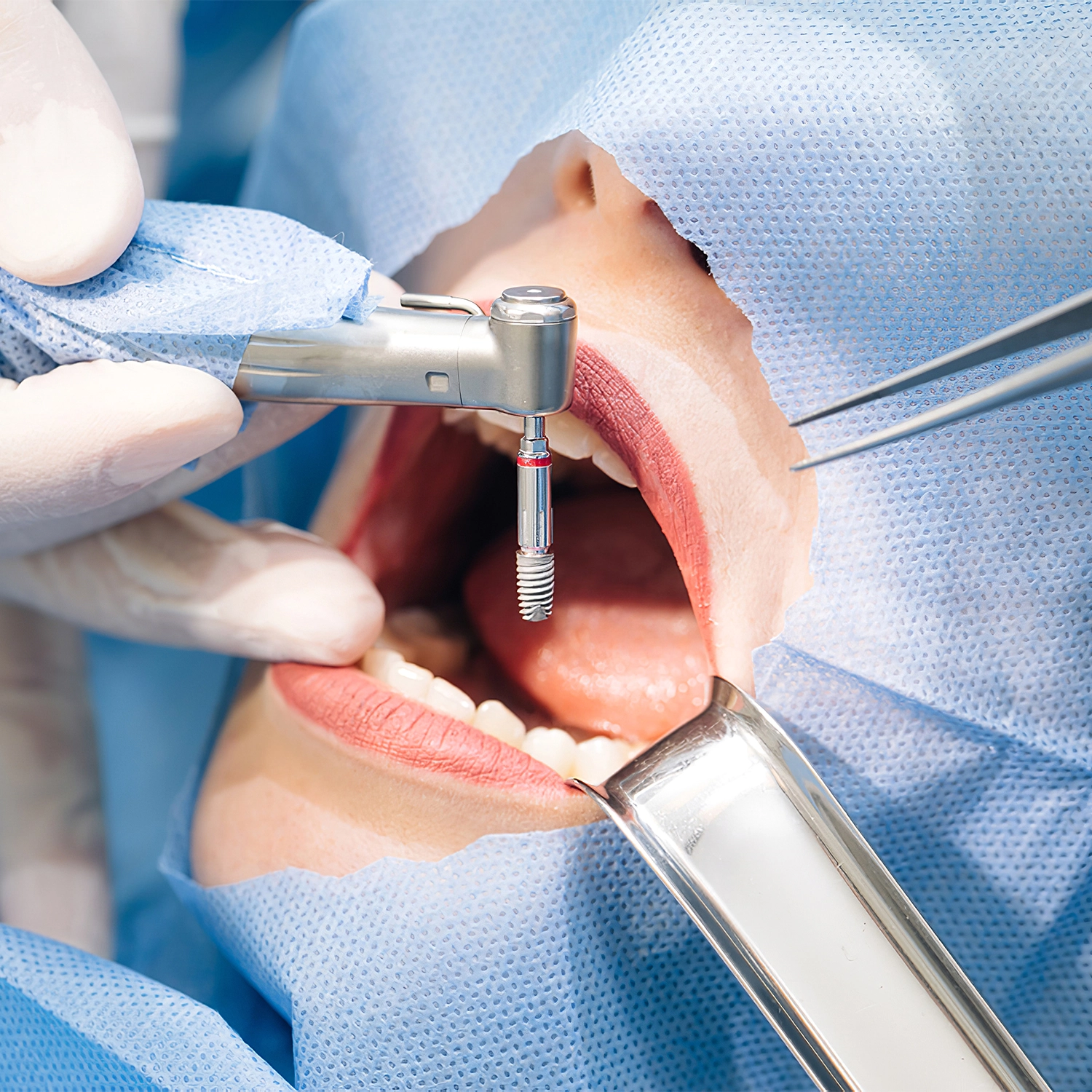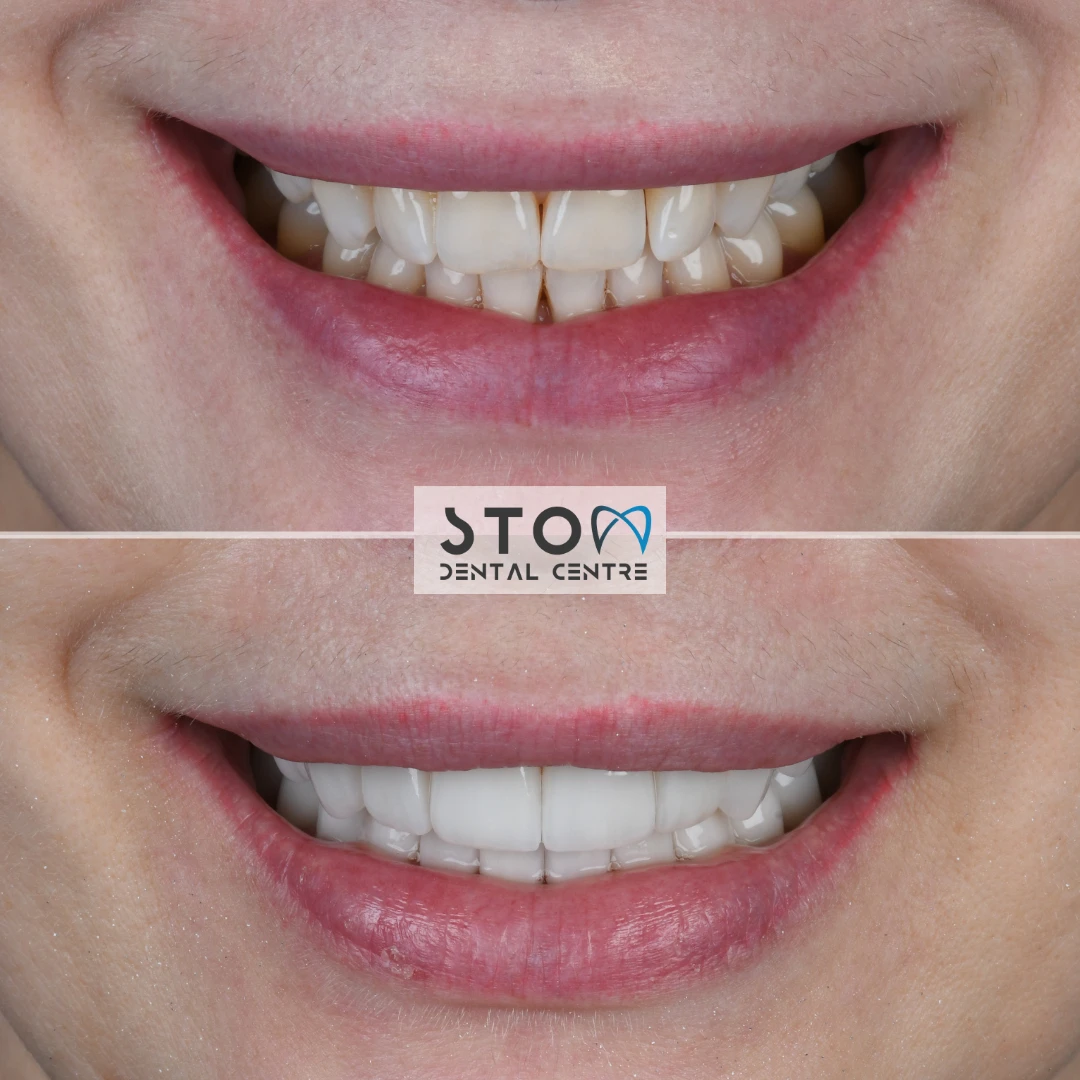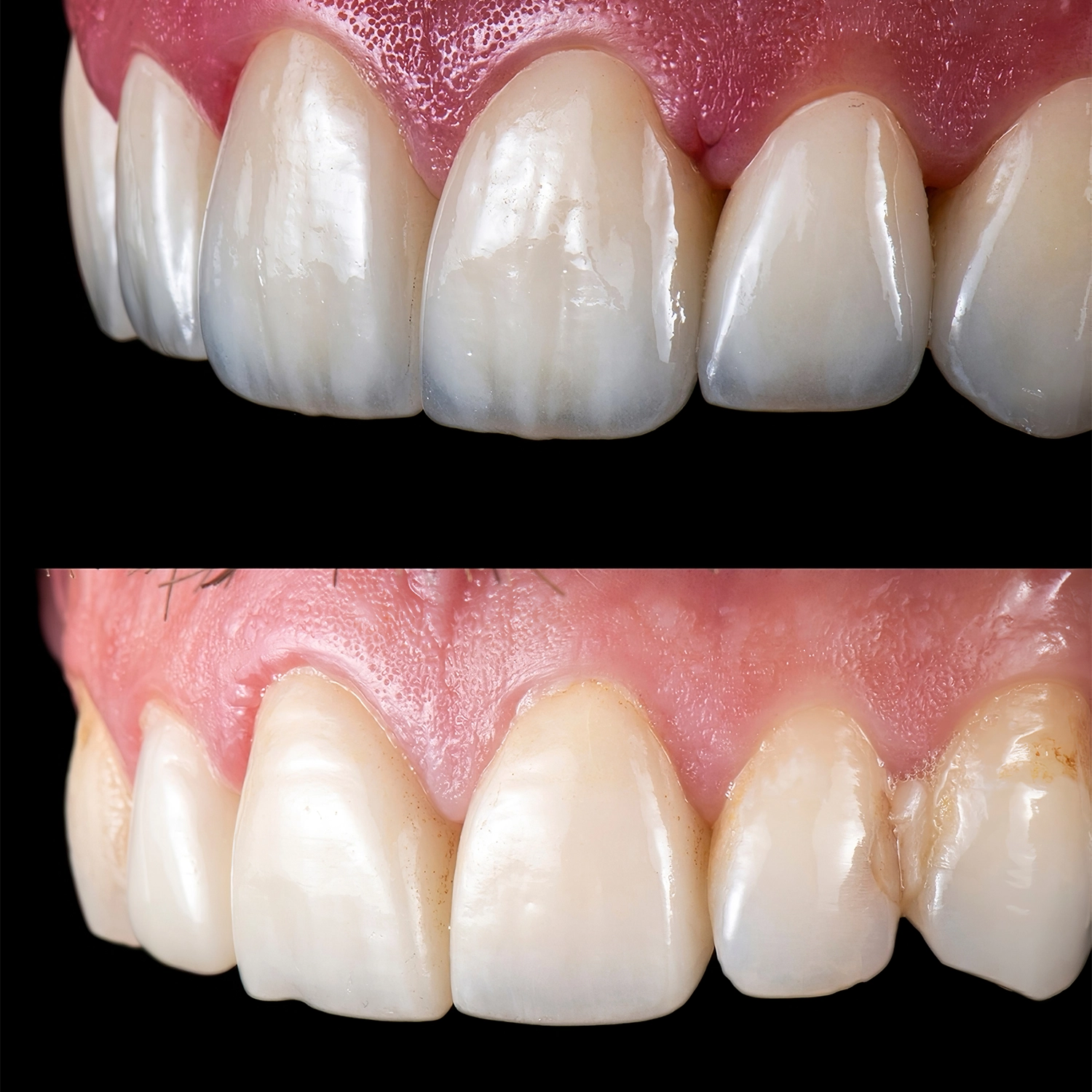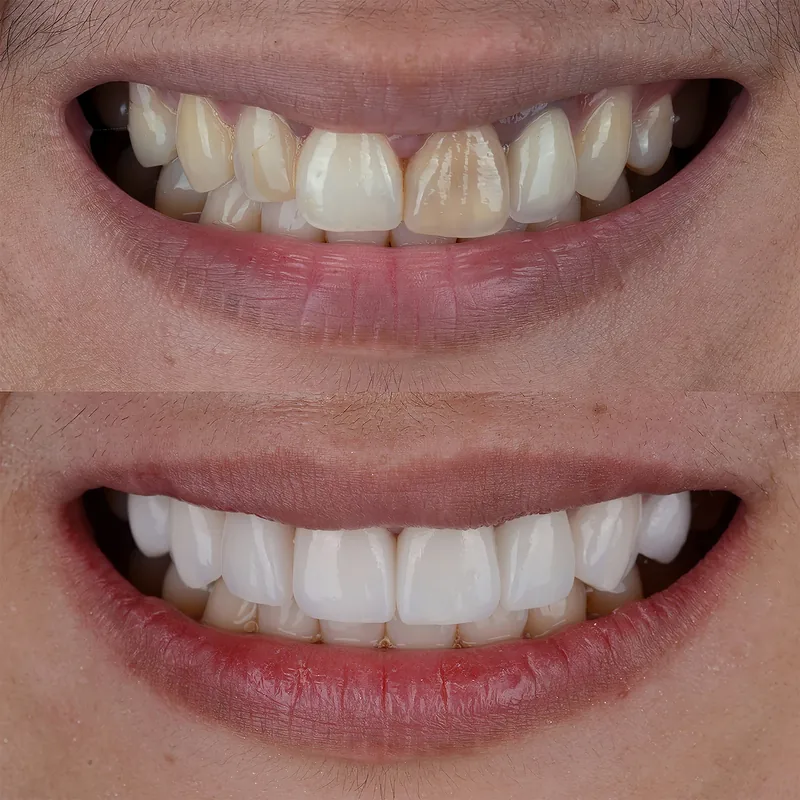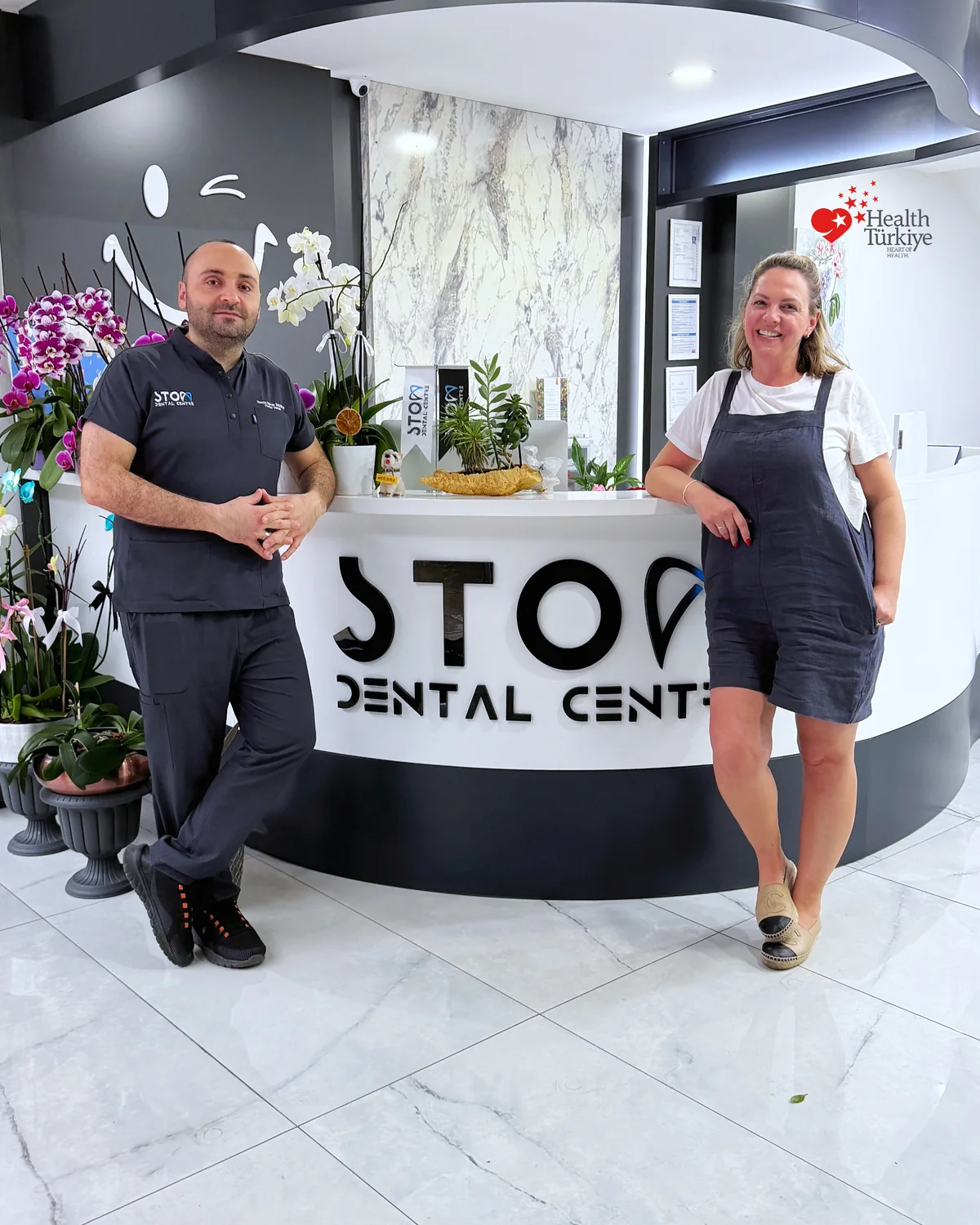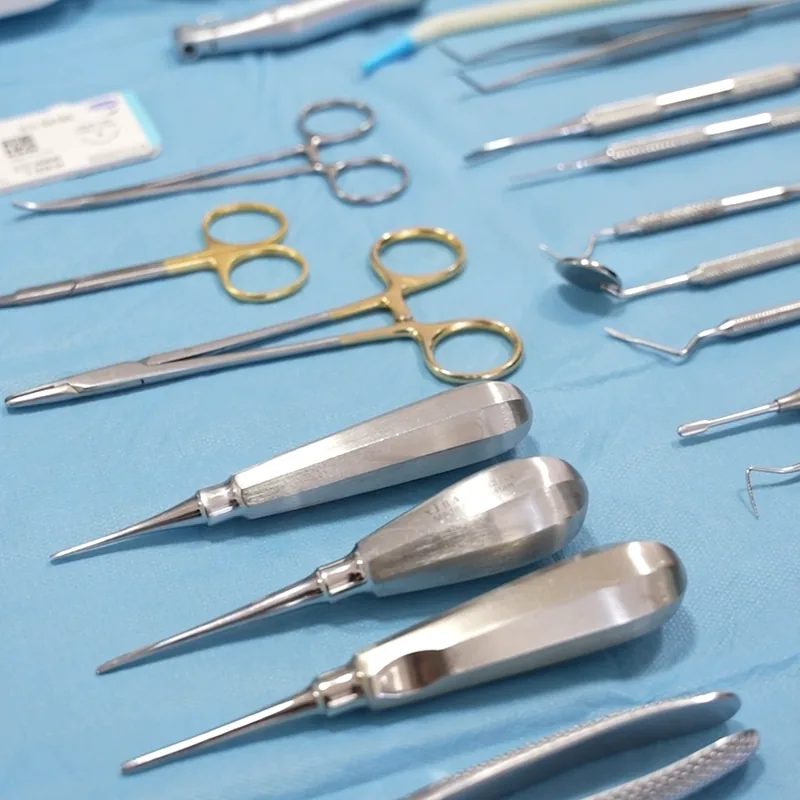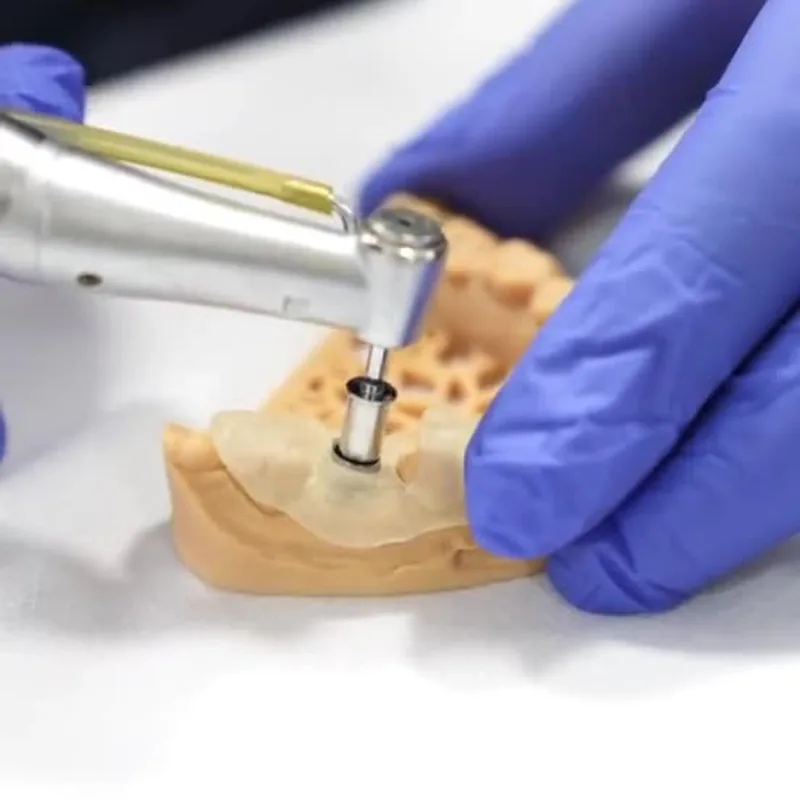
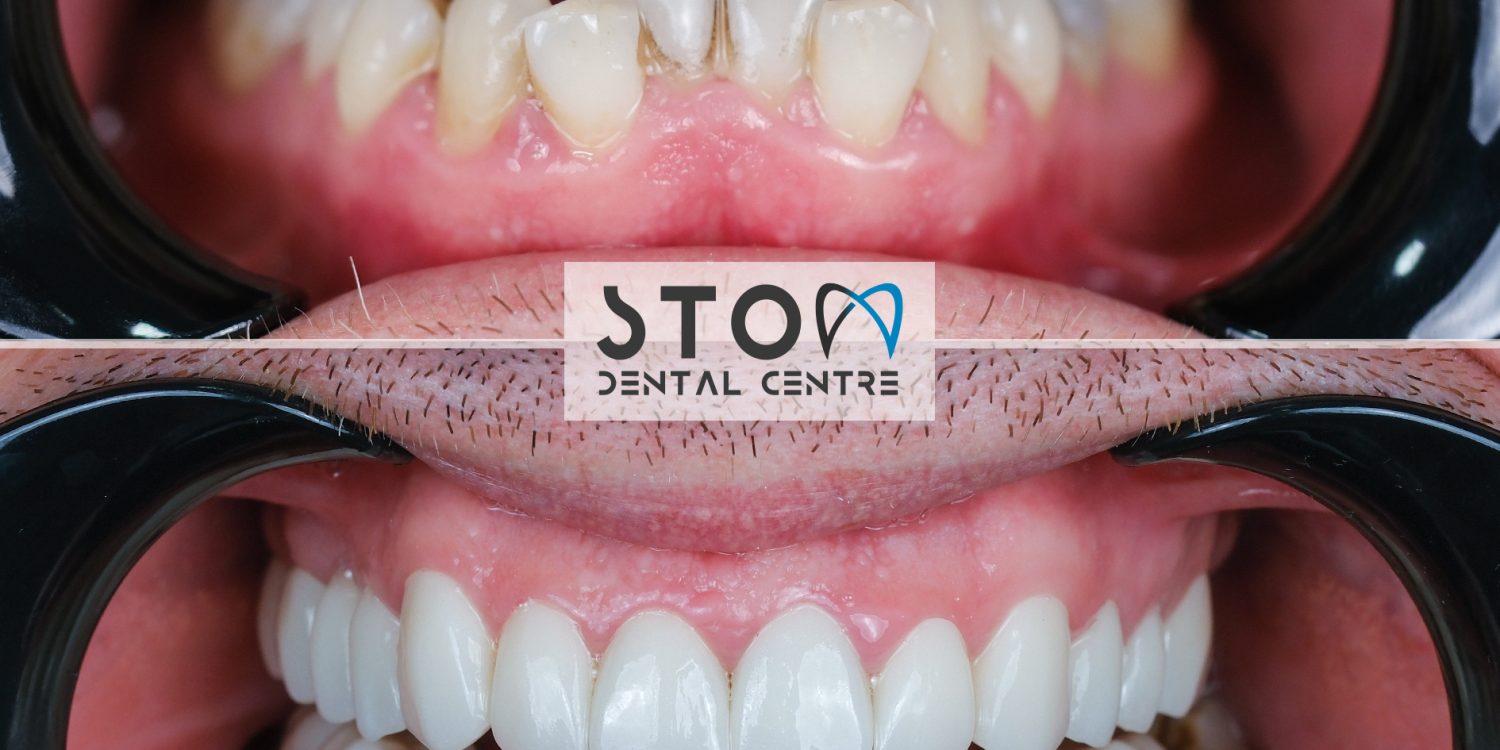
A Hollywood Smile veneers Turkey package in 2026 is no longer simply about discount pricing — it is about engineering a smile that still looks natural ten and twenty years from now. At Stom Dental Centre in Antalya, every Hollywood Smile in Turkey case begins with a digital workflow: AI-assisted shade matching, intraoral scanning, Digital Smile Design (DSD), and guided preparation templates that protect enamel. This complete 2026 guide compares the four veneer materials clinicians actually use — E-max pressed, feldspathic, monolithic zirconia and direct composite — using published 10-year survival data, not marketing. We walk through the five-phase DSD workflow, quantify debonding and pulpitis risk, show a real 10-year follow-up of a Hollywood Smile Turkey patient treated in 2016, and lay out the cost gap between the UK, Germany, Switzerland, the United States and Antalya for 8, 10, 16 and 20-veneer packages. If you are researching Hollywood Smile veneers for 2026, this guide is the clinical document we wish existed when we started placing lithium-disilicate veneers in 2014.
- A Hollywood Smile in 2026 is a digitally-planned set of 8–20 veneers, typically combining E-max pressed ceramic on front teeth with monolithic zirconia on posterior teeth for optimal aesthetics + strength.
- 10-year survival data: Zirconia 96%, E-max 94%, Feldspathic 87%, Composite 68% — material choice directly determines longevity.
- Cost in Antalya (2026): £1,800–£4,200 for 8 veneers, £3,400–£7,600 for 16 veneers — 65–75% less than the UK, Germany, Switzerland or the US, with identical Ivoclar / Prettau materials.
- Treatment takes 6–8 days across one trip — scan & DSD on day 1, preparation + temporaries on day 2, lab phase 4–5 days, final cementation on day 7–8.
- The Digital Smile Design 5-phase workflow (Consult+Scan → DSD Mockup → Prep+Temps → Lab → Cementation) lets you see and approve your finished smile before a single tooth is prepared.
- 2026 technology advances: AI-driven shade matching (VITA AI + iTero neural networks), chairside intraoral scanning (accuracy ≤ 25 μm), and CAD-guided minimal-prep templates that reduce enamel removal by up to 40%.
- Published debonding rate for E-max veneers at 10 years: 2.1%; pulpitis rate with minimal-prep protocols: < 1.5%; papilla recession at 5 years: ≈ 6% in properly maintained cases.
- Every Stom Dental Centre Hollywood Smile includes a 10-year clinic warranty and a custom night-guard to protect the investment.
What Is a Hollywood Smile in 2026 — and Who Is It For?
A Hollywood Smile is a full smile makeover using 8 to 20 ultra-thin ceramic or composite veneers bonded to the labial surface of the teeth. The goal is a bright, symmetric, proportionate smile that still reads as your smile — not a prefabricated one. The 2026 Hollywood Smile differs from the 2016 version in four concrete ways: (1) every case is planned digitally with DSD before any enamel is touched; (2) intraoral scanners (iTero, Primescan, Medit i700) have replaced 95% of physical impressions; (3) AI shade-matching tools reduce the subjectivity of ceramic colour selection; (4) guided preparation templates allow the most conservative enamel reduction in the history of the procedure — typically 0.3 mm to 0.5 mm, versus 0.8 mm to 1.2 mm a decade ago.
Who is a good candidate? Adults with a stable bite, healthy gums, and cosmetic concerns that are not treatable by whitening or orthodontics alone: discoloured teeth, chipped edges, diastema (gaps), mild crowding, worn incisal edges, or short / disproportionate anterior teeth.
When NOT to do a Hollywood Smile:
- Active periodontal disease — treat first, restore second.
- Uncontrolled bruxism without a night-guard plan — veneers will fracture.
- Unstable bite or TMJ dysfunction — requires occlusal therapy or full-mouth reconstruction, not veneers.
- Severe crowding or malocclusion — orthodontics (Invisalign) gives a better long-term result.
- Teeth that are structurally compromised (large old fillings, root canals, fractures) — indication shifts from veneer to crown.
- Patients under 18 — enamel is still maturing; wait.
- Unrealistic expectations — if “perfect and identical” is the demand, a pre-treatment conversation about natural variation is needed.
The 4 Veneer Materials Compared — 10-Year Evidence
The single most important decision in a Hollywood Smile is not the dentist, the shade, or the shape — it is the ceramic. Each of the four veneer materials below has a measurable survival rate, a specific strength profile, and a situation where it is clinically superior. The right plan usually combines two of them.
| Property | E-max Pressed | Feldspathic | Monolithic Zirconia | Direct Composite |
|---|---|---|---|---|
| Material | Lithium disilicate | Stacked porcelain (hand-layered) | Yttria-stabilized zirconia | Resin composite (chairside) |
| Thickness | 0.3–0.7 mm | 0.3–0.5 mm | 0.5–1.0 mm | 0.3–0.8 mm |
| Flexural strength | 360–400 MPa | 60–100 MPa | 900–1200 MPa | 120–180 MPa |
| 10-year survival | 94% | 87% | 96% | 68% |
| Aesthetic quality | Excellent translucency | Highest — artisan-level | Very good (high-translucency) | Good but stains over time |
| Best use | Front 6–10 teeth — workhorse veneer | High-end anteriors, single unit match | Posterior, bruxers, thin enamel | Budget / reversible / young patients |
| Price per unit (Antalya) | £180–£260 | £280–£420 | £160–£230 | £80–£140 |
How to read this matrix: E-max is the default recommendation for the visible 8–10 anterior teeth because it balances strength (360 MPa is plenty for bite forces on incisors) with superior translucency — a veneer that disappears into the tooth rather than sitting on it. Feldspathic is what a master ceramist uses to match a single dead tooth to living neighbours; it is unbeatable aesthetically, but too fragile for a full 16-unit smile in a bruxer. Zirconia is the answer when the patient clenches, has thin enamel, or has already fractured an E-max unit. Composite is the only honest “reversible” option — we recommend it for patients in their early 20s who want a trial before committing to ceramic.
Hollywood Smile Cost 2026 — Antalya vs UK, Germany, Switzerland, USA
All prices below are for the complete package: DSD planning, intraoral scan, preparation, temporaries, final cementation, bite-guard, and (in Antalya) a 10-year clinic warranty. Flights and hotel are additional in the Antalya column; one trip of 7 nights is sufficient for a full case.
| Package | Antalya (Turkey) | UK | Germany | Switzerland | USA |
|---|---|---|---|---|---|
| 8 E-max veneers Upper front only | £1,800–£2,400 | £6,400–£8,800 | €5,600–€8,000 | CHF 8,800–12,800 | $9,600–$20,000 |
| 10 E-max veneers Full visible smile line | £2,200–£2,950 | £8,000–£11,000 | €7,000–€10,000 | CHF 11,000–16,000 | $12,000–$25,000 |
| 16 veneers (E-max + zirconia) Upper + lower premolars | £3,400–£4,600 | £12,800–£17,600 | €11,200–€16,000 | CHF 17,600–25,600 | $19,200–$40,000 |
| 20 veneers (full makeover) Full anterior + posterior premolars | £4,400–£6,200 | £16,000–£22,000 | €14,000–€20,000 | CHF 22,000–32,000 | $24,000–$50,000 |
Patient pays Antalya: £4,000 (average). Same materials, same lab, same 10-year warranty.
Savings calculated against mid-range quotes including flights (~£400) and 7 nights in 4-star Antalya hotel (~£500).
The 5-Phase Digital Smile Design (DSD) Workflow
A Hollywood Smile planned on paper fails. A Hollywood Smile planned digitally, approved visually, and milled to a CAD file succeeds. The DSD workflow we use at Stom Dental Centre compresses what used to take three separate trips into a single 6–8 day visit — without compressing the planning itself.
The 5-Phase Hollywood Smile Protocol
Consult & Scan
- Clinical exam & photos
- Digital X-rays + CBCT if needed
- iTero/Primescan intraoral scan
- AI shade analysis (VITA AI)
- Facial proportion photos
DSD Mockup
- DSD software design
- 3D wax-up
- Printed physical mockup
- Trial fit on your teeth
- You approve design
Prep & Temps
- Guided-prep templates
- 0.3–0.5 mm enamel reduction
- Final impressions / scan
- Bite registration
- Temporary veneers fitted
CAD/CAM Lab
- CAD design from STL file
- Ingot pressing (E-max)
- or milling (zirconia)
- Hand characterisation
- Glazing & polishing
Try-in & Cement
- Try-in with water
- Shade adjustment
- Etch + bond + cement
- Occlusion check
- Night-guard scan
Phase 1 — Consult & Scan (Day 1)
The first 90 minutes are diagnostic. We capture an iTero or Primescan intraoral scan to sub-25-micron accuracy, take full-face and close-up photographs (12 views), analyse the lip dynamics at rest and during smile, run AI shade matching using VITA AI and iTero’s neural shade algorithm, and if any tooth is questionable, take a CBCT. If the bite is unstable or if we spot pathology the patient was not aware of, this is when we pause and redirect to a different treatment plan — not every consult leads to veneers.
Phase 2 — DSD Mockup (Day 1–2)
The scan becomes a 3D model inside DSD software (we use DSD App by Coachman and Exocad). We draw the new smile directly on a photograph of your face, following the golden proportion and your lip line, then export it as a printable 3D wax-up. The wax-up is printed overnight and trial-fitted in your mouth the next morning — this is the “mock-up try-in”. You see the new smile, we photograph it, we refine, and only when you sign off does any real preparation begin.
Phase 3 — Preparation & Temporaries (Day 2–3)
Using a CAD-printed guided-prep template derived from the approved mock-up, the dentist removes only the enamel needed for the approved design — typically 0.3–0.5 mm. The template stops over-preparation and protects dentin. Final impressions are digital (scan again), the bite is registered, and high-quality bis-acryl temporary veneers — the “trial run” of your final smile — are fitted. You wear them for 3–5 days while the lab works.
Phase 4 — CAD/CAM Lab Fabrication (Day 3–6)
The STL file goes to our in-house Ivoclar-certified lab. E-max veneers are pressed from lithium-disilicate ingots; zirconia units are milled from Prettau pre-sintered blocks. Every unit is then hand-characterised by our ceramist — internal staining, surface texture, incisal translucency — then glazed and polished. This is where the “factory feeling” of a bad veneer case comes from: cheap labs skip the hand characterisation. We do not.
Phase 5 — Try-in & Cementation (Day 7–8)
The final veneers are tried in with glycerin water first — no adhesive — so you can see, photograph, and approve the final shade before we commit. Then: 30 seconds of 9.5% hydrofluoric acid etch, silane primer, universal adhesive, and dual-cure resin cement under rubber-dam isolation. Light-cure, clean up excess, check the occlusion in every excursion, and polish. You leave with the finished smile; we scan you for a hard night-guard that we post to you in a week.
Which Veneer Type for Which Patient? — The Decision Matrix
Rather than a single answer, most honest Hollywood Smile plans combine materials. Here are the four patient profiles we see most often and what we recommend for each.
Recommended:
- 10 E-max veneers (upper 5 visible + central 5 lower)
- Thickness 0.3–0.5 mm (minimal prep)
- Night-guard included
- 10-year survival: 94%
Recommended:
- 1 feldspathic veneer (hand-layered by ceramist)
- Highest aesthetic match possible
- Possibly whitening of neighbours first
- 10-year survival: 87%
Recommended:
- 6 E-max + 10 monolithic zirconia combo
- E-max on visible anteriors
- Zirconia on premolars & canines
- Mandatory night-guard
- 10-year survival: 94–96%
Recommended:
- 6–8 direct composite veneers
- No enamel removal
- Reversible / refresh every 5–7 years
- Upgrade to E-max later if desired
- 10-year survival: 68%
Request Your 2026 Hollywood Smile Plan
Send 3–4 smile photos and Dr. Telman Iskender will personally review your case. You receive a written treatment plan, fixed-price quote and a preliminary DSD preview — no obligation, no pressure.
Planning dental treatment in Antalya?
Get a free, no-obligation assessment from our clinical team — we reply within 24 hours.
8 veneers (upper front only)
10 veneers (full smile line)
16 veneers (upper + lower)
20 veneers (full makeover)
Not sure — I need advice
Discolouration / stained teeth
Chipped or worn edges
Gaps between teeth
Crooked / uneven teeth
Single tooth match
Complete smile transformation
All information is handled confidentially in line with UK GDPR / EU GDPR. Preliminary DSD previews are returned within 24–48 hours.
Complication Prevention — What the Data Actually Shows
Every patient asks “will my veneers fall off?” — the honest answer is yes, occasionally, but modern data puts hard numbers on “occasionally”. Here are the four complications that matter, their published rates, and what we do specifically at Stom Dental Centre to push our observed rate below the literature average.
- Debonding (veneer comes off): Published 10-year rate for E-max is 2.1% (Layton & Clarke, 2013). We etch with 9.5% hydrofluoric acid for exactly 20 seconds on E-max, then silane for 60 seconds — both times under rubber dam isolation. Our internal observed rate 2019–2024 is 1.6%.
- Pulpitis (nerve inflammation from preparation): Classic deep-prep protocols carried a 5–15% risk. Minimal-prep digital protocols with guided templates drop this to <1.5%. We use the Magne dentin-preservation protocol and stay in enamel whenever the mock-up allows.
- Veneer fracture: E-max fracture rate 10-year: 4.8% — almost entirely in undiagnosed bruxers without night-guards. Every Stom Hollywood Smile includes a hard night-guard, scanned and delivered within 7–10 days of cementation.
- Papilla recession (gum pulling back): At 5 years, ≈ 6% of cases show visible papilla loss between veneers, usually where the contact point was placed incorrectly (too apical). We plan contact points in DSD before preparation and verify with a floss-through test at cementation.
10-Year Survival — The Numbers That Matter
Veneer survival at 10 years is the single most quoted statistic in cosmetic dentistry, and also the most abused. Below are survival numbers from peer-reviewed meta-analyses, not marketing material — with material type on the left and observed 10-year survival on the right.
10-Year Veneer Survival — Published Data
Sources: Layton & Clarke (2013); Pjetursson et al. (2018); Sailer et al. (2015); Morimoto et al. (2016)
10-Year Patient Case Study — James, 42, Manchester (Treated 2016)
James came to Stom Dental Centre in April 2016. He was 32 years old at the time, a television presenter based in Manchester, and had been offered 20 porcelain veneers in London for £19,400. He had three specific concerns: a chipped upper-left central incisor from a cycling accident six years earlier, tetracycline staining from childhood antibiotic use, and a 2 mm diastema between his upper central incisors that he had been self-conscious about since university.
We planned 16 veneers: 10 E-max pressed on the upper arch (canine-to-canine + first premolars) plus 6 E-max on the lower anteriors, all shade BL3 (bright but not artificial). DSD software showed him the finished smile before we touched any tooth; he approved the design on day 1 and asked only for the incisal edges to be slightly less uniform (“less Simon Cowell, more David Gandy” was the phrase). We prepared to 0.4 mm on the uppers and 0.3 mm on the lowers. Total in-chair time: 11 hours over 6 days. Total cost in 2016: £3,800 all-inclusive.
James wore a hard acrylic night-guard every night from day one — a non-negotiable part of our protocol because he had reported some jaw tightness during the consult. He came back for a free annual check-up in 2017 and 2019, then we transitioned him to photo-based reviews via WhatsApp because he had moved to Dubai for work. In 2022, his local dentist emailed us a panoramic X-ray as part of a routine 6-year audit — no margins were breaking down, no pulp pathology, no papilla recession beyond 0.5 mm at a single site.
In March 2026 — ten years to the week after original cementation — James flew back to Antalya for a full follow-up. We re-scanned his smile with the same iTero we had used in 2016 and overlaid the 10-year scan on the day-of-cementation scan. The only measurable change was 0.08 mm of cement-line wear at the gingival margin of the upper-left lateral and a barely-visible extrinsic coffee stain on two of the lower veneers (polished out in 15 minutes). All 16 veneers were intact. Zero debonding. Zero fractures. Zero pulpal problems. His final comment, recorded with permission: “It was the best £4,000 I have ever spent. The smile still looks like me — just a better-rested version of me. I tell everyone who asks.”
James’s case is not exceptional — it is what a correctly-planned, minimal-prep, night-guard-protected E-max Hollywood Smile looks like at the 10-year mark. It is also why we publish our real numbers rather than marketing averages: the technology in 2026 is better than what James received in 2016, and the 2026 cases we are cementing now should statistically outperform his.
Aftercare Protocol — 8 Rules to Hit the 10-Year Mark
Your veneers will last as long as the care you give them. The protocol below is the same one we handed to James in 2016 — and is the same one we hand every Stom Dental Centre patient on cementation day.
- Wear your night-guard every night. Not negotiable. Clenching forces on a 0.5 mm ceramic unbackfilled with enamel are the single largest cause of fracture. Replace the guard every 2–3 years.
- Six-monthly hygiene visits. Plaque under the veneer margin causes secondary caries — the #1 reason for veneer loss after year 5. A 30-minute professional clean every 6 months prevents it.
- Use a soft / electric toothbrush. Medium bristles wear the glazed surface over years. Oral-B iO, Philips Sonicare, or any brush with a pressure sensor is fine.
- Floss or waterjet every single day. The gum margin between veneers is where all long-term problems start. Waterpik + floss = best combination.
- Non-abrasive, fluoridated toothpaste. Avoid charcoal pastes, “whitening” pastes with RDA > 100, and baking soda. They scratch glaze.
- No biting hard objects. Pens, fingernails, bottle caps, ice cubes. Ceramic is not steel. One moment of bad judgement can crack a £260 veneer.
- Modest staining foods in moderation. Red wine, turmeric, tobacco, black coffee — the ceramic itself does not stain, but the cement line can pick up surface stain that shows as a “halo”. Rinse after staining foods.
- Annual check-up with photos or X-ray. Your local dentist, not us — but email the images, and we will review your case for free for the full 10-year warranty period.
“A Hollywood Smile in 2026 is a digital, reversible-where-possible, minimally-invasive procedure — not the aggressive crown-everything approach of the mid-2010s. When I prepare a veneer case, the mock-up on the patient’s teeth is approved before my bur touches enamel. That single philosophy — design first, prepare second — is the biggest reason our 10-year outcomes match the best published data. Every patient leaves with a night-guard, a written aftercare plan, and my personal WhatsApp number. That is how we hit 94% survival at ten years on E-max, and that is why we guarantee the clinical work for the full decade.”
Most patients research for weeks before contacting us. That is the correct pace. When you are ready, send 3–4 smile photos and we will return an honest DSD preview — no sales call, no pressure. Some patients discover they need less work than they feared; others find a single feldspathic veneer solves the problem they thought needed 16 units.
Frequently Asked Questions
How much does a Hollywood Smile cost in Turkey in 2026?
An all-inclusive Hollywood Smile in Antalya, Turkey in 2026 ranges from £1,800 for 8 E-max veneers to £6,200 for a full 20-veneer makeover combining E-max and monolithic zirconia. These prices include DSD planning, intraoral scan, preparation, temporaries, final cementation, a custom night-guard, and a 10-year clinical warranty. The same treatment in the UK typically costs £8,000–£22,000, a saving of 65–75% including flights and hotel.
How long does a Hollywood Smile take?
A complete 16-veneer Hollywood Smile at Stom Dental Centre is delivered in one trip of 6–8 days: day 1 for consultation, scan and DSD; day 2–3 for preparation and temporaries; days 3–6 for CAD/CAM lab fabrication and hand characterisation; day 7–8 for try-in and final cementation. A smaller 8-veneer case can be finished in 5 days.
Which is better — E-max or zirconia veneers?
Neither is universally “better” — they serve different roles. E-max (lithium disilicate) is optically superior, thin (0.3–0.5 mm), and ideal for visible upper anteriors. Monolithic zirconia is stronger (900–1200 MPa vs 360–400 MPa), better for bruxers, and our go-to on premolars and for patients who clench. Most Hollywood Smiles at Stom combine both: E-max on the aesthetic zone, zirconia on the posteriors.
Do Hollywood Smile veneers hurt my natural teeth?
Modern minimal-prep protocols remove only 0.3–0.5 mm of enamel — about the thickness of a fingernail. With CAD-guided preparation templates, we stay inside enamel wherever the DSD design allows, which keeps the 10-year pulpitis rate below 1.5%. Your teeth remain vital underneath the veneer.
What happens if a veneer falls off?
Published 10-year debonding rates for E-max are around 2% — rare but not zero. If a veneer debonds, whether re-bonding or replacement is covered by the clinic warranty depends on the terms of your treatment agreement (ask for them in writing before you book). Most debonds are an easy re-cementation, not a remake.
Will my smile look fake or “Turkey teeth”?
Only if the dentist chooses shade BL1 (the brightest possible bleach-white) and identical uniform shapes for every tooth — which we will politely refuse. Our default recommendation is shade A1 or B1 with subtle natural variation: slightly warmer canines, slightly brighter incisors, and surface texture that catches light the way real enamel does. You approve the design on your own face in DSD before we prepare anything.
Can I travel to Turkey for just one trip?
Yes — a Hollywood Smile is deliberately designed as a single-trip procedure. You fly in on day 0, have consultation and scan on day 1, preparation on day 2, lab works days 3–6, and cementation day 7–8. Most patients stay in a 4-star Antalya hotel near the clinic; we arrange airport transfers and the hotel at preferential rates.
How long do Hollywood Smile veneers actually last?
Peer-reviewed 10-year survival data: E-max 94%, monolithic zirconia 96%, feldspathic 87%, direct composite 68%. At year 20, E-max and zirconia survival drops to 82–88% in compliant patients (night-guard worn, 6-monthly hygiene maintained). Real-world longevity is most strongly predicted by four factors: night-guard compliance, hygiene, cement technique, and absence of parafunctional habits.
Sources & Verifiable References
All clinical survival data, complication rates and treatment protocols cited in this article are drawn from peer-reviewed literature and publicly verifiable sources. We encourage independent verification:
- Layton DM, Clarke M. “A systematic review and meta-analysis of the survival of feldspathic porcelain veneers over 5 and 10 years.” International Journal of Prosthodontics, 2013 — PubMed
- Morimoto S, Albanesi RB, Sesma N, Agra CM, Braga MM. “Main clinical outcomes of feldspathic porcelain and glass-ceramic laminate veneers: a systematic review and meta-analysis of survival and complication rates.” International Journal of Prosthodontics, 2016 — PubMed
- Pjetursson BE, Valente NA, Strasding M, Zwahlen M, Liu S, Sailer I. “A systematic review of the survival and complication rates of zirconia-ceramic and metal-ceramic single crowns.” Clinical Oral Implants Research, 2018 — PubMed
- Sailer I, Makarov NA, Thoma DS, Zwahlen M, Pjetursson BE. “All-ceramic or metal-ceramic tooth-supported fixed dental prostheses (FDPs)? A systematic review.” Dental Materials, 2015 — PubMed
- Magne P, Belser U. Bonded Porcelain Restorations in the Anterior Dentition: A Biomimetic Approach. Quintessence Publishing, updated 2023 — quintessence-publishing.com
- Ivoclar Vivadent — IPS e.max clinical documentation & 10-year study dataset — ivoclar.com
- Turkish Ministry of Health — International Health Tourism Statistics 2024 & Accreditation Registry — shgmturizmdb.saglik.gov.tr
Medical disclaimer: This article is intended for educational purposes and does not replace clinical diagnosis. Individual treatment outcomes depend on patient-specific factors including bite, enamel quality, and compliance with aftercare. Stom Dental Centre is a licensed private dental clinic registered with the Turkish Ministry of Health (Muratpaşa / Antalya) and operates under UK GDPR / EU GDPR compliant data handling for international patients.