Wisdom Tooth Extraction: When You Actually Need It and How Recovery Really Goes
Medically reviewed by Dr. Fuat Biter, Stom Dental Centre Antalya
Meet our team and patient coordinators — verified names and WhatsApp numbers, so you always know who you are talking to.
Wisdom teeth — the third molars — usually erupt between the late teens and mid-twenties, and because most jaws simply don’t have room for them, they often cause problems. But not every wisdom tooth has to come out: the decision depends on whether the tooth is diseased or positioned in a way that puts it at real risk. This guide covers when extraction is genuinely necessary, what an impacted wisdom tooth actually is, how the procedure and anesthesia work, what healing looks like day by day, and how to prevent complications like dry socket — all backed by checkable sources.
- Not every wisdom tooth needs to come out: disease-free, asymptomatic impacted teeth can often just be monitored (AAOMS; Cochrane 2020).
- Impacted third molars are common worldwide: a meta-analysis of 183,828 people found a prevalence of 36.9% per person (Pinto et al., 2024).
- Dry socket risk is higher for lower wisdom teeth: roughly 0.5–5% for routine extractions, but up to 30% specifically for mandibular wisdom tooth extractions.
- Age matters for impacted teeth: in a Finnish cohort, the odds of a demanding surgical extraction rose by about 2.8% per additional year of age (Noro et al., 2026).
- When roots sit close to the nerve, coronectomy is a possible alternative some surgeons consider — it should be discussed individually with your treating surgeon.
What Wisdom Teeth Are and Why They Cause Problems
Wisdom teeth are the last molars to erupt, and human jaws have generally not evolved enough room to accommodate them comfortably. A meta-analysis pooling 98 studies and 183,828 subjects worldwide found an impacted third molar prevalence of 36.9% per person and 46.4% per tooth, with the highest rates in Asia (43.1%) and the lowest in Europe (24.5%) (Pinto et al., Journal of Clinical Medicine, 2024). When there isn’t enough space, a wisdom tooth may fail to erupt at all, erupt only partially, or come in at an angle that presses against the neighboring tooth — creating a pathway for infection, decay, and pain.
Does Every Wisdom Tooth Need to Be Removed?
No. There is not enough evidence to support routinely removing asymptomatic, disease-free impacted wisdom teeth. The American Association of Oral and Maxillofacial Surgeons’ evidence-based position is that third molars associated with disease, or at high risk of developing disease, should be surgically managed, while teeth without disease or significant risk can be monitored clinically and radiographically. A 2020 Cochrane systematic review reached the same conclusion: there is insufficient evidence to determine whether asymptomatic, disease-free impacted wisdom teeth are better removed or retained, which is why regular monitoring is considered a reasonable approach (Ghaeminia et al., Cochrane Database of Systematic Reviews, 2020). Genuine indications for removal include recurrent pericoronitis (gum infection around the tooth), non-restorable decay, resorption of the root of the neighboring tooth, an associated cyst or tumor, periodontal disease, and cases tied to orthodontic or orthognathic treatment planning.

What Is an Impacted Wisdom Tooth? Understanding the Types
An impacted tooth is one that cannot fully erupt because of insufficient space or an unfavorable angle. Dentists classify impaction using two long-standing systems: Winter’s classification, which describes the tooth’s angle relative to the neighboring second molar (vertical, mesioangular — the most common type —, distoangular, horizontal, and inverted), and the Pell and Gregory classification, which assesses depth (Class A/B/C, relative to the second molar’s chewing surface) and available space (Class I/II/III, relative to the jawbone) (Santos et al., Journal of Maxillofacial and Oral Surgery, 2022). These classifications help the surgeon anticipate how difficult and how long the procedure is likely to be.
Diagnosis: Examination, Panoramic X-ray, and When CBCT Is Needed
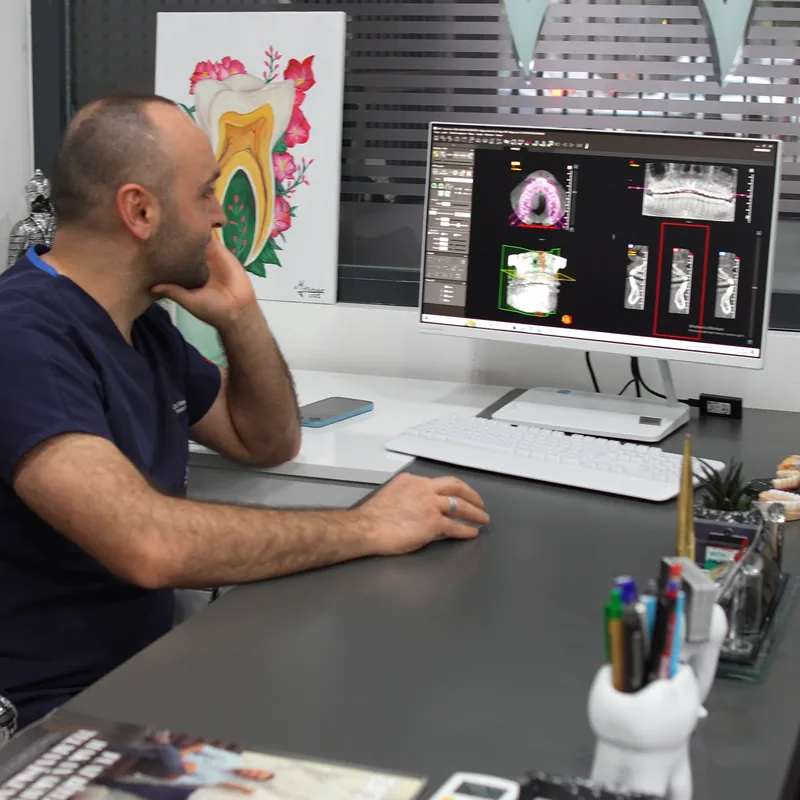
Diagnosis starts with a clinical exam and a panoramic X-ray (OPG), which gives an overview of the tooth’s position and its relationship to nearby structures. Certain signs on the panoramic film — an interruption in the border of the nerve canal, darkening of the root, or a deviation in the canal’s path — suggest the tooth may sit close to the inferior alveolar nerve. When those signs appear, a cone-beam CT (CBCT) scan is used for three-dimensional assessment, since it shows the true relationship between the roots and the nerve canal far more reliably than a flat panoramic image and helps the surgeon plan the safest approach.

How the Procedure Works: Anesthesia and Extraction Techniques
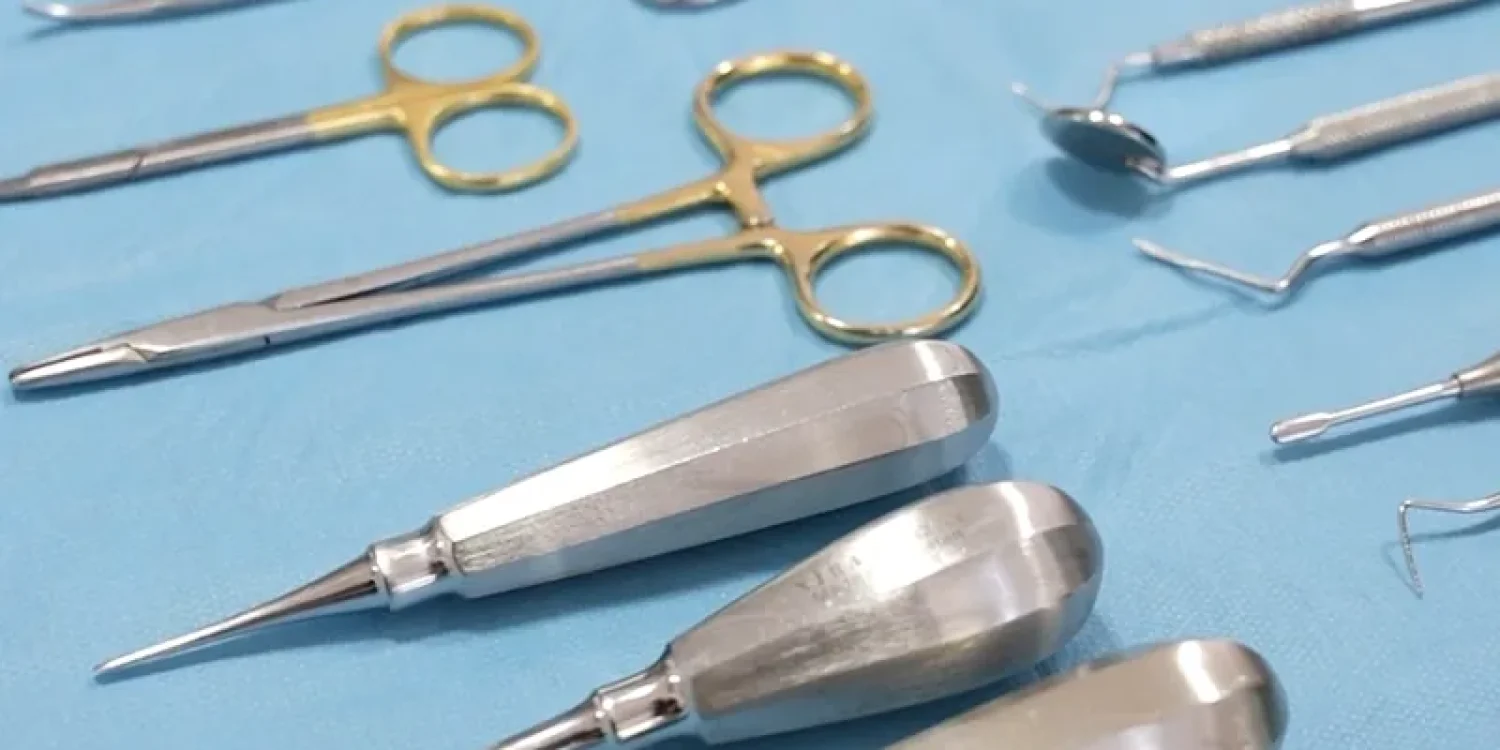
A fully erupted tooth is usually removed under local anesthesia with forceps in a short, straightforward procedure. An impacted tooth requires a surgical extraction: the gum is gently lifted to expose the tooth, some surrounding bone may need to be removed, and the tooth is often sectioned into pieces so it can come out with minimal trauma to the jaw. Most cases are entirely manageable under local anesthesia; for anxious patients, or when several impacted teeth are being removed in one visit, conscious sedation (such as nitrous oxide or IV sedation) can be offered as an option. When the roots sit very close to the inferior alveolar nerve, coronectomy — deliberately removing only the crown and leaving the roots in place to protect the nerve — is a possible alternative some surgeons consider. A recent meta-analysis of such high-risk cases found that this approach meaningfully lowers nerve-injury risk compared with complete extraction (see below), but whether it is suitable for a specific case is a decision to be made individually with your treating surgeon.

Healing, Day by Day: What to Expect
The times below are typical approximate values rather than fixed dates — how quickly you heal depends on how difficult the procedure was and on your general health. On the day of surgery, bleeding is controlled by biting on gauze as your surgeon instructs, and the local anesthetic wears off within a few hours. In a prospective study in which patients recorded their recovery every day for two weeks after third molar surgery, swelling was most pronounced on days 1–2 and had decreased markedly by day 5, patients had returned to a more normal daily life by day 5, and the share reporting their average pain as severe fell from 29% on day 1 to 5.5% on day 7 (Conrad et al., Journal of Oral and Maxillofacial Surgery, 1999). A light-colored coating over the wound in the first days can be part of normal healing; if it comes with worsening pain, a bad taste or smell, or fever, have it checked by your surgeon. Beneath the surface, the blood clot in an extraction socket is replaced by granulation tissue within roughly the first week; over the following weeks this tissue is gradually replaced by new bone, the socket is sealed with mature bone around week 12 on average, and remodeling of the jawbone continues for months beyond that (Udeabor et al., Bioengineering, 2023).
Common Complications and Preventing Dry Socket
The best-known complication is dry socket (alveolar osteitis), which happens when the blood clot protecting the healing bone is lost too early. It occurs in roughly 0.5–5% of routine extractions, but multiple systematic reviews report rates as high as 30% for mandibular wisdom tooth extractions specifically (StatPearls, “Alveolar Osteitis”). In a prospective study of 238 patients, smoking raised the risk 6.41-fold (95% CI 2.86–14.36), poor oral hygiene raised it 9.53-fold, and surgical (versus simple) extraction raised it 3.27-fold (Tandon et al., Cureus, 2024). Many studies also report a higher dry socket rate in women taking oral contraceptives (StatPearls, “Alveolar Osteitis”). Prevention means avoiding smoking and vaping for several days after surgery, skipping straws and vigorous rinsing or spitting for the first 24 hours, keeping the area clean, and following your surgeon’s post-operative instructions. Nerve injury is the other complication worth understanding. A meta-analysis that included only high-risk lower wisdom teeth — roots showing radiographic signs of close contact with the inferior alveolar nerve — found nerve injury after an average of about 6.17% of complete extractions, and coronectomy lowered this risk substantially (Peto OR 0.23, 95% CI 0.13–0.39 — Derbishi et al., Cureus, 2026). This rate refers to such high-risk cases, not to wisdom tooth extractions in general. Age and surgical difficulty also matter: in a study of 916 patients, surgical difficulty was significantly linked to day-one pain, trismus (jaw stiffness), and paresthesia (p≤0.001), and persistent pain one week out was reported in 12.5% of patients aged 51–60 versus just 1.3% of those aged 21–30 (Rizqiawan et al., International Journal of Dentistry, 2022).
The Age Question: Is Earlier Removal Really Easier?
Partly, yes — but with real nuance. A recent Finnish cohort study of 12,649 third molar extractions found that surgical extractions (those requiring a gum flap, as impacted teeth usually do) become more demanding with age: each additional year raised the odds of a demanding procedure by 2.8%, and demanding surgical extractions were eight times more common in patients aged 50–59 than in the youngest age group (Noro et al., Acta Odontologica Scandinavica, 2026). That’s why addressing a problematic impacted wisdom tooth earlier — before the roots are fully formed and while the surrounding bone is less dense — often means a shorter, more predictable operation and faster recovery. For simple forceps extractions, however, the same study found a pattern that depends on the jaw: in the lower jaw they actually became easier with age, while in the upper jaw they became more demanding. So age alone isn’t the dividing line — the tooth’s position and the jaw matter too. And technically easier does not automatically mean clinically safer: in older patients, slower bone healing, general health conditions, and medications can still raise the risk of complications (Gülses, Acta Odontologica Scandinavica, 2026).
Aftercare Tips for a Smoother Recovery
Use ice for the first 24 hours, then switch to warm compresses. Stick to soft, lukewarm foods and avoid anything hard, crunchy, or spicy. Take pain relief as recommended by your surgeon. Avoid smoking, alcohol, and straws for the first 24–72 hours, since suction can dislodge the healing clot. Starting the day after surgery, gentle warm salt-water rinses help keep the site clean. Sleep with your head slightly elevated, avoid strenuous exercise for a few days, and keep brushing gently around — not directly over — the surgical site.

When You Should See a Doctor
Contact your surgeon promptly if pain gets worse rather than better after day 3–4, if you develop a fever, if a bad taste or smell doesn’t clear with rinsing, if bleeding won’t stop after hours of gauze pressure, or if you notice spreading facial swelling or trouble swallowing or breathing. Numbness in the lip, chin, or tongue that lasts longer than expected should also be evaluated.
Simple Extraction vs. Surgical Extraction of an Impacted Tooth
| Feature | Simple extraction (erupted tooth) | Surgical extraction (impacted tooth) |
|---|---|---|
| When it applies | Tooth fully erupted, no complications | Tooth partially/fully impacted, at an angle |
| Anesthesia | Local anesthesia | Local anesthesia ± sedation |
| Duration | Usually 10–20 minutes | Usually 20–60 minutes |
| Technique | Direct extraction with forceps | Gum flap, possible bone removal, tooth sectioning |
| Stitches | Usually not needed | Usually required |
| Swelling/pain | Mild to moderate | Moderate to significant, most pronounced on days 1–2 |
| Return to daily activity | 1–3 days | 4–7 days |
| Dry socket risk | Lower (~0.5–5%) | Higher (up to ~30% in systematic reviews) |
Frequently Asked Questions
Does every wisdom tooth need to come out?
No. Disease-free, well-positioned impacted wisdom teeth can often just be monitored; removal is indicated when there’s evidence of disease — infection, decay, a cyst, or damage to the neighboring tooth.
What’s the best age for wisdom tooth removal?
When a problematic impacted tooth is identified, removing it in the late teens or early twenties — before the roots are fully formed and while the bone is less dense — tends to mean a more predictable procedure and quicker recovery.
What does “impacted wisdom tooth” mean?
Planning dental treatment in Antalya?
Get a free, no-obligation assessment from our clinical team — we reply within 24 hours.
It means the tooth can’t fully erupt because of limited space or an unfavorable angle, so it stays partly or entirely under the gum or bone.
Is the surgery painful?
No pain is felt during the procedure itself, thanks to local anesthesia; sedation is available for anxious patients. Some soreness afterward is normal and is managed with prescribed pain relief.
How long does recovery take?
Many patients feel markedly better within about 5 days, although pain can take somewhat longer to fade. Beneath the surface, the socket fills with new bone over several weeks — on average it is sealed with mature bone around week 12 — and bone remodeling continues for months. Healing times vary from person to person.
What is dry socket and how do I avoid it?
It’s exposed bone after the protective blood clot is lost too early. Not smoking, avoiding straws and vigorous rinsing in the first days, keeping up good oral hygiene, and following your surgeon’s aftercare instructions all help lower the risk.
What if my tooth is very close to the nerve?
If the roots sit close to the inferior alveolar nerve, coronectomy — removing the crown and leaving the roots in place — is a possible alternative that meaningfully lowers the risk of nerve injury compared with complete extraction. Whether it is an option in your case should be discussed individually with your treating surgeon.
When can I go back to work or school?
In studies, patients had returned to a more normal daily life by about day 5 after wisdom tooth surgery; after an uncomplicated extraction it can be sooner. Physically demanding jobs may need a longer break — your surgeon will advise you individually.
Sources
- American Association of Oral and Maxillofacial Surgeons (AAOMS). “The Management of Impacted Third Molar Teeth” / “Evidence-Based Management of Third Molar Teeth” — White Paper, aaoms.org.
- Ghaeminia H, Nienhuijs MEL, Toedtling V, et al. “Surgical removal versus retention for the management of asymptomatic disease-free impacted wisdom teeth.” Cochrane Database of Systematic Reviews. 2020;5:CD003879. PMID: 32368796.
- Pinto AC, Francisco H, Marques D, Martins JNR, Caramês J. “Worldwide Prevalence and Demographic Predictors of Impacted Third Molars—Systematic Review with Meta-Analysis.” Journal of Clinical Medicine. 2024;13(24):7533. PMID: 39768456; PMCID: PMC11728092.
- Santos KK, Lages FS, Maciel CAB, Glória JCR, Douglas-de-Oliveira DW. “Prevalence of Mandibular Third Molars According to the Pell & Gregory and Winter Classifications.” Journal of Maxillofacial and Oral Surgery. 2022;21(2):627-633 (Epub 2020). PMID: 35712399; PMCID: PMC9192858.
- Noro A, Snäll J, Ventä I. “The effect of age on third molar extraction difficulty: a retrospective cross-sectional cohort study.” Acta Odontologica Scandinavica. 2026;85:33-39. doi:10.2340/aos.v85.45308. PMID: 41556399.
- Rizqiawan A, et al. “Postoperative Complications of Impacted Mandibular Third Molar Extraction Related to Patient’s Age and Surgical Difficulty Level: A Cross-Sectional Retrospective Study.” International Journal of Dentistry. 2022;2022:7239339. PMID: 35027927; PMCID: PMC8749374.
- Tandon P, et al. “Dry Socket Prevalence and Risk Factors in Third Molar Extractions: A Prospective Observational Study.” Cureus. 2024;16(3):e56721. PMID: 38646199; PMCID: PMC11032735.
- StatPearls. “Alveolar Osteitis.” NCBI Bookshelf, NBK582137.
- Derbishi AA, Altayyar RA, Alsubaiei AS, et al. “Coronectomy Versus Total Extraction for Third Molar Surgery: A Systematic Review and Meta-Analysis.” Cureus. 2026;18(3):e105646. PMID: 42022697; PMCID: PMC13098716.
- Conrad SM, Blakey GH, Shugars DA, Marciani RD, Phillips C, White RP. “Patients’ perception of recovery after third molar surgery.” Journal of Oral and Maxillofacial Surgery. 1999;57(11):1288-1294. PMID: 10555792.
- Udeabor SE, Heselich A, Al-Maawi S, Alqahtani AF, Sader R, Ghanaati S. “Current Knowledge on the Healing of the Extraction Socket: A Narrative Review.” Bioengineering (Basel). 2023;10(10):1145. PMID: 37892875; PMCID: PMC10604628.
- Gülses A. “Comments on ‘The effect of age on third molar extraction difficulty: a retrospective cross-sectional cohort study’ – Danger in describing ‘simplicity’ in third molar surgery” [Letter]. Acta Odontologica Scandinavica. 2026;85:209. PMID: 42053138; PMCID: PMC13137084.
This article is for informational purposes only and does not replace a dental examination. Whether extraction, monitoring, or an alternative such as coronectomy is right for you should be decided individually with your treating surgeon, based on your tooth’s condition, position, and overall health. Figures are drawn from independent scientific publications and are not a guarantee of outcome at any specific clinic.