Zirconia Crowns: The Complete 2026 Guide — Types, Cost, Lifespan, and When to Choose Zirconia over E-Max
Zirconia is the workhorse of modern restorative dentistry — the material behind most strong, long-lasting crowns and almost every full-arch bridge. But “zirconia” is not one thing. There are several generations and types, the difference between them changes both how your teeth look and what you pay, and zirconia is not automatically better (or worse) than E-Max. This guide explains what a zirconia crown actually is, the different types and why they matter, the real difference between zirconia and E-Max, how the tooth is prepared, the honest downsides, how long it lasts, and what it costs — so you can read a treatment plan critically instead of just trusting one.

- What it is: a crown milled from zirconium dioxide — extremely strong (~1,000–1,200 MPa), biocompatible, metal-free.
- Types matter: monolithic (strongest), multilayer (the modern all-rounder), and layered (most aesthetic but can chip) — the type changes both look and price.
- Zirconia vs E-Max: zirconia wins on strength (molars, bridges, grinders); E-Max wins on translucency (front teeth). Most patients get both.
- Lifespan: 15–25+ years with good care — among the most durable crown materials available.
- Cost in Turkey: a single zirconia crown typically runs £140–195 — roughly 60–75% less than UK, German or US prices for the same material. Your exact figure comes in a free written quote.
Not sure if you need zirconia or E-Max? Send a photo of your teeth on WhatsApp — Dr. Fuat’s team will tell you honestly which material fits each tooth, in English, German, Russian or Turkish. The assessment is free and there is no obligation.
What Is a Zirconia Crown?
A zirconia crown is milled from zirconium dioxide (ZrO₂), a white ceramic so strong it is also used in aerospace components and orthopaedic hip replacements. Unlike older crowns built on a metal core, it contains no metal — so there is no grey line at the gum over time, and it is fully biocompatible for patients concerned about metal sensitivity.
Its defining property is flexural strength: roughly 1,000–1,200 MPa, around twice that of E-Max (about 500 MPa) and far beyond older feldspathic porcelain. That strength is exactly why zirconia is the default choice for teeth that take heavy chewing load, and why it can span gaps in a bridge that would fracture a weaker ceramic.
It is worth clearing up a common confusion: a zirconia crown covers a natural tooth or implant 360°, while a zirconia veneer is a thin facing for the front of a tooth. Most zirconia is used for crowns and bridges; for thin front-tooth veneers, E-Max is more often the material of choice (more on that below).
Why “Zirconia” Today Is Not the Zirconia of 10 Years Ago
If you remember zirconia as “strong but a bit flat and opaque”, that reputation comes from the first generation. The material has moved on substantially:
- First-generation zirconia was very strong but opaque — fine hidden under porcelain on a back tooth, too lifeless for a visible one.
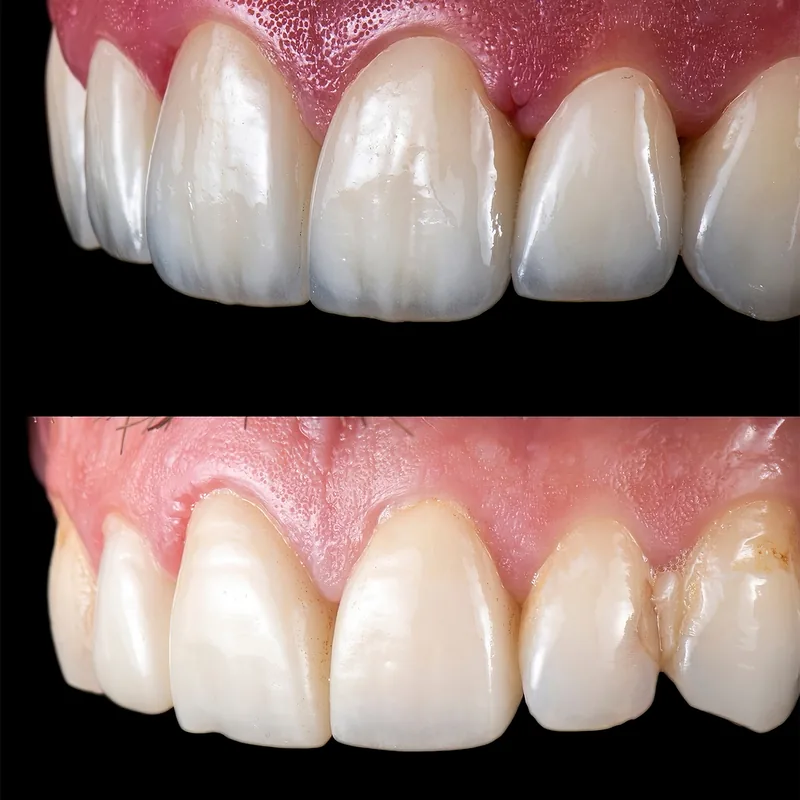
- Modern high-translucency and multilayer zirconia is engineered with a translucency and colour gradient built into the block, mimicking the way a natural tooth is more translucent at the edge and more saturated near the gum.
The practical takeaway: the quality and generation of the zirconia block matters as much as the word “zirconia” on your quote. This is why two zirconia crowns can look — and cost — very differently.
The Three Types of Zirconia (and Why It Changes Your Quote)
Milled from a single solid block, no porcelain layer — maximum strength, virtually unchippable. Ideal for molars, bridges and grinders. Modern versions are far more aesthetic than the old opaque blocks.
Pre-shaded blocks with a natural translucency gradient. The modern default — strong and aesthetic. The best all-rounder for most visible teeth.
A zirconia core hand-layered with porcelain for maximum lifelike depth. Beautiful on front teeth, but the porcelain layer can chip, so it is chosen selectively.
When you receive a quote, ask which type of zirconia and which brand is used. A price that looks too cheap often means a low-translucency, first-generation block placed on a front tooth where it will look flat — a saving you will regret every time you smile.
Zirconia vs. E-Max: The Real Difference
This is the question almost every patient asks, and the honest answer is: they are not competitors — they are tools for different jobs. A good clinic uses both, often in the same mouth.
| Property | Zirconia | E-Max (lithium disilicate) |
|---|---|---|
| Strength | ~1,000–1,200 MPa — strongest | ~500 MPa |
| Translucency / aesthetics | Very good (modern multilayer) | Best — closest to natural enamel |
| Best location | Molars, bridges, full-arch, grinders | Front teeth (incisors, canines) |
| Long bridges / multiple units | Yes | Single crowns / short spans only |
| Tooth reduction needed | Moderate | Minimal (especially veneers) |
| Bruxism (heavy grinding) | Better choice | Possible with a night-guard |
| On implants | Excellent | Selective |
The combination most patients end up with: E-Max on the front six to eight teeth where translucency shows when you smile, and zirconia on the molars and any bridges where chewing force matters more than light transmission. If a clinic pushes you toward one material for every tooth, ask why. For the full picture on the front-tooth side of this decision, see our E-Max crowns & veneers guide.
Zirconia vs. Porcelain-Fused-to-Metal and Gold
If you are replacing older crowns, you may be weighing zirconia against the materials you already have:
- vs. Porcelain-fused-to-metal (PFM): PFM was the standard for decades, but its metal core can show as a grey line at the gum as you age, and the porcelain can chip. Zirconia gives comparable strength with no metal and no grey margin.
- vs. Gold: gold is extremely durable and kind to opposing teeth, but it is, of course, gold-coloured — a non-starter for visible teeth. Zirconia offers tooth-coloured strength.
When Zirconia Is the Right Choice
- Molars and premolars — chewing force is high and translucency is barely visible. Zirconia is the durable, sensible choice.
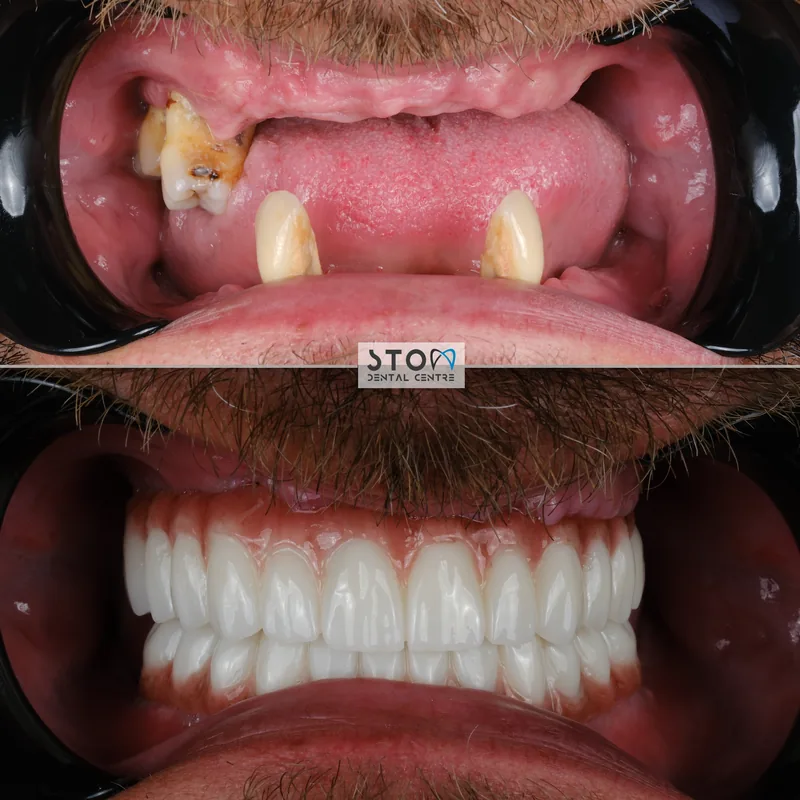
- Bridges and full-arch restorations — only zirconia reliably spans multiple teeth. It is the material behind most All-on-4 / All-on-6 final bridges.
- Bruxism (clenching/grinding) — zirconia resists the forces that crack weaker ceramics.
- Implant crowns — its strength and biocompatibility make it a reliable choice on implants.
- Metal-free preference — a strong, fully metal-free option with no grey gum line.

How a Zirconia Crown Is Made — Step by Step
- Assessment & shade. The tooth is examined, X-rayed if needed, and the target shade is chosen against your neighbouring teeth.
- Preparation. The tooth is shaped to make room for the crown. Zirconia needs moderate reduction — less than a metal crown, slightly more than a thin veneer.
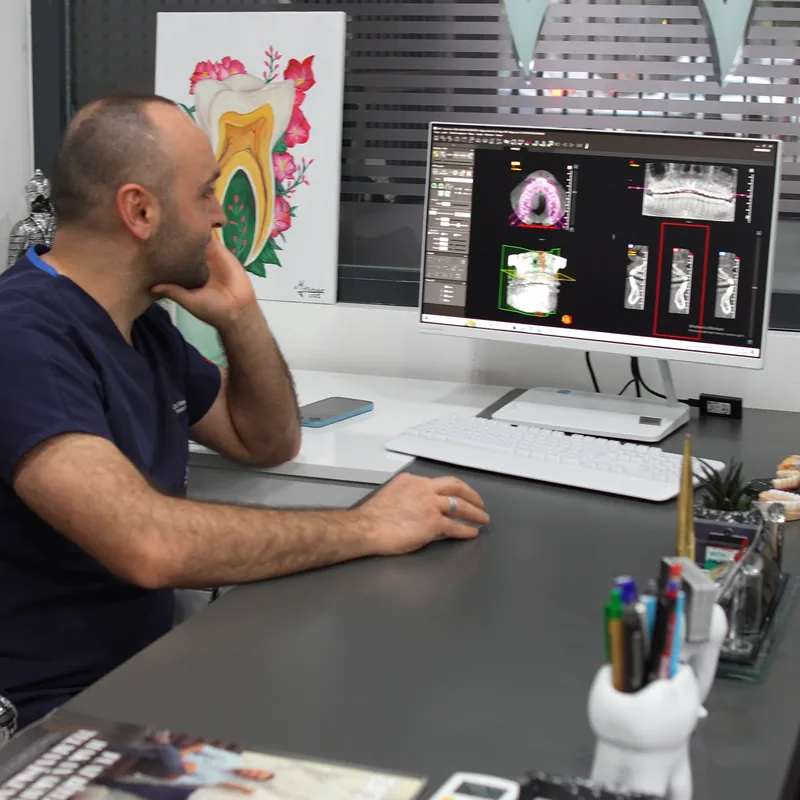
- Digital scan / impression. A digital intraoral scan (or impression) captures the prepared tooth precisely.
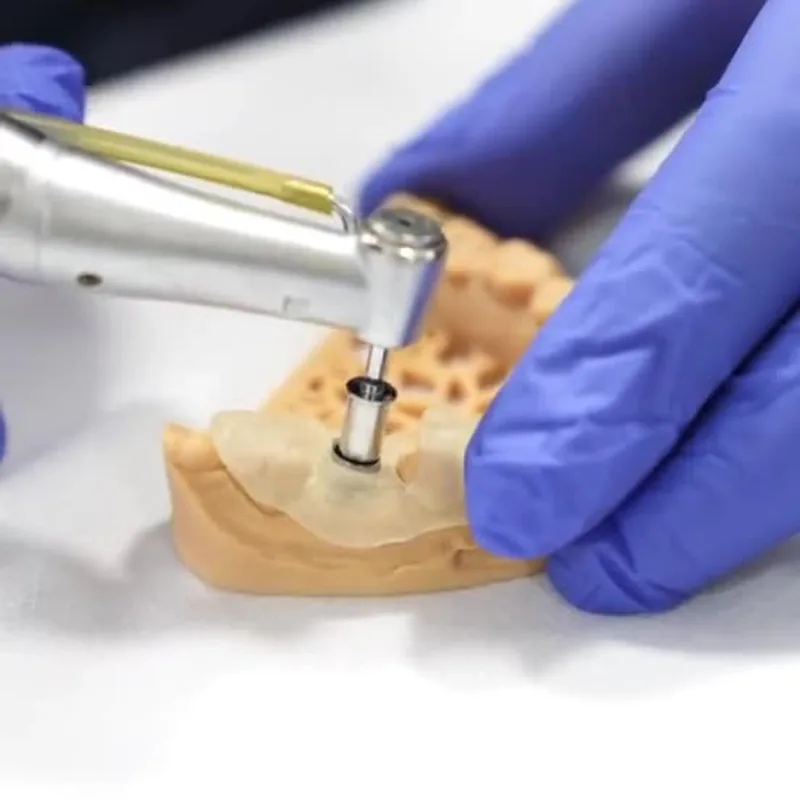
- Milling. The crown is milled by CAD/CAM from a zirconia block, then sintered at high temperature to full strength and, for multilayer/layered types, characterised and glazed.
- Temporary. You wear a temporary crown while the final one is made.
- Fitting. The finished crown is checked for fit, bite and shade, then permanently bonded. A well-made crown should feel like a natural tooth within a day or two.
The Honest Downsides
No material is perfect, and a clinic that only lists advantages is selling, not advising. The real considerations with zirconia:
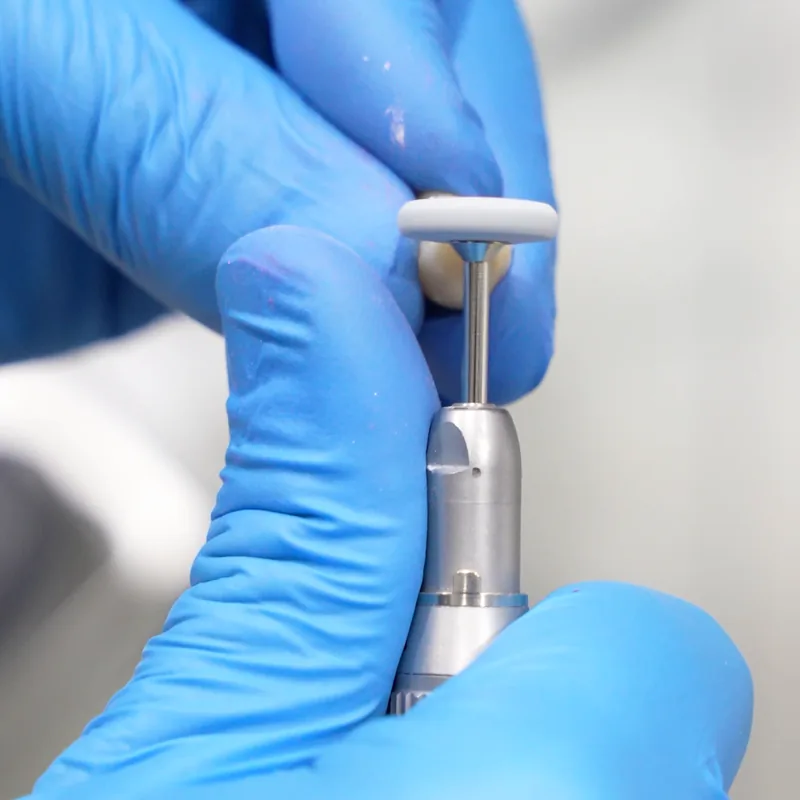
- Opposing-tooth wear. Zirconia is hard, and there has been genuine debate about whether it wears down the natural teeth it bites against. The current evidence is reassuring: well-polished or glazed monolithic zirconia is kind to opposing teeth — but a rough, poorly finished surface is not. This is a workmanship issue, which is exactly why finish quality matters.
- Slightly less translucent than E-Max on the most visible front teeth — the reason E-Max is often preferred there.
- Harder to adjust/repair chairside than some materials, given its hardness.
- Quality varies hugely by block generation and laboratory — “zirconia” alone tells you little.
How Long Do Zirconia Crowns Last?
Zirconia is among the most durable crown materials available. With good oral hygiene and regular check-ups, 15–25+ years is a realistic expectation, and many last longer. The crown material itself rarely fails; what matters long-term is keeping the underlying tooth and gum healthy and the bite balanced — which is why a clinic that insists on proper preparation, an accurate fit and a polished finish is worth more than one competing on price alone.
Caring for Zirconia Crowns
Care is refreshingly simple: brush twice daily, clean between the teeth, and keep your check-ups. Zirconia does not stain the way natural enamel or composite can, and it does not decay — but the natural tooth underneath and the gum margin still can, so hygiene is about protecting them. If you grind your teeth, a night-guard protects both your crowns and your opposing teeth.
A Typical Patient Journey
The following is a representative case that illustrates the process; individual results vary.
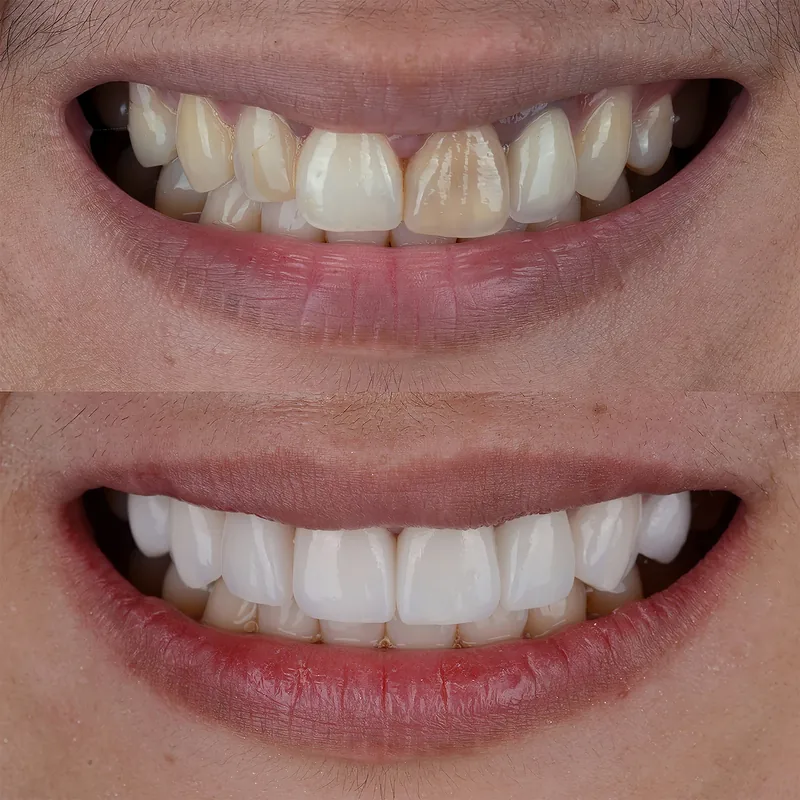
Markus, 48, from Germany, had three old porcelain-fused-to-metal crowns on his molars that were showing grey margins at the gum, plus two cracked back teeth. He wanted strength and no more grey lines, but natural-looking front teeth. The plan combined materials sensibly: multilayer zirconia crowns on the molars and the two cracked teeth, and — because his front teeth were visible when he laughed — E-Max on the upper front six. On the first trip the teeth were prepared, scanned and temporised; the final restorations were fitted a few days later once the laboratory had milled and characterised them. The result: tooth-coloured strength at the back, lifelike translucency at the front — and no metal anywhere.
What Zirconia Crowns Cost — Turkey vs. Europe
These are realistic 2026 ranges per single zirconia crown. The Turkey figures reflect what clinics in Antalya genuinely charge for branded zirconia — the same kind of material used in the UK, Germany and the USA, at a fraction of the price:
| Single zirconia crown | Turkey (Antalya) | UK | Germany | USA |
|---|---|---|---|---|
| Typical 2026 range | £140–195 | £500–1,200 | £400–950 | £650–1,400 |
That is a saving of roughly 60–75% for the same branded ceramic. The reason is not lower quality — it is the far lower overhead of running a clinic in Antalya versus Western Europe. Bear in mind the type changes the figure too: monolithic and multilayer crowns differ in price, and a multi-unit bridge is quoted per unit. The exact total for your case depends on how many crowns you need and whether any are bridges, so you receive a free, no-obligation written quote before anything is decided.
Want your exact zirconia quote? Send a photo or X-ray on WhatsApp. You will get a clear written price for your case — which teeth need zirconia, which (if any) need E-Max — with no obligation.
Planning dental treatment in Antalya?
Get a free, no-obligation assessment from our clinical team — we reply within 24 hours.
Frequently Asked Questions
What is a zirconia crown?
A zirconia crown is a tooth cap milled from zirconium dioxide, an extremely strong, metal-free white ceramic. It is used where strength matters most — molars, bridges, full-arch restorations and for patients who grind their teeth.
Which is better, zirconia or E-Max?
Neither is universally better — they are for different jobs. Zirconia is stronger and is the right choice for back teeth, bridges and grinders. E-Max is more translucent and looks more natural on front teeth. Most patients receive a combination of both.
What are the types of zirconia?
Monolithic (a single solid block, strongest, best for molars and bridges), multilayer (a built-in translucency gradient — the modern all-rounder), and layered (a zirconia core hand-layered with porcelain for maximum front-tooth aesthetics, but the porcelain can chip).
How long do zirconia crowns last?
With good hygiene and regular check-ups, zirconia crowns typically last 15–25 years or more, making them one of the most durable crown materials available.
Does zirconia wear down opposing teeth?
Well-polished or glazed monolithic zirconia is kind to the teeth it bites against. A rough, poorly finished surface can cause wear — which is a workmanship issue, not a property of the material. Finish quality is what matters.
How much does a zirconia crown cost in Turkey?
In Turkey, a single zirconia crown typically costs around £140–195 in 2026 — roughly 60–75% less than in the UK, Germany or the USA for the same branded material. The exact total for your case is given in a free written quote.
Do zirconia crowns look natural?
Modern multilayer zirconia looks very natural and has a translucency gradient close to real teeth. For the most visible front teeth, where light transmission matters most, E-Max can look even more lifelike — which is why the two materials are often combined.
Does zirconia stain or can it be whitened?
Zirconia does not stain or discolour the way natural enamel and composite can, and it does not decay. It also cannot be whitened — its shade is set when it is made — so the shade is chosen carefully beforehand, and any natural-tooth whitening is done first.
Are zirconia crowns safe and metal-free?
Yes. Zirconia is fully biocompatible and contains no metal, so there is no grey line at the gum and no concern for patients with metal sensitivity. It has decades of documented clinical use.
Related guides
- E-Max crowns & veneers — the complete 2026 guide
- Hollywood Smile in Turkey — full smile makeover guide
- All-on-4 dental implants in Antalya
Ready for an honest assessment? Stom Dental Centre, Muratpaşa/Antalya — led by Dr. Telman İskender, treating international patients in English, German, Russian and Turkish. Free consultation, written quote within 24 hours, 10-year guarantee on all prosthetic work.