Crooked Teeth Treatment 2026: Orthodontics or a Prosthetic Solution? (and When a Root Canal Becomes Necessary)
Crooked teeth are one of the most common dental irregularities in the world — the global average prevalence of malocclusion (misaligned bite/tooth position) is reported at 56%, and in some regions it exceeds 80%. So what is the right crooked teeth treatment? Today there are two fundamental paths: orthodontics (braces or clear aligners), which actually moves the teeth into position, and prosthetic solutions (crowns/veneers, laminates), which change how the teeth look. The “braces vs veneers” question is one of the most confused topics on the internet, because these two approaches do not do the same job. This guide explains both paths honestly and without hype: which one suits your type of misalignment — and, most importantly, when and why the prosthetic route can require a root canal — backed by current scientific evidence, so you can base your decision on data rather than marketing promises.

- Malocclusion (tooth misalignment) is common: a global average of 56%; in children and adolescents it is reported in the range of 39–93% depending on region — crooked teeth are the rule, not the exception.
- Orthodontics preserves tooth structure: braces and clear aligners move teeth without grinding away healthy enamel. In mild-to-moderate crowding, clear aligner success rates are in the range of 80–96%.
- The prosthetic route is fast but irreversible: for a crown, roughly 63–72% of the tooth’s natural structure is removed; for laminates the figure is far lower (about 3–30%).
- This is where the root canal risk comes from: a severely tilted/rotated tooth needs deep grinding for prosthetic alignment; pulp necrosis (nerve death) after crown preparation is reported in the literature in the range of 3–25%.
- For young patients with mild crowding, the first recommendation should be aligners/braces, not veneers — cutting a healthy tooth is an irreversible decision.
What Are Crooked Teeth and Malocclusion?
Crooked teeth occur when a lack of space in the jaw causes teeth to overlap, rotate, or drift out of line; in dentistry, this general condition is called malocclusion (a bite/position disorder). It is not merely a cosmetic issue: severe crowding can increase plaque buildup in areas the toothbrush cannot reach, raising the risk of decay and gum disease, and in some cases can contribute to chewing and jaw-joint problems.
To show how common it is, let’s look at the numbers. According to systematic reviews and meta-analyses, the global average prevalence of malocclusion is 56%; regionally, rates as high as 81% in Africa and 72% in Europe have been reported. In children and adolescents, the rate varies between 39% and 93% depending on region and age group. In short, crooked teeth are an extremely common condition affecting more than half of the world’s population — which makes them a matter to be evaluated with proper planning, not an “urgent defect”.
Slight rotation/overlap in one or a few teeth. Usually an ideal candidate for clear aligners or short-term orthodontics; prosthetic intervention is mostly unnecessary.
Noticeable lack of space, drifting in several teeth. Braces or clear aligners deliver predictable results; treatment takes longer.
Serious space shortage, advanced rotation/bite disorder. Sometimes extraction-based orthodontics or multidisciplinary planning is required.
If the problem lies not only in the teeth but in the jaw relationship, orthodontics alone may not be enough; surgically assisted planning is considered.
How Are Crooked Teeth Fixed? The Two Fundamental Paths
Crooked teeth are corrected with two fundamental approaches: orthodontics (braces or clear aligners), which actually moves the tooth, and prosthetic restoration (crowns/veneers, laminates), which changes the tooth’s appearance. This distinction is critical because the two rest on completely different philosophies and carry different costs to the tooth.
1. Orthodontics — Moving the Tooth
Orthodontics moves the tooth into the correct position with controlled forces, without touching the tooth’s natural structure. It comes in two main forms:
- Fixed braces (brackets): provide the broadest control in every type of crowding, especially in severe and complex cases.
- Clear aligners: removable, aesthetic and hygienic. In mild-to-moderate crowding they are as effective as fixed braces; in severe/complex cases they are limited. For details, see our clear aligner (Invisalign) guide.
The greatest advantage of orthodontics: tooth structure is preserved and the process is reversible. The disadvantage: it takes months to years and requires patient compliance (such as wearing aligners 20–22 hours a day).
2. The Prosthetic Solution — Reshaping the Tooth
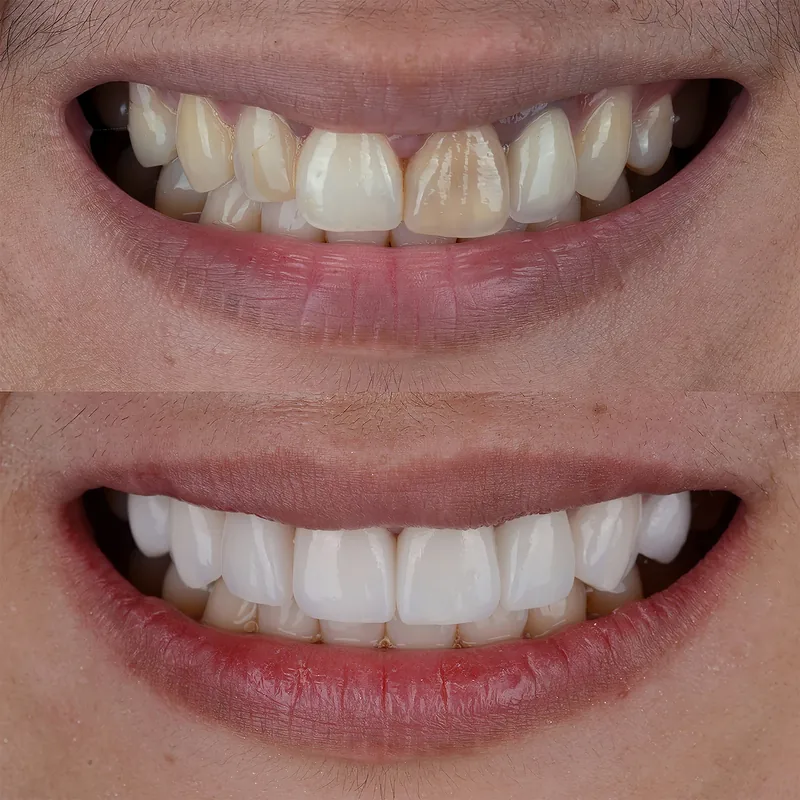
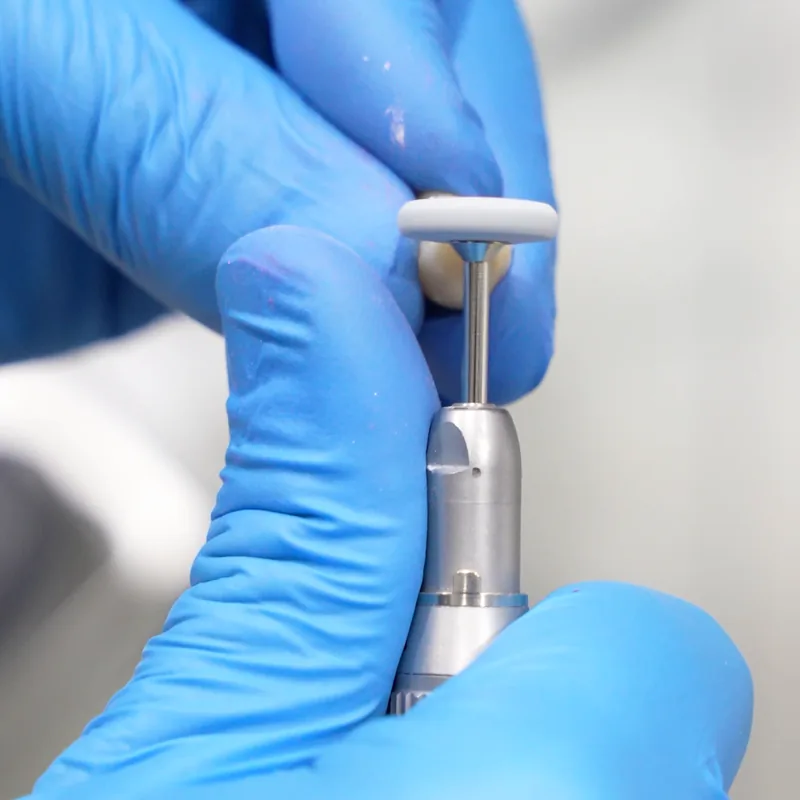
The prosthetic approach does not move the tooth; it grinds down the tooth surface and places a crown, veneer, or laminate (porcelain laminate veneer) on top, creating a surface that looks straight. In marketing it is sometimes called “instant orthodontics”. Its advantage is speed: in a few appointments you get both the appearance of alignment and a change in colour/shape. But the price is serious: healthy tooth structure is permanently removed, and this cannot be undone.
There are also major differences among the prosthetic options themselves:
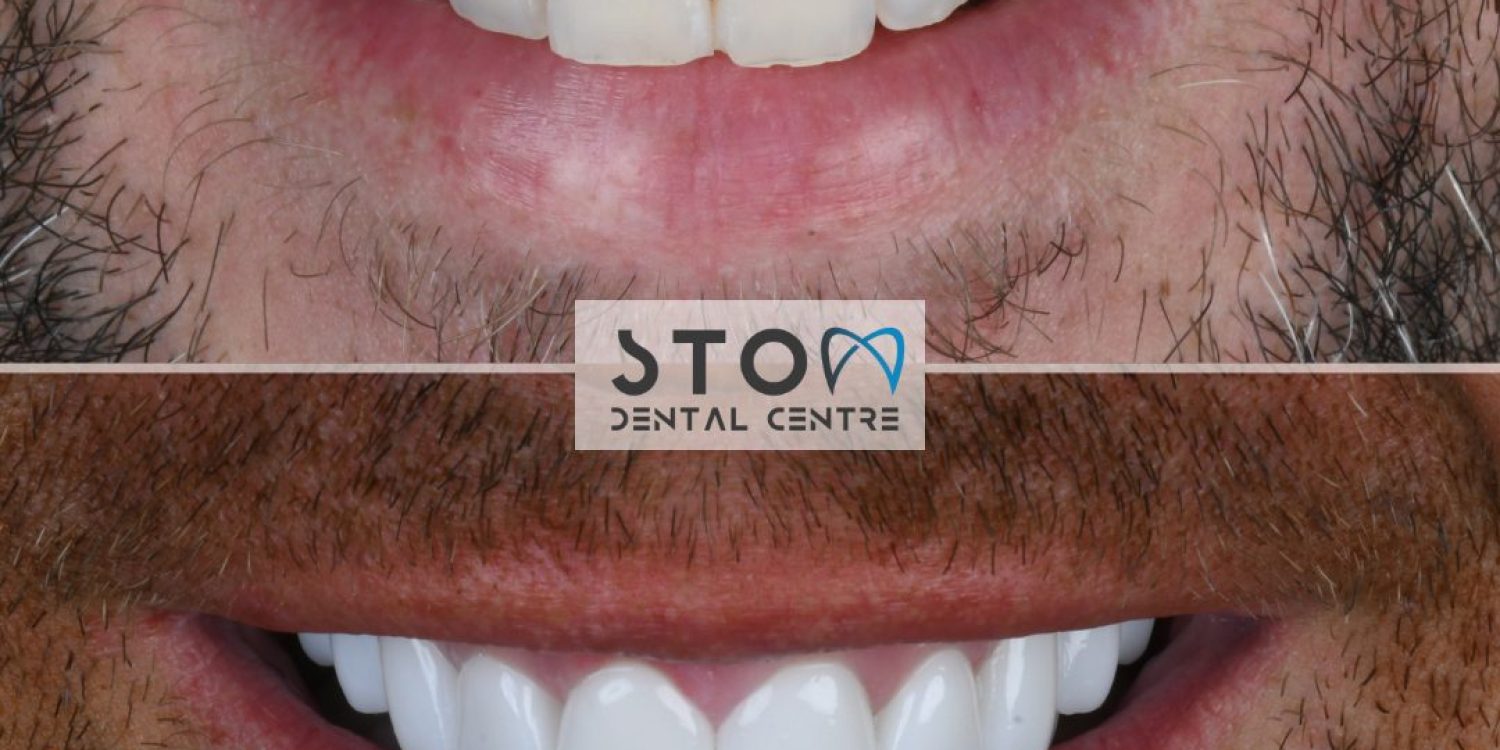
- Laminate / porcelain laminate veneer: the prosthetic option that removes the least tooth structure. In the literature, roughly 3–30% of the tooth structure is removed, staying within the enamel wherever possible. For the different types, see our veneer types guide.
- Full crown (zirconia / E-max): covers the tooth completely; it is the option with the greatest structural loss. For material details, our zirconia crown and E-max veneer guides can help.
When and Why Does a Root Canal Become Necessary?
When crooked teeth are corrected by the prosthetic route, the probability of a root canal is directly proportional to how tilted/rotated the tooth is. The reason is mechanical: a crown or veneer can only form a smooth arch when the teeth are roughly in the same line. To prosthetically “pull into line” a tooth that sits far out, far in, or rotated, the dentist must perform deeper grinding on the side that deviates from the tooth’s natural axis. The deeper the grinding, the closer it comes to the living pulp (the nerve-and-vessel tissue) at the centre of the tooth; in some cases the pulp is exposed or becomes irreversibly inflamed. At that point, a root canal treatment becomes necessary before the crown can be placed.
This is not a theoretical fear — it is a measured risk. In the dental literature, the rate of pulp necrosis (nerve death) after tooth preparation for full-coverage restorations is reported between 3% and 25%. A comprehensive prospective study found an overall pulp necrosis incidence of 9% after crown preparation; in intact teeth the rate was 5%, rising to 13% in previously damaged/decayed teeth. In other words, the more grinding is required and the more pre-existing damage a tooth has, the higher the probability of losing the pulp and needing a root canal.
To fit a severely rotated/tilted tooth into the arch, one surface of the tooth is cut excessively; the preparation approaches the pulp chamber.
In long/deep cutting, bur heat and mechanical stress strain the pulp; worn burs and insufficient water cooling increase the risk.
In a tooth with a history of decay/fillings/trauma, the pulp is more fragile; the probability of necrosis is markedly higher than in an intact tooth.
Hiding a pronounced rotation in the front teeth with veneers alone is usually the scenario that demands the deepest cutting.
The honest conclusion is this: first bringing the tooth into the correct position with orthodontics, then (if needed) placing a veneer with far less grinding is safer for preserving the pulp than cutting the same tooth deeply and crowning it straight away. The more severe the crowding, the higher the chance that the “prosthetic shortcut” will end in a root canal. Root canal treatment itself is a successful procedure (for details, see our treatment safety guide), but sacrificing the nerve of a living tooth unnecessarily is not a good plan.
Orthodontics or Prosthetics? The Decision Table
The short answer: if you want to preserve your tooth structure and have a reversible solution, orthodontics leads; if a fast aesthetic change is your priority and the teeth already need restorations, prosthetics comes to the fore. The table below compares the two paths using the criteria dentists actually weigh.
Planning dental treatment in Antalya?
Get a free, no-obligation assessment from our clinical team — we reply within 24 hours.
| Criterion | Orthodontics (braces / clear aligners) | Prosthetics (crown / laminate) |
|---|---|---|
| Loss of tooth structure | Virtually none — structure is preserved | ~63–72% removed for a crown; ~3–30% for a laminate |
| Reversibility | Reversible (teeth remain natural) | Irreversible (removed structure does not grow back) |
| Duration | Months – years | Usually a few appointments / weeks |
| Ideal age / situation | First choice for young patients with mild-to-moderate crowding | Adults with crowding plus colour/shape problems combined |
| Severe crowding | Broad control with fixed braces; the most comprehensive solution | Requires deep cutting → root canal risk rises |
| Root canal risk | None (the tooth is not cut) | Pulp necrosis after preparation ~3–25% |
| Long-term durability | Result is permanent (maintained with a retainer) | Laminate 10-year survival ~95.5%; replacement may be needed over time |
| Maintenance/compliance | Requires high patient compliance (aligner wear time) | Requires restoration care and periodic check-ups |
The table in one sentence: orthodontics preserves tooth structure but demands patience; prosthetics is fast but carries a permanent structural cost and — in severe cases — a root canal risk. The good news is that even when a prosthetic option is genuinely needed, minimally invasive methods such as laminates perform very well long-term: systematic reviews report a 10-year survival of 95.5% for porcelain laminate veneers. So the issue is not “prosthetics bad, orthodontics good”; the issue is choosing the right path for the right case.
Do Clear Aligners Really Work?
Yes — in the right case, clear aligners are as effective as fixed braces. Systematic reviews and meta-analyses show that in mild-to-moderate crowding and bite disorders, clear aligners achieve a similar level of tooth-movement accuracy and clinical effectiveness as fixed appliances; in suitable cases, success rates are reported in the range of 80–96%. There is also moderate-quality evidence in favour of clear aligners for quality of life, oral hygiene, and patient satisfaction at the 6-month mark.
But honesty requires acknowledging a limit: in severe and complex malocclusions (pronounced rotations, major space shortage, extraction cases, skeletal problems), fixed braces are still more predictable and sometimes faster. The claim that “every case can be solved with clear aligners” overstates the scientific picture. The correct approach is to determine the degree of crowding through examination and choose the tool accordingly.
- Young + mild crowding, healthy teeth: consider clear aligners / braces first. Cutting healthy teeth for veneers is usually unnecessary.
- Adult + crowding combined with colour/shape/old-filling problems: a combination of orthodontics + minimal prosthetics, or laminates, can be considered.
- Severe crowding: first align with orthodontics, then restore with minimal grinding if needed — this sequence protects the pulp and the tooth.
- In every case: make the decision with a dentist who explains the options (including their risks); stay away from any approach that presents a single method as a “cure-all”.
Frequently Asked Questions
How are crooked teeth fixed?
There are two fundamental paths: orthodontics (fixed braces or clear aligners), which moves the tooth, and prosthetic restoration (crown/laminate), which covers the tooth and changes its appearance. Orthodontics preserves tooth structure and is reversible; prosthetics is faster but demands permanent loss of tooth structure. The right choice is determined by examination, based on the degree of crowding, age, and the health of the teeth.
Braces or veneers — which is better?
There is no single “better”; they do different jobs. If you want to preserve healthy teeth and achieve permanent alignment, braces/clear aligners; if you also have colour/shape problems alongside the crowding and speed matters, veneers may come to the fore. For young patients with mild crowding, orthodontics is usually recommended first, because cutting healthy teeth for veneers cannot be undone.
Do veneers on crooked teeth require a root canal?
Not always, but the risk rises with the degree of crowding. Pulling a severely tilted/rotated tooth into line with a veneer requires deep grinding, which approaches the pulp (the nerve). Pulp necrosis after crown preparation is reported in the literature in the range of 3–25%. That is why, in severe cases, aligning first with orthodontics is safer for preserving the tooth and its nerve.
How common is malocclusion (tooth misalignment)?
Very common. In systematic reviews, the global average prevalence is 56%; in children and adolescents it varies between 39% and 93% depending on region. In other words, crooked teeth are not an exception but a condition affecting a large share of the population.
Are clear aligners as effective as fixed braces?
In mild-to-moderate crowding, yes; meta-analyses show similar effectiveness, and in suitable cases success is in the 80–96% range. However, in severe, complex, or extraction cases, fixed braces are still more predictable. An examination determines suitability.
How much tooth is cut for a veneer?
It depends on the chosen method. For a full crown, roughly 63–72% of the tooth’s natural structure is removed; a laminate (porcelain laminate veneer) is far more conservative, removing roughly 3–30% of the structure and staying within the enamel where possible. That is why, when prosthetics are needed, the option with the least cutting should be preferred.
How long do veneers last?
Long-term data show a 10-year survival of about 95.5% for porcelain laminate veneers; the most frequent complication is fracture, followed by debonding, usually seen in the first years. Even so, a veneer is not a lifetime solution; replacement may be needed over time, and good oral care extends its lifespan.
Can crooked teeth be straightened in adulthood?
Yes. Tooth movement is not age-dependent; as long as the gums and bone are healthy, orthodontics works successfully in adults too. Adults often prefer clear aligners for aesthetic reasons; severe cases may require fixed braces.
Sources
- Worldwide prevalence of malocclusion in the different stages of dentition: A systematic review and meta-analysis — European Journal of Paediatric Dentistry (EJPD) / PubMed: global malocclusion prevalence 56% (Africa 81%, Europe 72%).
- Prevalence of Malocclusion (systematic reviews, 2010–2024) — Healthcare (MDPI) / PMC: range of 39–93% in children and adolescents depending on region and age.
- A prospective study of the incidence of asymptomatic pulp necrosis following crown preparation — PubMed (24964352): overall pulp necrosis after crown preparation 9%; intact teeth 5%, damaged teeth 13%.
- The Pulpal Response to Crown Preparation and Cementation — Journal of Endodontics / ScienceDirect: literature range of pulp necrosis after full-coverage preparation 3–25%.
- Tooth structure removal associated with various preparation designs for anterior teeth — Journal of Prosthetic Dentistry / ScienceDirect: coronal tooth structure loss in crown preparation ~63–72%; ceramic veneer/laminate ~3–30%.
- Long-Term Survival and Complication Rates of Porcelain Laminate Veneers — Journal of Clinical Medicine (MDPI) / PMC: 10-year cumulative survival 95.5%; most frequent complications fracture and debonding.
- The Effectiveness of Clear Aligners Versus Fixed Aligners in Malocclusion Patients — Systematic Review & Meta-Analysis / PMC: similar effectiveness in mild-to-moderate cases; success 80–96% in suitable cases; evidence in favour for quality of life at 6 months.
- Duration of orthodontic treatment with clear aligners versus fixed appliances in crowding cases: a systematic review — Clinical Oral Investigations (Springer): no significant duration difference in mild-to-moderate crowding; fixed appliances advantageous in complex/extraction cases.
This article is for informational purposes and does not replace an examination. Which method is right for your crooked teeth can only be determined individually after a clinical examination and X-rays. The percentages are taken from independent scientific publications and are not a guarantee of results at any specific clinic.