Composite Bonding in Turkey: The Affordable Way to Fix Your Front Teeth — Complete 2026 Guide
Composite bonding is the treatment most people are actually looking for when they want to fix a chipped front tooth, close a small gap, hide discoloured edges or freshen up their smile — without filing down healthy teeth and without the price of veneers. A tooth-coloured resin is sculpted directly onto the tooth in a single visit, hardened with a light, and polished to match. This guide explains what composite bonding is, exactly what it can and cannot fix, how it compares to E-Max and zirconia veneers, how long it lasts, what it costs, and how to make sure it is done well.

- What it is: tooth-coloured composite resin sculpted directly onto the tooth and light-cured — also called dental bonding, edge bonding or composite veneers.
- Minimal or no drilling: in most cases little to no healthy enamel is removed, which makes it largely reversible — a key advantage over porcelain veneers.
- One visit: usually done in a single appointment, no laboratory wait.
- Best for: chips, small gaps (diastema), worn edges, minor shape/colour fixes — the affordable smile upgrade.
- Lifespan: typically 4–8 years; it can stain and chip more than porcelain, but it is easily repaired or refreshed.
- Cost: a fraction of veneer prices, and in Turkey a fraction again of UK/EU prices — exact figure in a free quote.
Not sure if bonding or veneers is right for you? Send a photo of your smile on WhatsApp — Dr. Fuat’s team will tell you honestly which option fits, in English, German, Russian or Turkish. The assessment is free and there is no obligation.
What Is Composite Bonding?
Composite bonding uses the same tooth-coloured resin used for modern white fillings. The dentist applies it in soft layers directly onto the tooth, shapes it by hand to the desired form, hardens each layer with a curing light, then trims and polishes it to blend with your natural teeth. There is no laboratory and no second appointment — the result is sculpted in your mouth, in one sitting.
Because it is added onto the tooth, composite bonding usually needs little or no removal of healthy enamel. That makes it conservative and, in many cases, reversible — the opposite of porcelain veneers, which require permanently filing the tooth down. When bonding is used to cover the whole visible front of several teeth, it is often marketed as composite veneers; when it is just rebuilding a worn or chipped edge, it is called edge bonding.
What Composite Bonding Can Fix
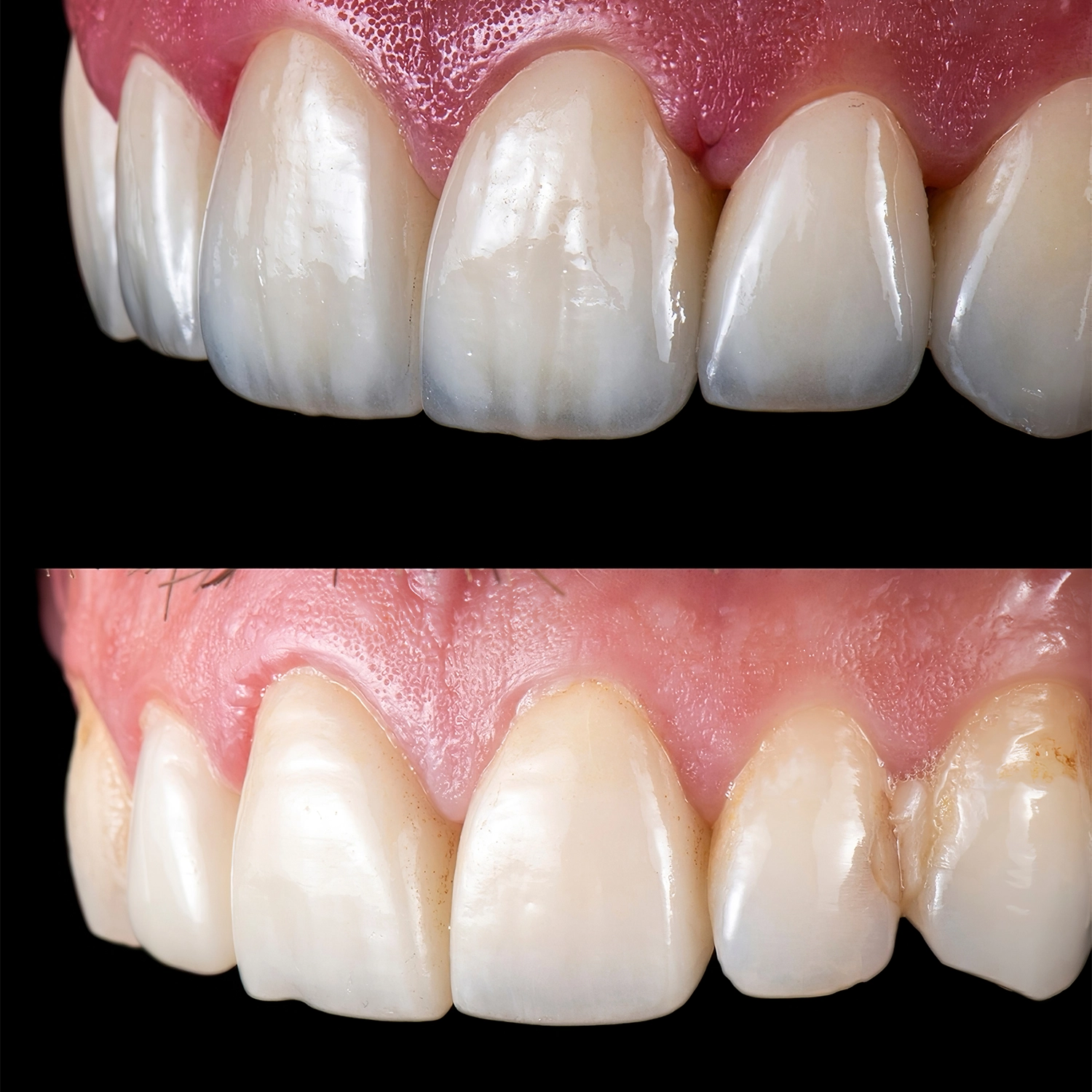
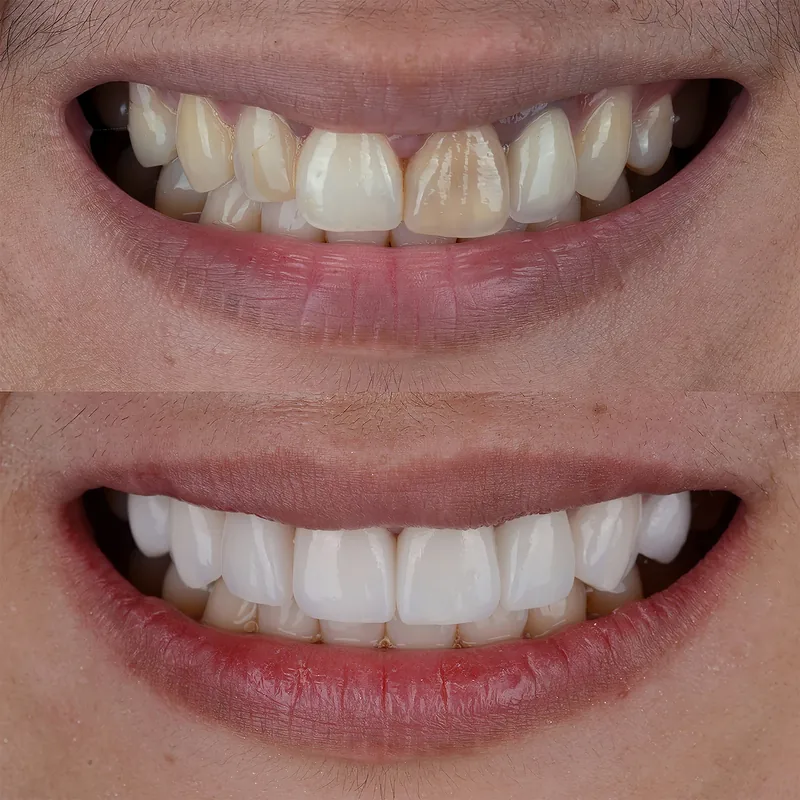
Rebuild a chipped corner or worn-down edge so the tooth looks whole again.
Close a gap between the front teeth without braces or aligners.
Mask stains or a single darker tooth that whitening cannot fix.
Even out slightly uneven, short or pointed teeth for a balanced smile.
It is also the everyday material for white (composite) fillings — repairing decay or replacing old grey amalgam fillings on both front and back teeth with a natural, tooth-coloured result.
What bonding is not ideal for: large structural rebuilds, heavily broken-down teeth, severe crowding or a full “Hollywood” transformation across the whole smile — those are better served by E-Max veneers/crowns, zirconia crowns or orthodontics. An honest clinic will tell you when bonding is the wrong tool.
Composite Bonding vs. Porcelain Veneers (E-Max) and Zirconia
This is the decision most patients are weighing. None is “best” — they suit different goals and budgets:
| Composite bonding | E-Max veneers | Zirconia crowns | |
|---|---|---|---|
| Tooth reduction | Minimal / none | Minimal–moderate | Moderate |
| Reversible | Usually yes | No | No |
| Visits | Usually one | Two (lab) | Two (lab) |
| Lifespan | 4–8 years | 10–20 years | 15–25 years |
| Stain resistance | Lower (can be polished) | High | High |
| Strength | Good for front teeth | Strong | Strongest |
| Cost | Lowest | Higher | Higher |
| Best for | Chips, gaps, minor fixes, budget | Lasting front-teeth makeover | Back teeth, bridges, heavy bite |
The practical way to think about it: composite bonding is the affordable, conservative, reversible entry point — ideal for younger patients, smaller fixes, or trying out a change. If you want a longer-lasting, stain-proof full-smile result, porcelain veneers are the step up. A good clinic often combines them — bonding where it makes sense, ceramics where strength and longevity matter.
The Procedure, Step by Step
- Shade & plan. The dentist matches the resin shade to your teeth and agrees the shape with you.
- Surface preparation. The tooth is lightly cleaned and conditioned so the resin bonds — usually with little or no drilling.
- Layering & sculpting. Composite is applied in layers, shaped by hand, and each layer is hardened with a curing light.
- Polishing. The bonding is trimmed, the bite checked, and the surface polished to a natural shine that blends with neighbouring teeth.
Most cases are finished in a single visit, with no numbing needed when no drilling is involved — which makes bonding one of the most comfortable cosmetic treatments available.

Durability, Care and Honest Limitations
Composite bonding typically lasts 4–8 years before it may need a polish, repair or refresh — less than porcelain, and that is the honest trade-off for its lower cost and reversibility. Because composite is slightly more porous than ceramic, it can stain over time (coffee, tea, red wine, smoking) and a thin edge can chip. The good news: unlike a cracked veneer, bonding is usually repaired or re-polished quickly and cheaply without redoing the whole tooth.
To get the most years out of it: avoid biting nails or pens, ease off heavily staining habits, wear a night-guard if you grind, and keep up routine cleaning and check-ups.
Why Have Composite Bonding Done at Stom Dental Centre?
Composite bonding looks simple, but the result lives or dies on the dentist’s artistry and finishing — the layering, the shaping, the polish. Badly done bonding looks bulky, flat and stains fast; well-done bonding is invisible. That difference is entirely about the clinician, which is why where you have it done matters:
Bonding and aesthetic restoration are reviewed by Dr. Fuat Biter, specialist in restorative treatments — not handed to whoever is free.
We tell you when bonding is the right choice — and when E-Max or zirconia will genuinely serve you better, in writing.
Branded composite materials and proper multi-step polishing for a natural, longer-lasting, stain-resistant result.
Most bonding is completed in a single appointment, ideal to combine with a short trip to Antalya — in English, German, Russian or Turkish.
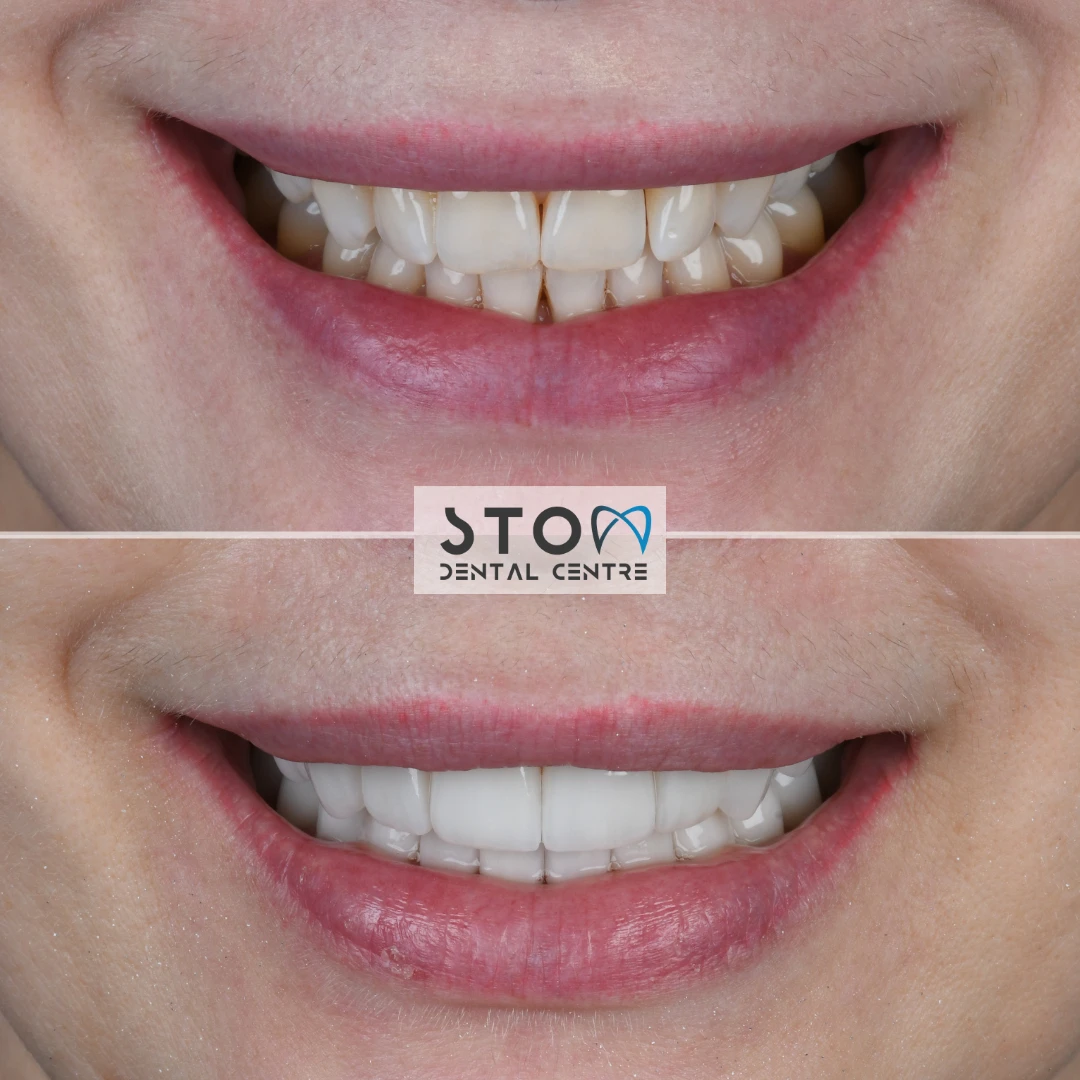
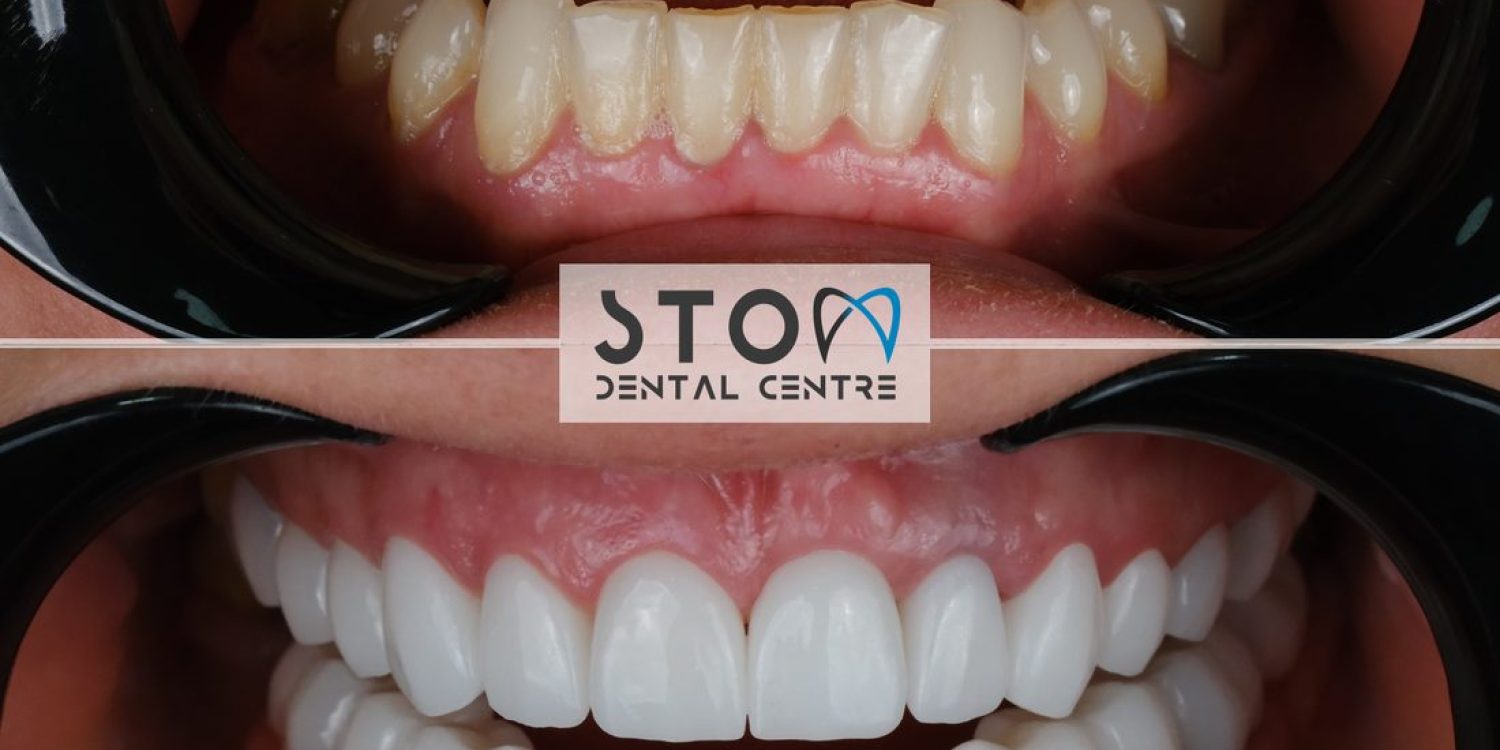
Ask any clinic to show you real before/after bonding cases (not stock photos) and to tell you which composite brand they use — at Stom, both are straightforward.
Planning dental treatment in Antalya?
Get a free, no-obligation assessment from our clinical team — we reply within 24 hours.
Curious what bonding could do for your smile? Send a close-up photo of your teeth on WhatsApp — Dr. Fuat’s team will tell you honestly whether bonding, veneers or a simple polish is the right call, with a clear written quote.
What Composite Bonding Costs
Composite bonding is the most affordable cosmetic dental treatment — a fraction of the price of porcelain veneers — because it is done chairside in one visit with no laboratory. In Turkey, the per-tooth price is in turn a fraction of UK, German or US prices for the same work, so a full set of bonded front teeth costs far less than the equivalent at home, even including travel.
The exact figure depends on how many teeth you want treated and whether you are having cosmetic bonding or functional fillings. You receive a free, no-obligation written quote for your case — send a photo on WhatsApp to get yours.
Frequently Asked Questions
What is composite bonding?
Composite bonding is a cosmetic treatment where tooth-coloured resin is applied directly to the tooth, shaped by hand and hardened with a light to fix chips, gaps, discolouration or shape — usually in a single visit with little or no drilling. It is also called dental bonding, edge bonding or composite veneers.
Is composite bonding better than veneers?
Neither is universally better. Composite bonding is cheaper, faster, reversible and conservative, but lasts 4–8 years and can stain. Porcelain veneers (E-Max) last 10–20 years and resist stains but require filing the tooth and cost more. Bonding suits smaller fixes and budgets; veneers suit a lasting full-smile makeover.
How long does composite bonding last?
Typically 4–8 years before it needs a polish, repair or refresh. It can stain or chip more than porcelain, but it is usually repaired quickly and cheaply without redoing the whole tooth.
Does composite bonding damage your teeth?
In most cases very little or no healthy enamel is removed, so bonding is largely reversible — a key advantage over veneers, which require permanently filing the tooth down.
Can composite bonding close gaps between teeth?
Yes. Bonding is one of the most common ways to close a small gap (diastema) between the front teeth in a single visit, without braces or aligners.
Does composite bonding stain?
It can, slightly more than porcelain, from coffee, tea, red wine or smoking — because composite is more porous than ceramic. Staining can usually be polished off, and reducing staining habits helps it last longer.
Is composite bonding the same as a white filling?
It is the same material. A white (composite) filling repairs decay or replaces old amalgam fillings; cosmetic bonding uses that same resin to improve the shape, colour or edges of front teeth.
How much does composite bonding cost in Turkey?
It is the most affordable cosmetic option — far less than veneers — and in Turkey the per-tooth price is a fraction of UK, German or US prices. The exact total depends on how many teeth you treat and is given in a free written quote.
Related guides
- E-Max crowns & veneers — the complete 2026 guide
- Zirconia crowns — types, cost and vs E-Max
- Hollywood Smile in Turkey — full smile makeover guide
Ready for an honest assessment? Stom Dental Centre, Muratpaşa/Antalya — led by Dr. Telman İskender, treating international patients in English, German, Russian and Turkish. Free consultation, written quote within 24 hours, real before/after cases on request.